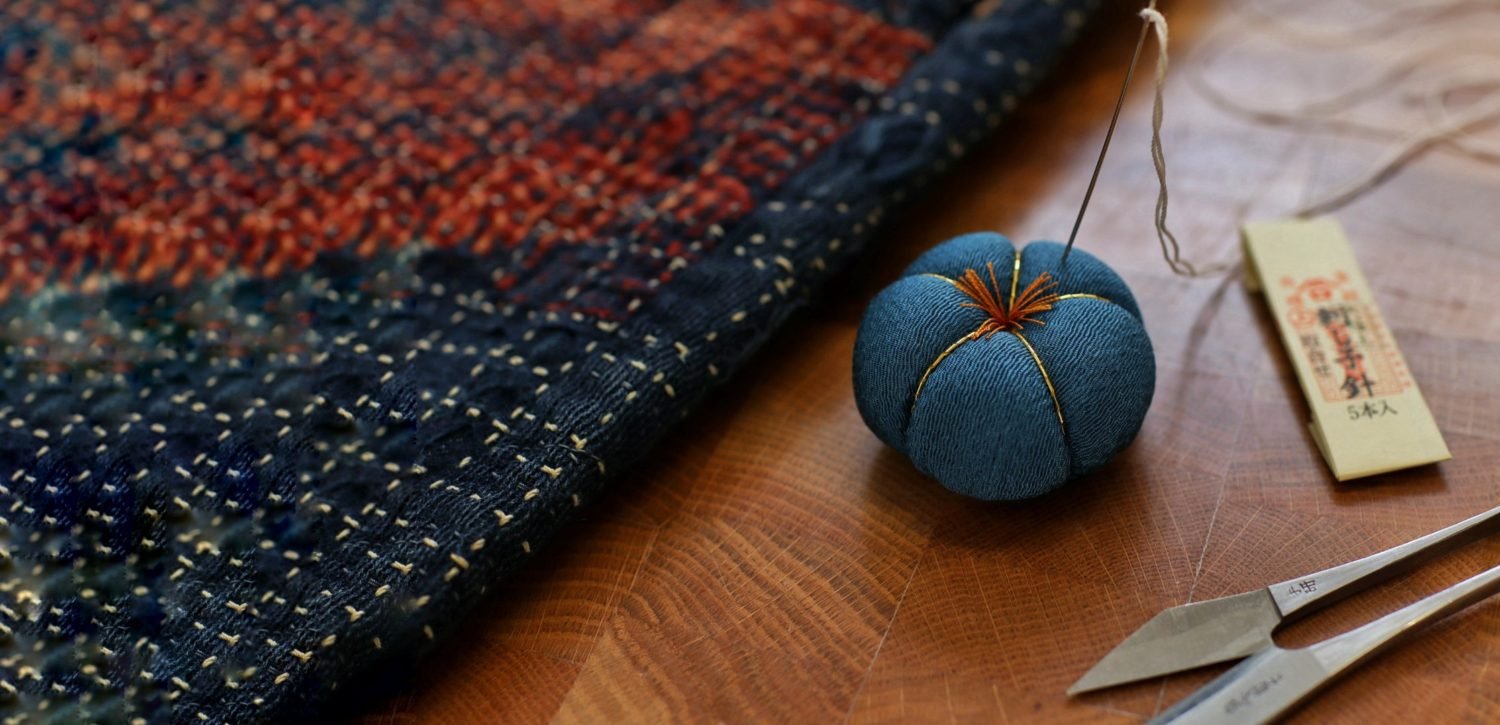

A small curved piece asks for control and a clear cutting path. Practical sewing advice, useful checks and related tools from Eight Needles.
Category Archives: Sewing Tips & Tool Advice
Eight Needles · Choose, use & care
Sewing Tips & Tool Advice
Find the right tool, learn how to use it and keep it ready for your next project.
Choose a topic below to browse our 100 practical articles.
Fabric markers & chalk
Choose a visible mark and a removal method that suits your fabric.
- Tailor’s Chalk, Fabric Pencil or Marker Pen?
- How to Test a Fabric Marker Before Sewing
- Marking Dark Fabric: Contrast and Removal
- Air-Erasable or Water-Erasable Fabric Markers?
- A Hera Marker: Making a Crease Instead of an Ink Line
- Keeping Tailor’s Chalk Sharp and Its Lines Clear
- Chalk Wheels and Chalk Pencils: Different Ways to Mark
- Choosing Refills for Sewing Pencils
- Tracing Paper for Fabric: Checking Both Sides
- Marking Delicate Fabric Without Guesswork
Hand-sewing needles
Compare needle sizes, eyes and uses.
- Choosing a Hand-Sewing Needle for the Fabric
- Long or Short Hand-Sewing Needles?
- Round and Grooved Needle Eyes: What to Compare
- Hand-Sewing Silk: Selecting a Needle and Testing the Stitch
- Canvas Hand Sewing: Choosing Without Forcing the Needle
- Wool Needles: Match the Yarn as Well as the Fabric
- Sashiko Needles: Choosing a Length and Checking Pack Contents
- Beading Needles: Check the Bead Hole Before Buying
- Patchwork and Quilting Needles: Read the Application
- Needle Threaders: Matching the Threader to the Eye
Threads & sashiko
Choose thread, cloth and a first stitching project.
- Regular or Thick Sashiko Thread? Choosing the Line
- Sashiko Thread Cards or Skeins: Choosing a Format
- Single-Colour or Variegated Sashiko Thread?
- Choosing a First Sashiko Sampler
- White or Navy Sashiko Cloth: Choosing Contrast
- Preprinted Sashiko Cloth or a Grid: Which Suits Your Project?
- Visible Mending: Assemble a Useful Sampling Kit
- Basting Thread: Why Keep It Separate from Decorative Thread?
- Naturally Dyed Thread: Choosing Colour with Care
- Keeping Thread Labels and Leftovers Useful
Measuring & patternmaking
Use rulers, tapes and tracing tools with confidence.
- 20cm, 50cm or 60cm: Which Pattern Ruler?
- Bamboo, Brass or Clear Plastic Sewing Rulers?
- Tape Measures with an End Gap: Where Does Zero Start?
- How to Measure a Curved Seam on a Paper Pattern
- French Curves, Armhole Rulers and D Curves Explained
- Pattern Weights or Pins: Choosing How to Hold Fabric
- Draping Tape: Choosing Between 1.5mm and 3mm
- How to Keep Draping Tape Organised Between Projects
- Tracing Wheels: Sharp, Blunt and Flat Edges
- How to Transfer a Paper Pattern Without Losing Details
- Half-Scale Pattern Rulers: Study Tools, Not Full-Size Patterns
- Seamline or Cutting Line? A Patternmaking Distinction
- Measuring Wheels for Patterns: What to Check First
- A Beginner’s Patternmaking Tool Kit
- Flexible or Straight Ruler? Choosing for Sewing
- A Sliding Gauge for Repeated Sewing Measurements
- How to Read a Half-Circle Protractor for Patterns
- L-Shaped Rulers: Checking a Right Angle in Patternmaking
- Why Two Rulers Can Give Different Sewing Measurements
- Compact Measuring Tools for a Small Sewing Space
Scissors & snips
Find the blade and size for the work in your hands.
- Mini Scissors or Thread Snips?
- Straight or Curved Embroidery Scissors?
- Choosing the Length of Tailor’s Shears
- Left- and Right-Handed Scissors: Check the Exact Model
- Bent-Handle Shears: Keeping Fabric Close to the Table
- Long- or Short-Blade Thread Snips?
- Keeping Fabric Shears Separate from General Craft Tools
- Choosing Scissors for Small Appliqué Details
- A Portable Scissor Kit: What to Pack and Protect
- When Sewing Scissors Stop Cutting Cleanly
Rotary cutters & mats
Match the cutter, replacement blade and working surface.
- 18mm, 28mm or 45mm Rotary Cutter?
- Rotary Cutting Small Curves and Pattern Details
- Straight Rotary Cuts: Ruler, Mat and Alignment
- Choosing a Cutting Mat for Sewing Projects
- Buying the Correct Rotary-Cutter Replacement Blade
- Perforation Cutter or Standard Rotary Cutter?
- Paper and Fabric Cutting: Organising Separate Tools
- Cutting Slippery Fabric: Stabilise Before You Choose a Blade
- Storing Rotary Cutters and Spare Blades Safely
- Why a Rotary Cutter Leaves Uncut Threads
Hole punches, awls & seam rippers
Make holes, open seams and shape small details.
- Nonaka Screw Punch: Body Only or with a 3mm Blade?
- Choosing a Screw-Punch Blade Size
- Preparing a Surface for Screw-Punch Work
- Screw Punch or Hammer-Driven Hole Punch?
- When a Screw Punch Does Not Make a Clean Hole
- Awl or Eyelet Punch: Opening a Gap or Cutting a Hole?
- Buttonhole Cutter or Seam Ripper for Opening a Buttonhole?
- Using a Seam Ripper Without Rushing the Fabric
- Turning Fabric Corners Without Pushing Through Them
- Sharp, Smooth and Ball-Point Awls: Choosing the Tip
Pins & small sewing tools
Explore the small tools that help with everyday sewing.
- Bodkin or Safety Pin for Threading Elastic?
- Loop Turners and Bodkins: Different Jobs in Narrow Channels
- Sewing Tweezers: Length, Access and Gentle Handling
- Choosing Pins for Draping and Delicate Fabric
- Pincushion or Magnetic Pin Holder?
- Wrist Pincushions: Keeping Pins Close While Draping
- Needle Minders, Needle Rests and Pin Holders
- Choosing a Thimble for Sashiko Practice
- Thread Wax: Check Suitability Before Treating Thread
- Sewing Tool Sets: How to Check What You Actually Need
Sewing kits, storage & gifts
Organise your tools or choose a useful sewing gift.
- A Sewing Kit for Classes: Pack by the Lesson
- Sewing Pouch, Tool Roll or Structured Bag?
- A Small Sewing Station on a Shared Table
- Organising Sewing Tools by the Job They Do
- Paperweights at the Pattern Table: What Matters?
- Gifts for a Sashiko Beginner: Build a Usable Combination
- Gifts for Dressmakers Who Already Have the Basics
- Choosing a Gift for Someone Who Sews by Hand
- How to Compare Sewing Tools Online Without Guessing
- The End-of-Project Sewing Kit Check
Explore travel sewing scissors kit with practical advice, a worked example and a checklist to help you choose sewing tools for your project.
A poor cut is a reason to pause and inspect the tool, not immediately to tighten its screw or attempt sharpening.
Small appliqué details need a clear view of the edge and a tool you can position accurately.
Thread snips with different blade lengths can feel quite different in close work. Practical sewing advice, useful checks and related tools from Eight Needles.
Dedicated fabric shears are easier to care for when their role is clear. Practical sewing advice, useful checks and related tools from Eight Needles.
Bent-handle shears place the handle at an angle to the blades. Practical sewing advice, useful checks and related tools from Eight Needles.
Longer shears can cover more distance in a cut, but length is only useful when you can control the tool comfortably.
Handedness should be confirmed from the exact product description. Practical sewing advice, useful checks and related tools from Eight Needles.
Mini scissors and thread snips both serve small cutting jobs, but their handles and cutting movements differ.