
Sewing Tips & Tool Advice
Wrist Pincushions: Keeping Pins Close While Draping
Eight Needles Journal · Small sewing tools
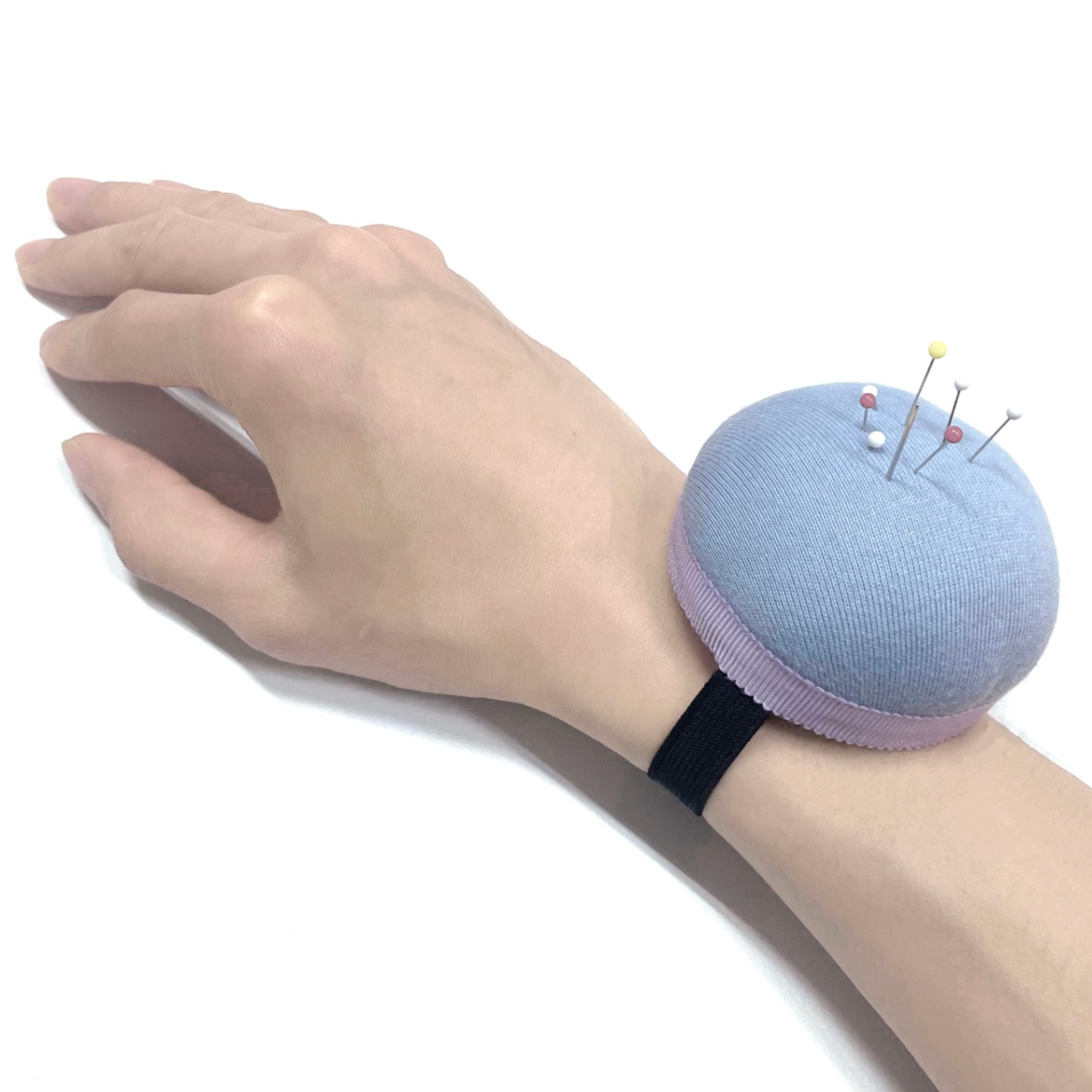
A wrist pincushion keeps pins near the hand during tasks such as draping. Its convenience depends on a secure fit, sensible placement and careful pin handling. It is not a reason to carry exposed points through a crowded workspace.
When wearing a pincushion helps
At a dress form, one hand may be supporting a fold while the other places pins. Keeping a small supply close can reduce repeated reaching towards a table. At a sewing machine, however, a stable holder beside the work may be easier to use. Choose by the movement you repeat most often.
| Style | What it offers | What to try |
|---|---|---|
| Elastic-band wrist cushion | A soft band holding the cushion around the arm | Whether it stays in position without feeling tight. |
| Spring-band wrist cushion | A band designed to wrap around the wrist | Whether its fit and fastening action suit you. |
| Tabletop pincushion | No holder moving with the wrist | Whether you can reach it without letting go of the work. |
| Tabletop magnetic holder | A place to set compatible pins down without insertion | Whether the surface remains clear enough to pick up one pin. |
The Bunka wrist cushion uses an elastic band and wool filling. Other wrist models use different bands and fillings, so the word “wrist” does not describe one universal fit. Compare the attachment as carefully as the cushion itself.
Check the fit
Wear the cushion as its maker intends and make sure it does not move unpredictably. Try the reaching movement before beginning the project. If it catches the fabric or gets in the way, a tabletop holder may suit the task better.
Begin with the cushion empty. Lift and turn your arm as you will while draping, then check whether the band slips or the cushion rotates. Make the same check with a small working supply of pins. If you cannot reach it comfortably with the opposite hand, a different position or a tabletop holder is a better choice.
Place pins deliberately
Keep the points contained in the cushion and avoid overcrowding it. Do not insert a pin where it could reach the wrist. Pause and rearrange the pins if their heads become difficult to distinguish.
Choose pins that suit both the fabric and the usable depth of the cushion. A long pin should not be pushed down until its head touches the surface. Keep each head visible, and position points so they remain inside the filling rather than emerging from the sides or base.
Look after the filling and band
Wool filling does not make needles rustproof. Keep the cushion dry, remove damaged pins and follow the product’s care instructions. Check the band and seams periodically; a stretched band can let a previously stable cushion move around. Do not assume every model has a replaceable band.
Remove it when the task changes
Put the cushion down before activities where it may snag fabric, bags or another person. Check for loose pins when finishing. A consistent cleanup routine is part of using a portable holder well.
If it catches on the drape
A wrist cushion catches on the draped fabric as you turn. Stop and change its position or use a tabletop holder. Convenience depends on the actual movement; wearing the tool is not useful if it interferes with the work.
Check before choosing
- Does it fit securely?
- Are the points contained?
- Will a tabletop holder work better for this task?
Related tools to compare
Compare the size, material and included parts on each product page against the task above.
 Bunka Wrist Pin Cushion in 6 colours
 Bunka Silk Pins for Draping – 10g
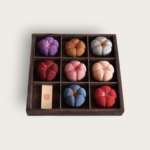 Misuya Chubei Plum Pin Cushion – 8 colours