
Sewing Tips & Tool Advice
Needle Threaders: Matching the Threader to the Eye
Eight Needles Journal · Needles
Choose a threader for the needle and thread you actually use. A small wire loop, a decorative handle and a desk mechanism can make threading easier in different ways. None can make an unsuitable thread fit a tiny eye.
Compare the type before the handle
| Type | How it helps | Check first |
|---|---|---|
| Handheld wire-loop threader | You guide the loop through the eye and draw the thread back through | The loop and folded thread must fit together without force |
| Desk threader | A button or lever operates the threading mechanism | The exact needle model, eye shape, size range and excluded needle types |
| Yarn threader | Designed to help with yarn and larger needle eyes | Use a model intended for the yarn needle; a fine sewing threader may be too delicate |
Two compact options for a sewing kit
The Misuya Chubei threader pack contains two threaders. It is an option to compare when putting together a small kit or keeping a spare with a second project.
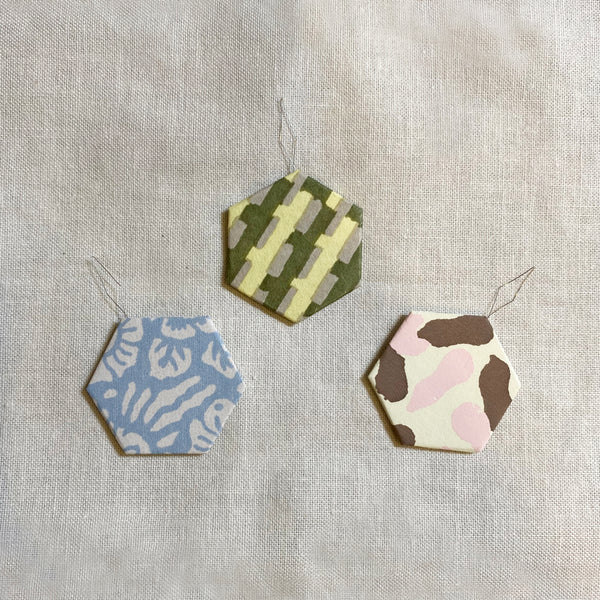
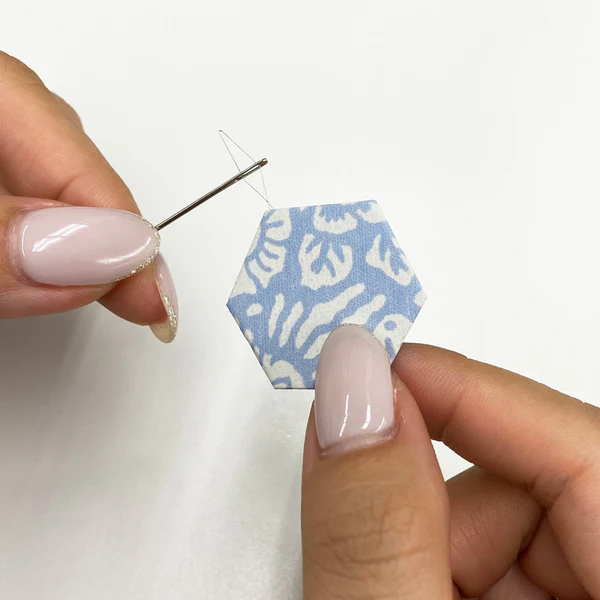
The Cohana Haibara Chiyogami set contains three threaders, one in each paper pattern. Each is approximately 43 × 26 × 1 mm, with a hexagonal washi-covered handle. Compare the way you hold the handle as well as its appearance: you need to guide the working end gently and keep the needle steady.
A comfortable handle is useful, but its size does not tell you the thickness or strength of the working loop. Nor does a larger pack guarantee that its threaders will fit a particular needle.
Use a wire threader without pulling hard
- Cut a clean thread end and check that the thread suits the needle.
- Pass the empty wire loop gently through the eye. If it does not fit, stop.
- Put the thread through the loop, leaving a short tail.
- Draw the loop back slowly, keeping the needle and threader aligned.
- Remove the thread from the loop and check it for damage before sewing.
The return journey needs more space than the empty loop alone. It carries both the wire and the folded thread through the eye. If the tool enters easily but jams on the way back, reassess the thread thickness and eye size instead of pulling harder.
Desk threaders have specific compatibility limits
The Clover Desk Threader Quick covers suitable Clover sewing needles from 0.46 to 0.89 mm thick. Its supported types include specified sewing, piecing, quilting and appliqué needles. Embroidery, beading, yarn and quilt-basting needles are among the excluded types.
That thickness range is not a universal compatibility chart for other brands. The mechanism also depends on the position and shape of the eye. Check the instructions for the exact threader before pairing it with round-eye Misuya needles or another specialist needle.
Look after the wire and paper
Keep threaders in a small compartment where scissors and heavier tools cannot crush the working end. Replace a damaged loop rather than repeatedly bending it back into shape. Stop using a threader if it catches or scrapes the thread.
For the Cohana paper-covered handles, avoid water, rubbing and storage in heat or humidity. Water can loosen the paper; friction can affect its colour. A spare is helpful, but gentle use and protected storage matter more than how many are in the packet.
Compare round and grooved needle eyes · Choosing a needle for yarn
