
Sewing Tips & Tool Advice
White or Navy Sashiko Cloth: Choosing Contrast
Eight Needles Journal · Sashiko
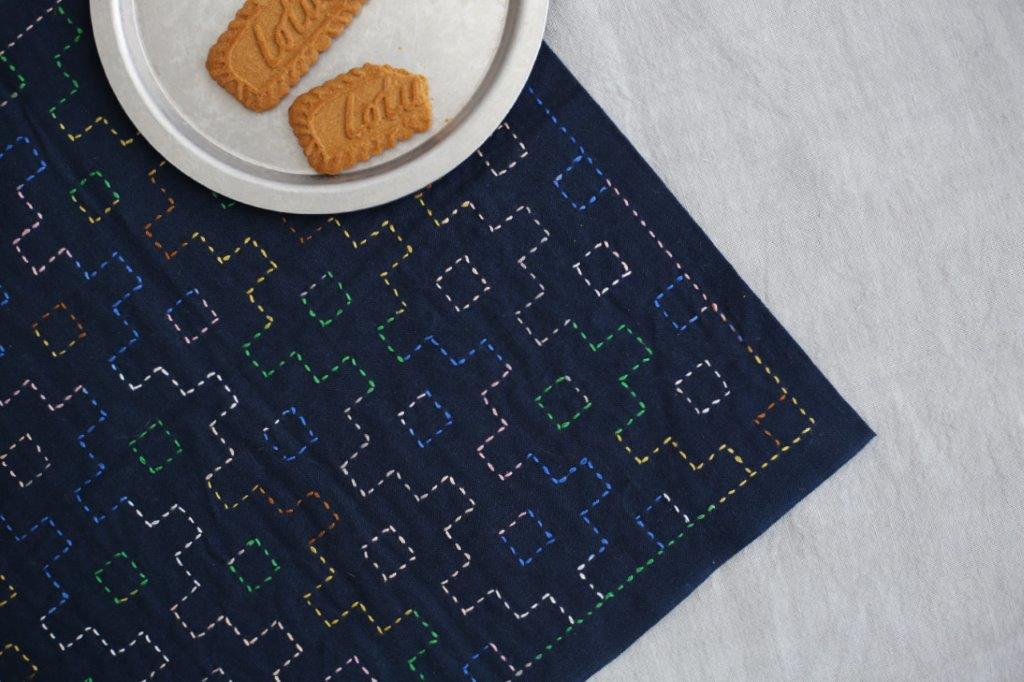
White and navy cloth can make the same thread look quite different. Choose for two things: the contrast you want in the finished pattern and the visibility you need while stitching. A beautiful colour combination is less enjoyable if you struggle to follow its guides.
Compare the effect you want
| Combination | Effect to look for | Check before choosing |
|---|---|---|
| Navy cloth with pale thread | A clearly outlined pattern | Can you also follow the unstitched guides? |
| White cloth with dark thread | Distinct stitches against a light background | Is the contrast comfortable under your sewing light? |
| White cloth with pale thread | A subtle, low-contrast design | Can you see the detail at normal viewing distance? |
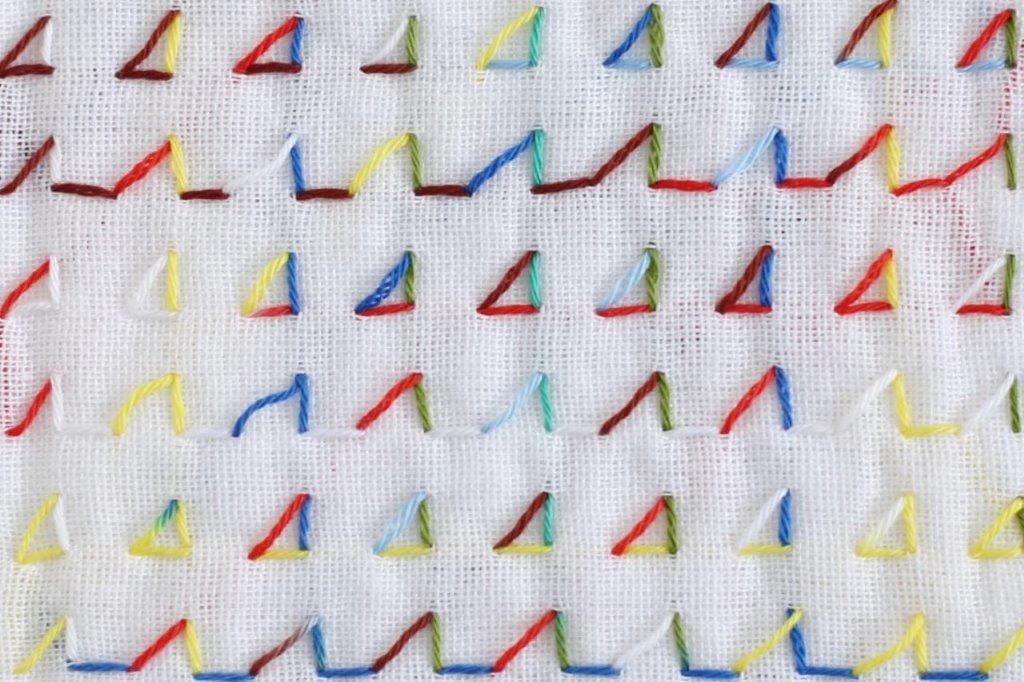
| Either cloth with variegated thread | Changing emphasis along the line | Which sections become quiet or almost disappear? |
Match the cloth format as well as its colour
Daruma’s white and navy traditional samplers are both listed as 34 × 34cm, 100% cotton, with water-removable stitching guides and English/Japanese instructions. Choose one of the eight designs; the listing is a choice of patterns, not an eight-cloth bundle.
Printed grid cloth is a different starting point. Its grid helps you place a pattern, whereas a sampler provides the design itself. If your main aim is to practise following stitches, compare the same sampler pattern in white and navy before adding the extra task of planning a grid-based design.
Use your sewing light for the decision
Place an actual length of thread on the cloth under the lamp where you work. Check both the thread and any printed lines. Move your hand into the position it takes while stitching; its shadow can change what you can see.
Then sew a small representative section where the project allows. Inspect the spaces between stitches and an intersection. Thread thickness, pattern scale and the cloth’s weave all influence the final appearance, so a screen image is only a starting point.
Plan the washing before choosing the combination
Check that the cloth and thread care instructions suit the finished item. A decorative piece and a frequently washed hand cloth have different uses. For washable materials, use a separate sample to check the intended treatment; do not prewash away printed guides that you still need.
Do not infer the dyeing method from the word “navy”. A colour name alone does not establish that a cloth is naturally indigo-dyed or predict its colourfastness. Keep the material information and care directions with the project.
Choose the starting cloth
Compare white traditional samplers with navy traditional samplers. For your own layout, see white grid cloth and coloured grid cloth.
