
Sewing Tips & Tool Advice
Mini Scissors or Thread Snips?
Eight Needles Journal · Scissors
For a few thread ends in a small sewing pouch, mini scissors can be a useful companion. For repeated cutting beside the sewing machine, a longer pair of thread snips may feel easier to pick up and control. Start with the cuts you make most often, then compare the grip and the actual size.
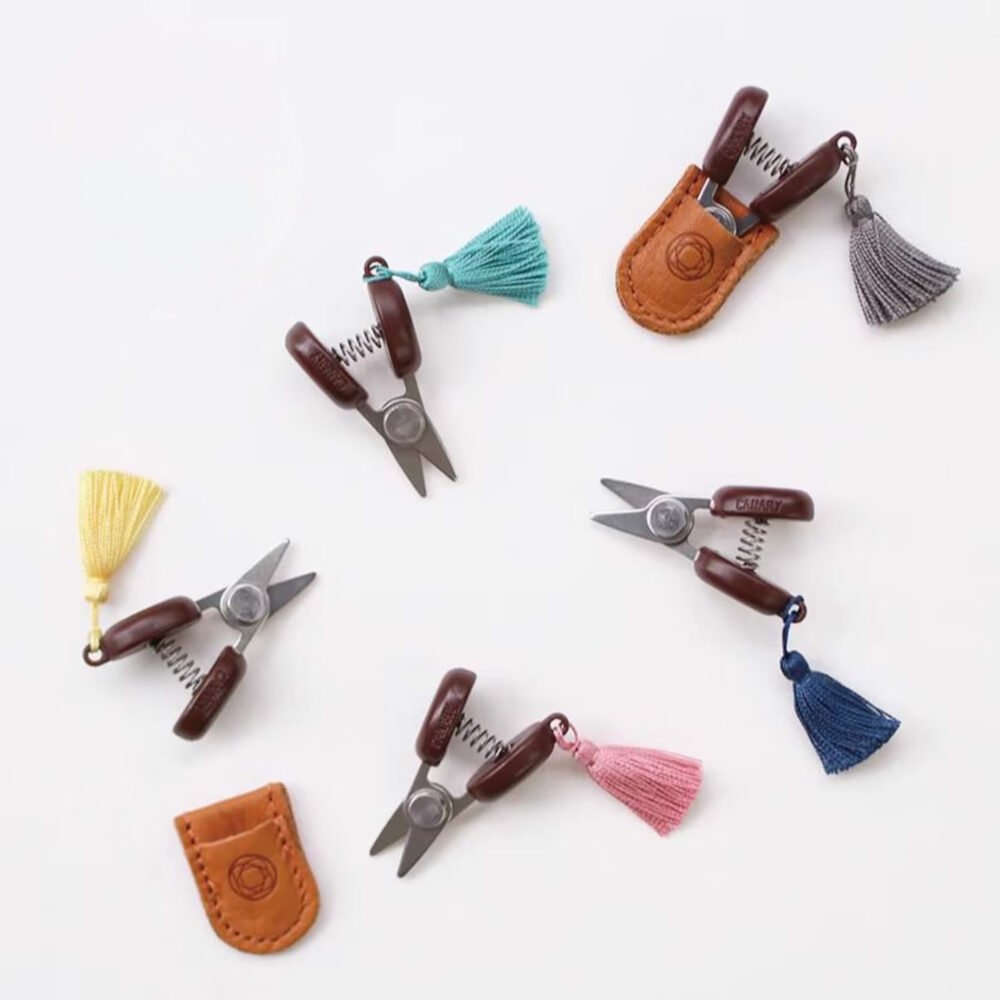
Three options, three things to check
| Option | Useful starting point | Check before choosing |
|---|---|---|
| Cohana Seki Mini Scissors | A compact cutter for occasional thread trimming | 35mm overall length and an 8mm cutting length; a very small pinch grip |
| Shozaburo 105mm short-blade snips | A full-length grip for repeated thread cutting | 105mm is the overall length, not the length of the cutting edge |
| Misuya Chubei 105mm Kabura snips | Another traditional snip shape to compare | Look closely at the blade profile and the handle, rather than choosing by overall length alone |
The two 105mm tools occupy about three times the length of the 35mm mini scissors. That is a comparison of overall size, not cutting capacity. Place a ruler beside your sewing kit: product photographs often make tools of very different sizes look equally large.
How the grip changes the job
The Cohana mini scissors work with a light squeeze between the fingers and have no finger rings. This particular model can be used in either hand. Traditional thread snips also use a squeezing action, but the longer handle gives your hand a different amount of space.
A smaller tool is not automatically easier to use. If you find tiny objects difficult to hold, compare the available gripping area before choosing the smallest pair. With any snips, consider how much pressure it takes to close them and whether you can see the thread clearly while holding them.
Think about picking the tool up as well as making the cut. A tiny pair can fit neatly into a portable kit; a longer pair may be easier to find among thread cards and fabric at a busy sewing table. Give either one a consistent place to return to between tasks.
Thread trimming and detailed embroidery are different jobs
For ordinary thread ends, the key requirement is a clean cut without pulling the thread out of the work. Fine cutwork, drawn-thread embroidery and close trimming around tiny shapes ask more of the blade tip. Compare the thickness and shape of the tip, its visibility and how precisely it meets the other blade.
A decorative handle or a very small overall size does not establish that a pair will suit those detailed jobs. If close embroidery work is the reason for buying, compare dedicated embroidery scissors as well as these thread cutters. Keep metal embroidery threads and other specialist materials separate unless the selected scissors are intended for them.
Try an ordinary cut before a close one
- Use a spare length of the thread you normally sew with. Hold it clear of the fabric and your fingers.
- Make a relaxed cut with the part of the blade you would usually use. Check whether the end cuts cleanly or folds between the blades.
- Try the same movement beside a scrap of fabric before trimming near finished stitches.
- If the thread folds or catches, stop and inspect the tool. Extra squeezing is not a useful substitute for blades that meet correctly.
Secure the stitching in the way your project requires before shortening its tails. Cutting every end flush is not the goal; some techniques need a tail left for weaving in or fastening.
A blade cover is different from a pouch
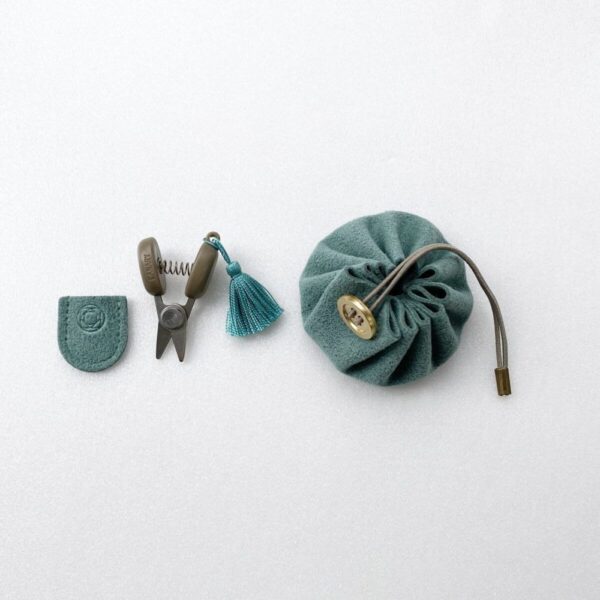
The Cohana mini scissors include a leather blade case. The separate mini-scissors-and-drawstring-pouch set adds a different storage item, so check the chosen listing if you want the pouch as part of a gift. A lifestyle photograph can show accessories that belong to another set.
Protect the blades after use, wipe the mini scissors dry if they become wet, and avoid hard materials or impacts. Their small size makes careful storage useful: a covered tool is easier to keep from snagging the rest of a sewing kit.
Compare the cutting tools
 Cohana-Seki Mini Scissors in 5 colours
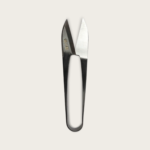 Shozaburo 105mm Snippers -Short Blade
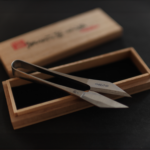 Misuya Chubei Hand- Crafted 105mm Snippers -Kabura Blade