
Sewing Tips & Tool Advice
Loop Turners and Bodkins: Different Jobs in Narrow Channels
Eight Needles Journal · Small sewing tools
A loop turner and a bodkin can arrive in the same packet, but they solve different problems. One turns a sewn tube of fabric right side out; the other helps draw cord or elastic through an existing channel. Understanding the two jobs makes this small set much more useful.

Which job are you trying to do?
| What is in front of you? | Tool to consider | What changes? |
|---|---|---|
| A fabric tube sewn with the right sides facing inward | Loop turner | The fabric is turned right side out |
| A finished casing that needs a drawstring or elastic | Bodkin | The cord or elastic is drawn through the channel |
For example, a small drawstring bag may involve both jobs: making a narrow fabric tie and then passing that tie through the finished casing. The tools are related because they appear in the same project, not because they are interchangeable.
Compare the tip, not just the length
KAWAGUCHI’s loop-turner-and-bodkin set combines one hooked turner with a separate gripping bodkin. Clover’s 21-701 loop-turner set contains two turner lengths. A two-piece packet therefore does not always mean the same two functions.
Hook size, the movable latch and the space needed around the tip matter when turning a narrow tube. A thin shaft alone does not tell you the smallest tube the complete tool can turn. Test with the same fabric, interfacing and seam allowance you intend to use.
Understand the hook and movable lever
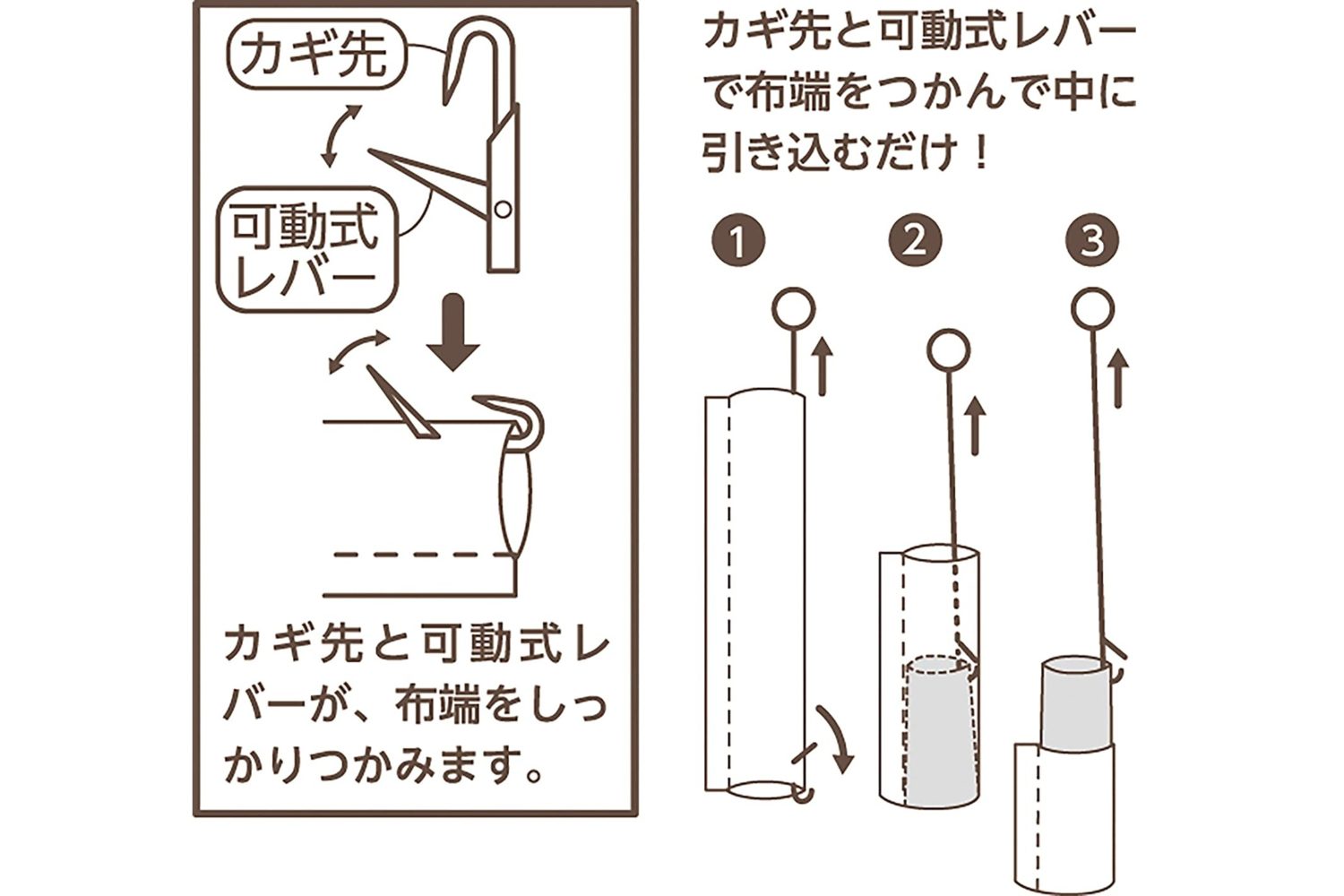
On this hooked design, the small lever is part of the holding mechanism. Follow the packet’s diagram to catch the fabric end with both parts positioned correctly. Merely hanging the edge over an open hook can allow it to slip off partway through.
Practise on a short tube first
- Sew a short sample using your intended construction and allowance.
- Pass the turner through the tube and secure the far end as shown in its instructions.
- Start the end folding into the tube with gentle, controlled movement.
- Ease the fabric along as you draw the tool back, without packing a hard lump around the hook.
- Release the end once the tube is right side out, then arrange and finish the seam.
If it jams, stop and inspect the hold, seam allowance and available space. Thick layers can be too bulky to turn through a very narrow tube. Review the width or construction on a sample rather than repeatedly pulling harder. A folded-and-stitched strap may be another option when the pattern and fabric suit that method.
Decide whether you need both pieces
A small bag can need both operations: turn its fabric ties right side out, then thread those finished ties through the casing. Keep the turning and threading tools together if you often make this kind of project.
If replacing a lost tool, check the exact packet contents. The KAWAGUCHI Loop Turner with Bodkin includes the separate threading tool. Other listings may sell a turner on its own. Do not assume that a similarly named product includes the same accessories.
Compare other bodkins by the channel
If your task is threading elastic, compare the bodkin’s grip and shape with the casing you have made. The overall size of the opening and the seam junctions matter as much as the width of the elastic. A sample casing lets you check the complete combination before reaching the nearly finished garment.
 Kawaguchi Loop Turner with Bodkin
 Clover Bodkins Set of 2
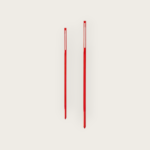 Clover Flexible and Glide Bodkins. Set of 2