
Sewing Tips & Tool Advice
A Sewing Kit for Classes: Pack by the Lesson
Eight Needles Journal · Workspace & gifts
A class kit should begin with the teacher's list. Different courses use different methods, and a tool recommended for one class may not be needed in another. Pack only after checking the lesson and any venue rules.
Build the kit around the lesson
| Lesson | Likely personal tools | Confirm first |
|---|---|---|
| Pattern drafting | Paper, pencil, eraser, straight ruler and the specified curves | Full-size or reduced-scale work; metric or imperial markings |
| Machine sewing | Fabric, matching thread, pins or clips, thread snips, seam ripper and tested marker | Machine availability, needle system, bobbin type and whether cutting tools are supplied |
| Hand sewing or sashiko | Project cloth, suitable needles and thread, snips and needle storage | Whether the cloth is premarked, and which thimble or marking method is taught |
This is a planning guide, not a substitute for the course list. Some classes supply nearly everything; others expect a full personal kit. Taking an unsuitable bobbin or a short ruler instead of the required scale can interrupt the lesson even when the bag seems well stocked.
Separate essential from optional
Identify the tools you must bring and those supplied in the classroom. Confirm any required ruler scale, needle type or marking method. Avoid substituting a similar-looking tool when the lesson depends on a particular function.
Pack for quick retrieval
Group measuring tools, marking tools and sharp accessories in separate accessible sections. Protect points and cutting edges. Keep labels on unfamiliar tools so it is easy to identify the item when the teacher refers to it.
Check the bag with your longest tool
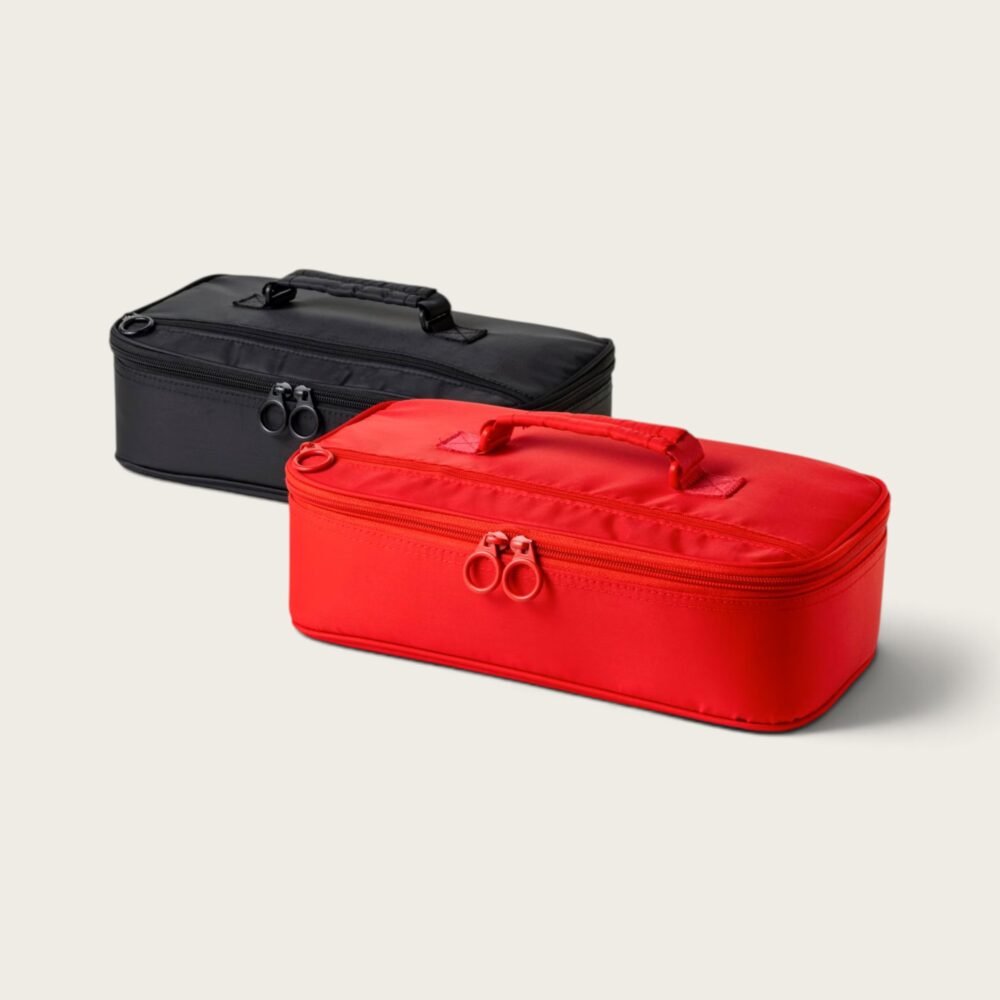
The Bunka sewing tool bag measures 310 × 155 × 60 mm overall and has mesh pockets, a shears sleeve and a detachable zipped mini bag. Overall dimensions do not guarantee the usable length of an individual pocket. Check the covered tool, its handle and the room needed for the zip to close without force.
Long pattern rulers and a cutting mat may need separate flat storage. Keep the small bag for the tools you will use at the machine, with bulky supplies packed elsewhere. A magnetic needle rest is useful while working, but loose needles and pins should go into closed storage for the journey.
Test the marker before class
Bring an offcut of the actual fabric. Check visibility, line width and removal before marking the project. If an air-fading line must last until the next lesson, choose another teacher-approved method; do not rely on a fixed disappearance time.
Use a leaving checklist
Before departing, check that the kit is complete and the project materials are present. Repeat the check when packing up at the end of class. A small written inventory reduces the chance of leaving a needle, ruler or expensive pair of scissors behind.
A practical example
Your course lists a particular reduced-scale ruler. Confirm the required scale before replacing it with a full-size model you already own. Pack the teacher's list with the kit so unfamiliar tool names can be matched to the lesson.
Check before choosing
- What does the teacher require?
- Which tools are supplied?
- Can I account for every sharp item before leaving?
Related tools to compare
Compare the size, material and included parts on each product page against the task above.
 Bunka Sewing Tool Bag – In 2 options
 Sōho Assorted Hand Sewing Needle Set
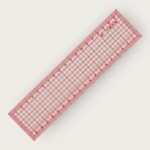 Bunka 20cm Pattern Ruler