
Sewing Tips & Tool Advice
Compact Measuring Tools for a Small Sewing Space
Eight Needles Journal · Measuring
A small workspace benefits from tools that are easy to put down and find again. A compact ruler, a gauge and a tape cover different measuring jobs; the best combination is the one that fits your actual projects.
Compare size with the job it can do
| Tool | Size or working range | Useful task |
|---|---|---|
| Clover Ruler Card | Approximately 9 × 5.5cm | Small details, parallel lines and 45-degree references |
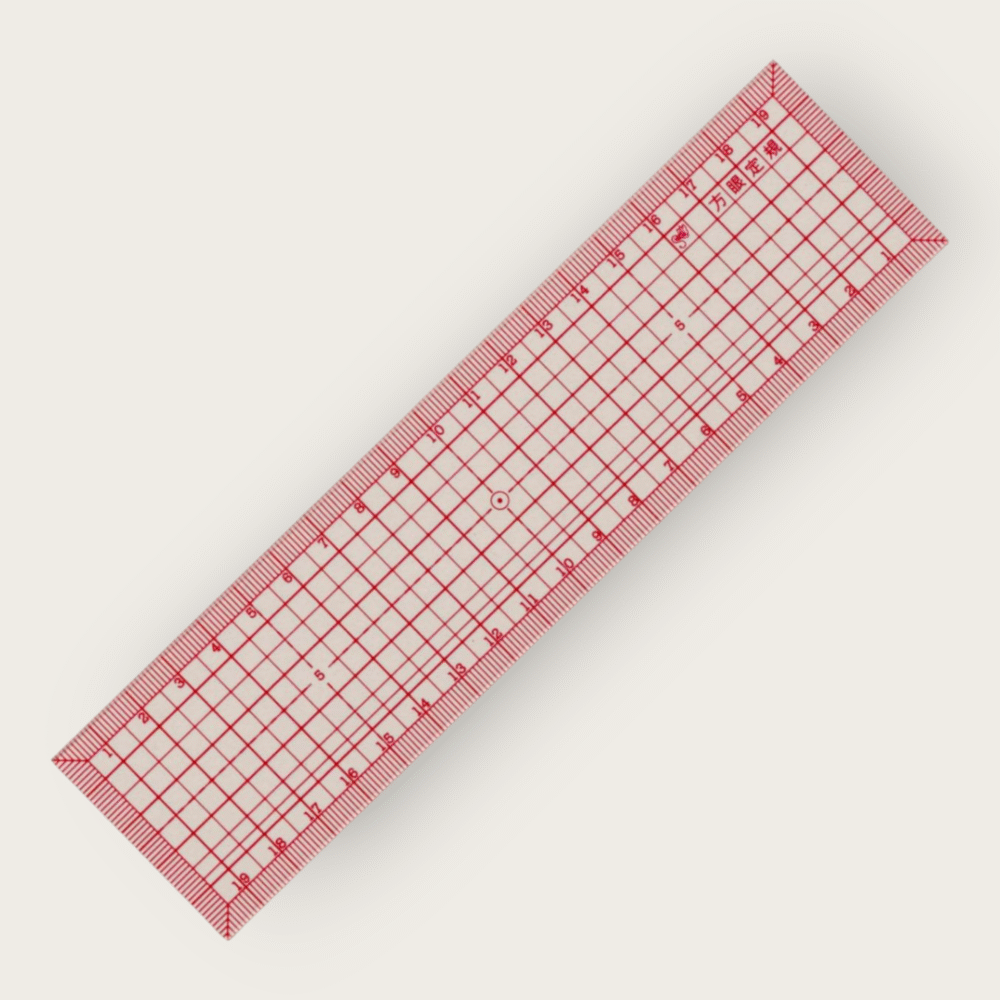
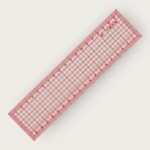
| Bunka 20cm pattern ruler | 20 × 5cm | Short straight lines and seam-allowance checks with a grid |
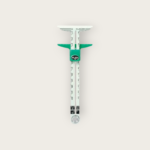
| Clover Slide Gauge T | Adjustable from 5 to 120mm | Repeating the same short offset without finding it anew |
| Cohana Yuzen leather tape | A retractable 1.5m metric tape | Longer measurements in a compact stored form |
A gauge’s working range is not the same as the size of its body. Similarly, a retractable tape stores small but still needs the measured cloth or pattern to be supported. Choose the function first, then check where the tool will fit.
Keep the frequent tool nearest
If you repeatedly check short distances at the machine, a small ruler or gauge is easier to manage than a long pattern ruler. Reserve the larger tool for the table where paper can lie flat and the full scale remains visible.
Readability matters as much as size
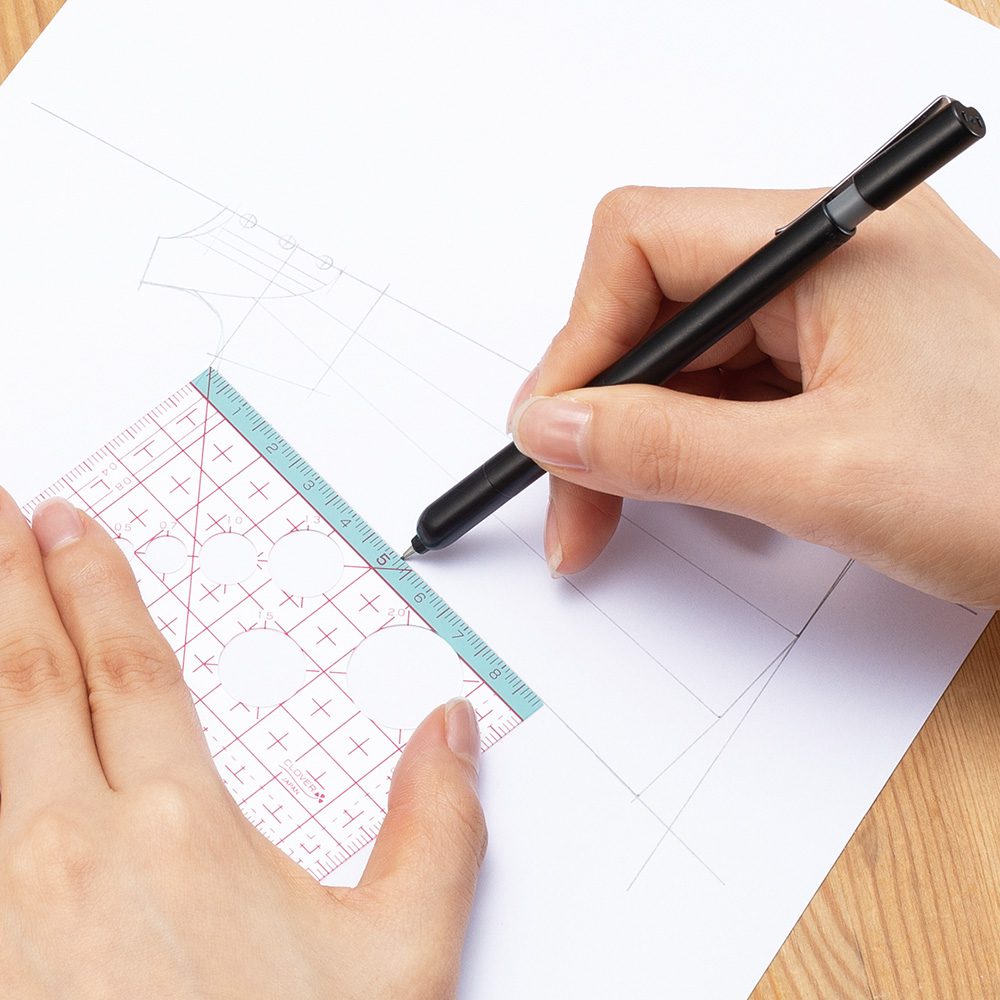
The Clover card has a green scale area, an edge-starting zero and holes for small circular details. Check that its close markings are comfortable for your eyes. A tool that fits a pocket but needs constant repositioning or awkward viewing may be less useful than a slightly longer ruler.
For a small pouch, a ruler card or short grid ruler may cover most drawing tasks. For an adult garment, keep a longer pattern ruler available for extended lines. Repeatedly advancing a short ruler requires careful alignment and can introduce a kink.
Give each tool a place
Store short rulers in a protective sleeve or a shallow compartment where they lie supported. Avoid burying a gauge beneath sharp tools. A clear storage position also makes it easier to notice when the tool is missing before you pack away fabric.
A compact setup to try
Start with one short ruler and the flexible tape you already use. Add a sliding gauge when repeated offsets are a frequent job. Keep them in a small tray beside the work, leaving the space behind the machine clear enough to support moving fabric.
Keep plastic measuring tools outside the pressing area. Neither the ruler card nor the ordinary pattern ruler should guide a cutting blade. Store a dedicated cutting ruler and mat with the cutting tools so the right pair is easy to bring out together.
Build from a project
Write down the measurements your next project requires. Add a specialised tool only when your existing ones make that task awkward. This creates a useful compact kit without filling the work surface with several tools that answer the same question.
A practical example
Your sewing machine sits on a small desk. Keep the gauge and short ruler in one shallow tray, and store the long pattern ruler flat elsewhere. Bring the long tool out only when the paper can be supported properly. This keeps the active area usable without reducing the range of tasks you can do.
Check before choosing
- Which measurement do I repeat?
- Where will this tool live?
- Does it add a function I lack?
Related tools to compare
Compare the size, material and included parts on each product page against the task above.
 Clover Ruler Card
 Clover Sliding Gauge
 Bunka 20cm Pattern Ruler