
Sewing Tips & Tool Advice
Tailor’s Chalk, Fabric Pencil or Marker Pen?
Eight Needles Journal · Marking
The best fabric marker is the one that gives you the right line for the next step—and leaves the finished cloth as it should be.
A tiny embroidery curve, a trouser hem and a dart on navy wool do not ask the same thing of a marking tool. A fine liquid line may be beautifully clear but need water to remove it. Powder chalk can make a useful cutting guide but rub away during handling. A white pen solves a contrast problem, yet may take a moment to show.
Here is how the different marking tools in our collection compare, with the practical differences that matter at the sewing table.
Find a starting point for your project
- Fine embroidery or quilting detail: compare Chacopar Extra Fine with a Sewline 0.9mm fabric pencil.
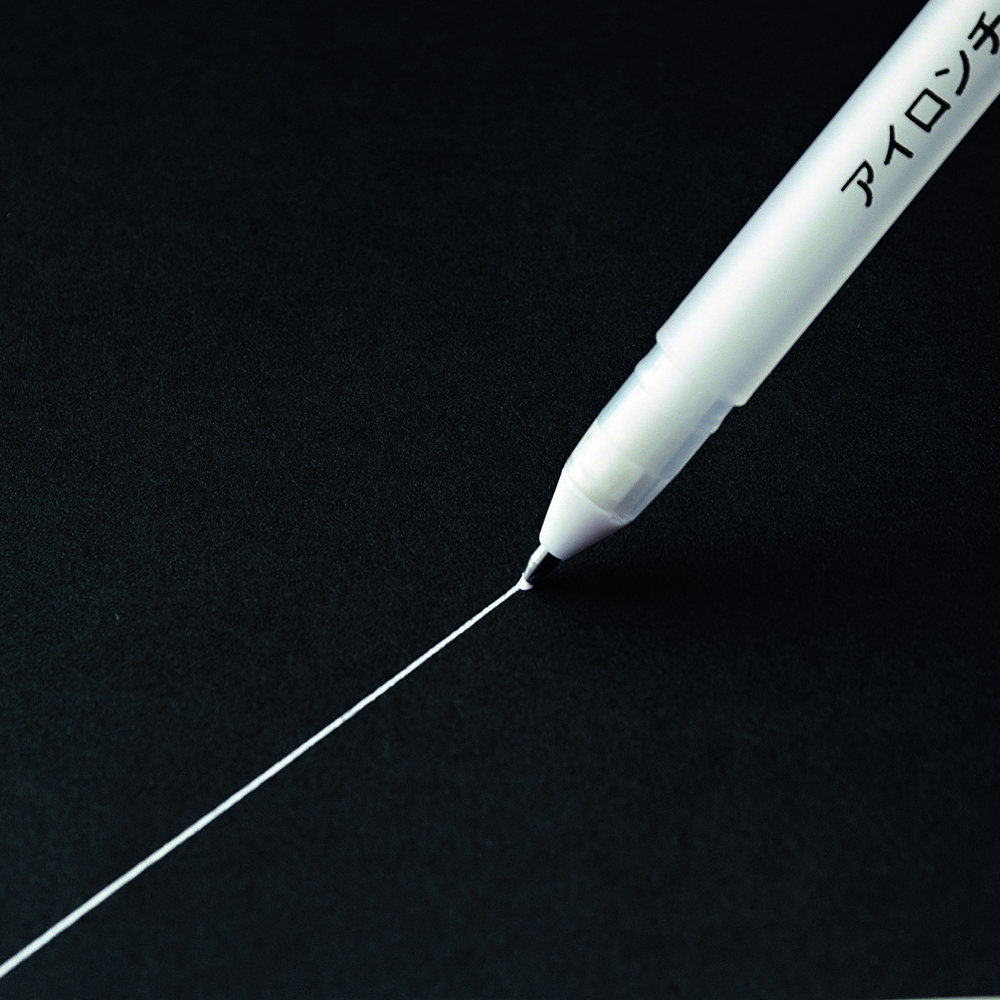
- Dark fabric: compare Clover’s white marker with a contrasting fabric-pencil lead or chalk.
- Long cutting lines: compare sharpened tailor’s chalk with the Bunka chalk wheel.
- A few marks to sew straight away: consider Adger’s air-erasable purple or pink ink.
- Work you will put down and return to: consider a water-erasable mark if the whole project can tolerate its removal.
- A visible crease will do: try a hera on a scrap before introducing coloured marks.
These are starting points, not promises for every fabric. Test the actual cloth before committing to a method.
Liquid markers: compare the ink as well as the tip
| Tool | Why choose it? | What to plan for |
|---|---|---|
| Adger purple | The slower-fading of Adger’s purple and pink inks. | Fades naturally; also removable with water. Working time varies. |
| Adger pink | The quicker-fading option for short tasks. | Check that it lasts through the task; also removable with water. |
| Adger Twin | Purple and pink together, for choosing between the two inks. | Both ends are air-erasable. Neither is a stay-until-washed blue ink. |
| Adger pale blue | A line that does not depend on natural fading. | Needs water removal. Remove before pressing and before washing with soap. |
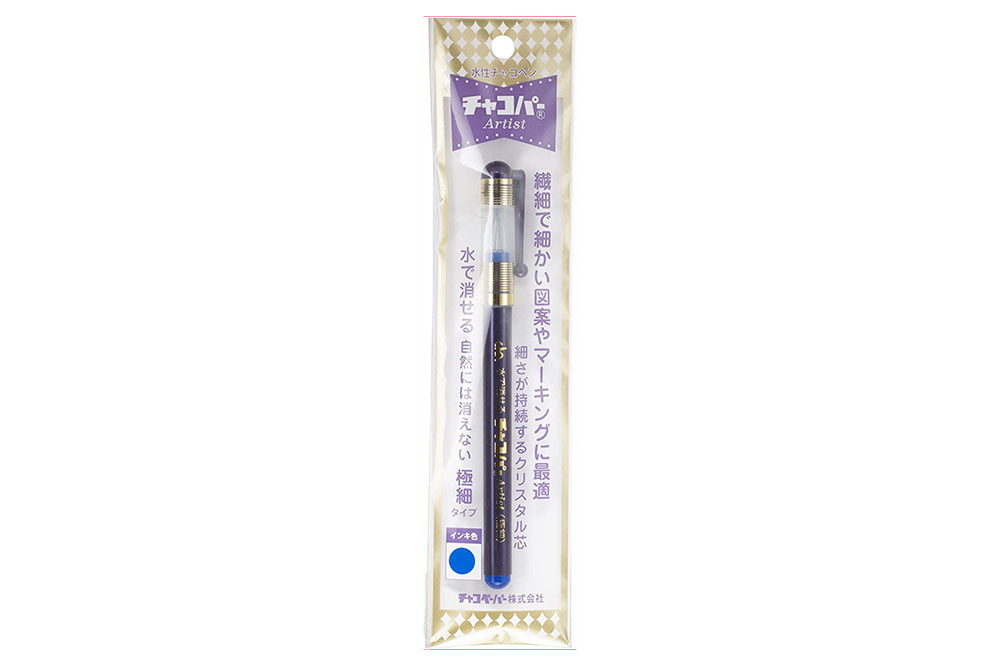
| Chacopar Extra Fine | A fine crystal tip for small motifs and detailed marking; blue or brown. | Water-erasable, not naturally fading. Use light pressure to protect the tip. |
| Clover white marker | A white line for black and other dark fabrics. | Allow the line to develop. Remove with ironing or water washing, as appropriate for the cloth. |
Do not read the cap colour as a universal code. The purple/pink distinction above belongs to Adger. A different maker’s pen may have a different removal method, even when the colour looks similar.
Fine detail: Chacopar or a pencil?
For a small embroidered letter, the useful question is whether you can see the intended stitch position without an oversized line hiding it. Chacopar gives an extra-fine liquid mark; the Sewline pencil gives a dry mark from a fixed-diameter lead. Compare how each behaves on the weave you are using. The stated tip or lead diameter is not a guarantee of the finished line width: pressure, angle and ink spread matter.
Pencils: the diameter and refill system matter
| Tool | Useful distinction | Check before choosing |
|---|---|---|
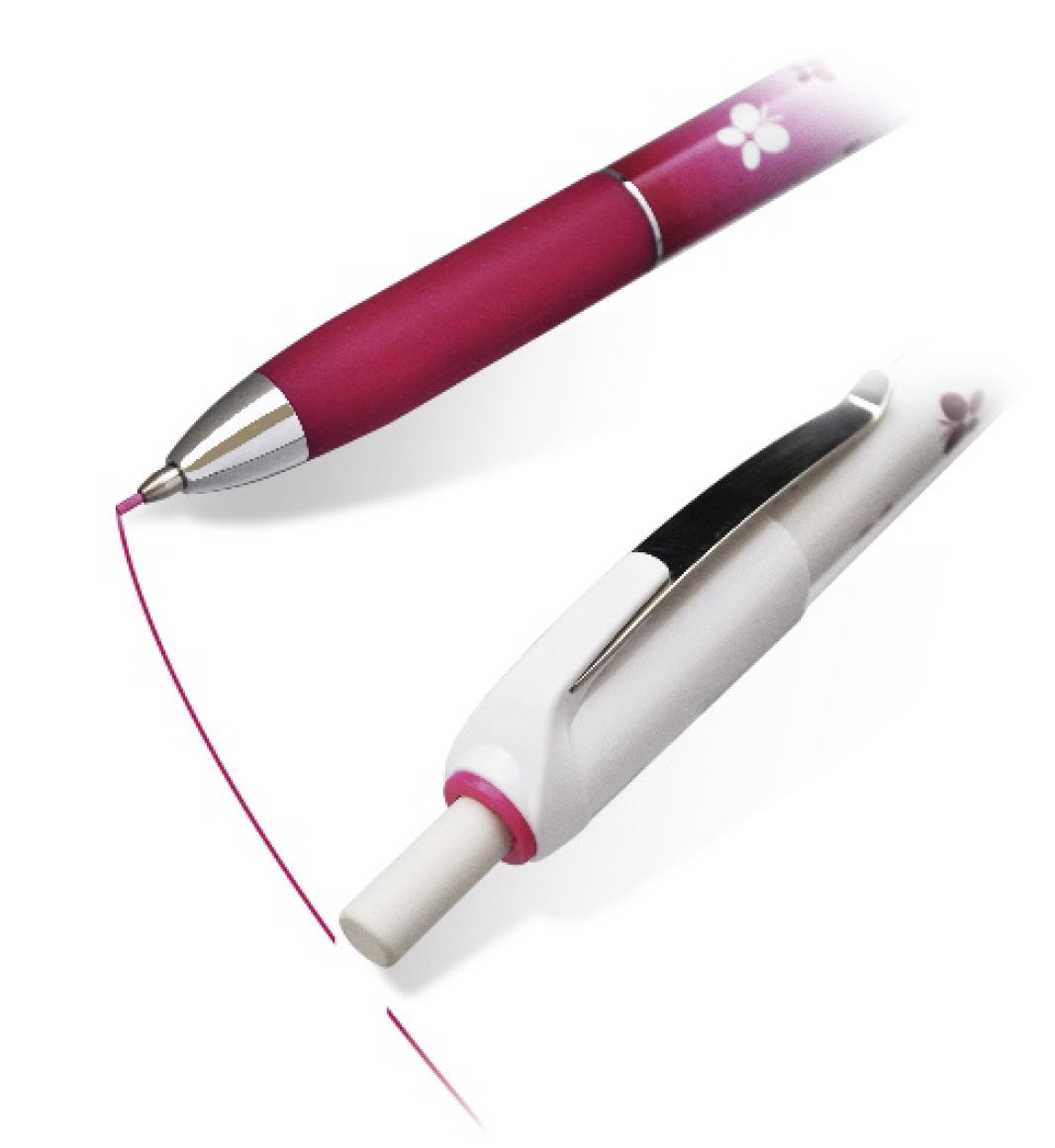
| Sewline 0.9mm mechanical fabric pencil | Advances its fabric-marking lead without sharpening; compatible refills are available. | Use light pressure and test removal with the intended eraser or water method. |
| Sewline Trio: white/black/tracer | Two contrasting leads and an ink-free tracing point in one body. | The third point is a tracer, not a third colour. Check the exact Trio version. |
| Sewline 1.3mm Tailors Click Pencil | A thicker lead option to compare with the 0.9mm pencil. | This is a disposable pencil, not a refillable 0.9mm system. |
| Kawaguchi chalk pencil | A familiar pencil shape with a brush cap. | The point needs maintaining. A brush cap does not guarantee complete removal. |
| Sodeyama 4.0mm Click Chalk Pencil | A click-style chalk pencil with a much thicker core. | Use its matching 4.0mm chalk refills; judge the actual drawn line on a scrap. |
A fine pencil can be especially useful for matching points and small patchwork pieces, where a consistent guide is easier to follow. On a soft, lofty or stretchy fabric, however, check whether the point drags the cloth as you draw. Increasing pressure to force a stronger mark can make both accuracy and removal worse.
The single-colour Sewline pencil and the Trio suit different habits: one keeps a favourite colour ready; the other makes it easier to switch between light and dark cloth. Choose by the fabrics you use, rather than buying several colours you cannot see clearly on your projects.
Chalk and hera: useful alternatives to ink
Triangular tailor’s chalk gives you an edge to maintain and a broad body to hold. A freshly prepared edge can draw a much finer line than the size of the chalk suggests. It is worth considering for long construction and cutting lines. Keep loose dust away from the right side of the work and check how the particular chalk removes; solid chalks are not all interchangeable.
The Bunka chalk wheel delivers powder through a small wheel, so there is no pencil point to sharpen. It is another option for following a ruler or a long outline. Try both a straight line and a curve: the position of the wheel feels different from a pen tip. Then handle the test piece as you will handle the garment and see whether the line remains usable.
A hera marker makes an indentation or crease instead of laying down ink. It can be useful when a fold guide is enough. Check the mark from your working angle; a crease that is obvious under side lighting may be difficult to follow in another position. Test that the pressure does not damage or permanently mark the fabric.
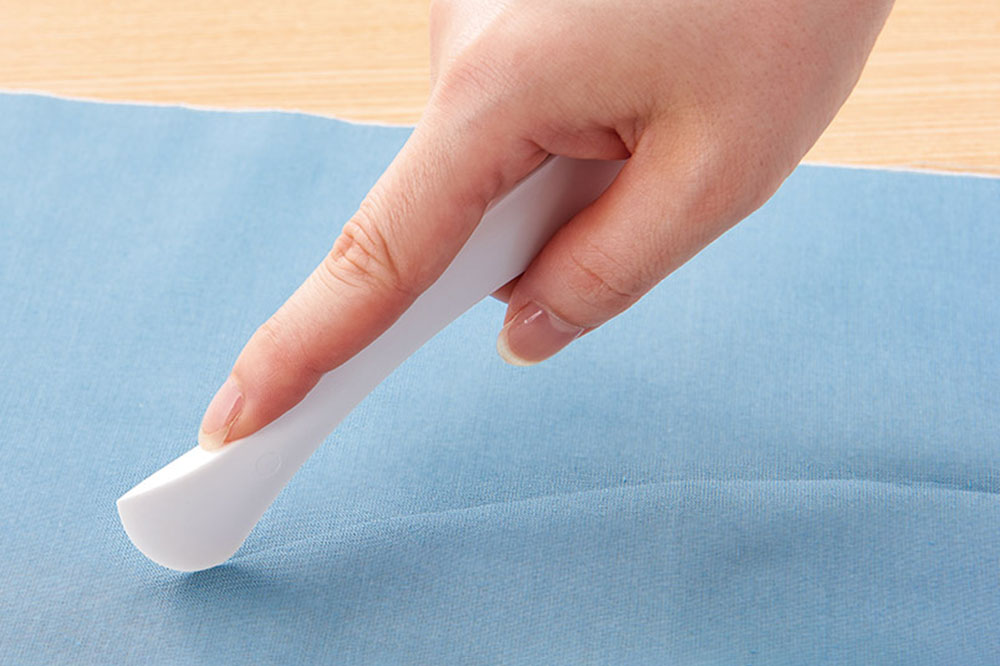
For more detail, compare chalk wheels and pencils, or read how to choose the right refill.
Remove the mark in the right order
Adger pale blue needs enough plain water. Where the fabric allows, immerse the marked area, or use a water-soaked towel to tap and disperse the ink. A quick mist, steam or a cotton bud can leave ink that becomes visible again. Let the cloth dry before deciding the mark has gone. Use soap or detergent only after the blue mark has been removed completely, and remove the mark before pressing.
Keep the ink systems separate. Adger purple and pink fade naturally and can also be removed with water. If you use an eraser pen, it must be the Adger eraser intended for those inks. Do not trace over an Adger mark with another ink, including a similar colour from another brand. Disappearance time depends on the cloth, pressure, ink quantity, temperature and humidity; it is not a fixed number of hours.
Clover’s white marker has its own instructions. Its marks can be removed by ironing or water washing. That does not make ironing a removal method for the blue, purple and pink Adger pens. Choose a removal method the fabric tolerates and try the entire process on a spare piece first.
Three problems that change the choice
“The white pen seems empty.”
Some white fabric inks develop after a short delay. With Clover’s white marker, pause before drawing over the same line again. Repeated applications made before the first line appears can leave more marking material than you intended.
“The line vanished before I could sew it.”
Natural fading is not a timer. Test for your actual interval between marking and stitching, and avoid drawing an entire time-consuming project in an air-erasable ink at once. For work spread over several sessions, choose a different system if your trial does not leave enough working time.
“It disappeared when wet, then I could see it again.”
Judge removal after the test fabric has dried, not while a damp patch changes its colour. If a line or outline remains, follow the exact product’s removal directions. Do not try to solve an unidentified mark with an iron or a mixture of erasers.
A small test that answers the right questions
Keep separate labelled scraps for each product. Draw a short straight line, a curve and a placement dot, then wait until you would normally sew. Check how clearly you can follow the marks, whether handling changes them, and whether they come out completely by a method the fabric tolerates. Keep the successful scrap with the project.
You do not need one pen to handle every job. A useful selection covers the cloth you sew most often, the line you need and a removal method you can actually use.
Explore fabric markers, chalks, pencils and matching refills · Compare air-erasable and water-erasable ink
