
Sewing Tips & Tool Advice
Screw Punch or Hammer-Driven Hole Punch?
Eight Needles Journal · Punching & finishing
For small round holes, a screw punch is worth considering when hammer blows are inconvenient. A hammer-driven leather punch may suit an established leatherworking bench. Choose by the operating action, the opening you need and the material—not simply by the word “punch” on the packet.
Compare four different actions
| Type | How it cuts | Useful buying question |
|---|---|---|
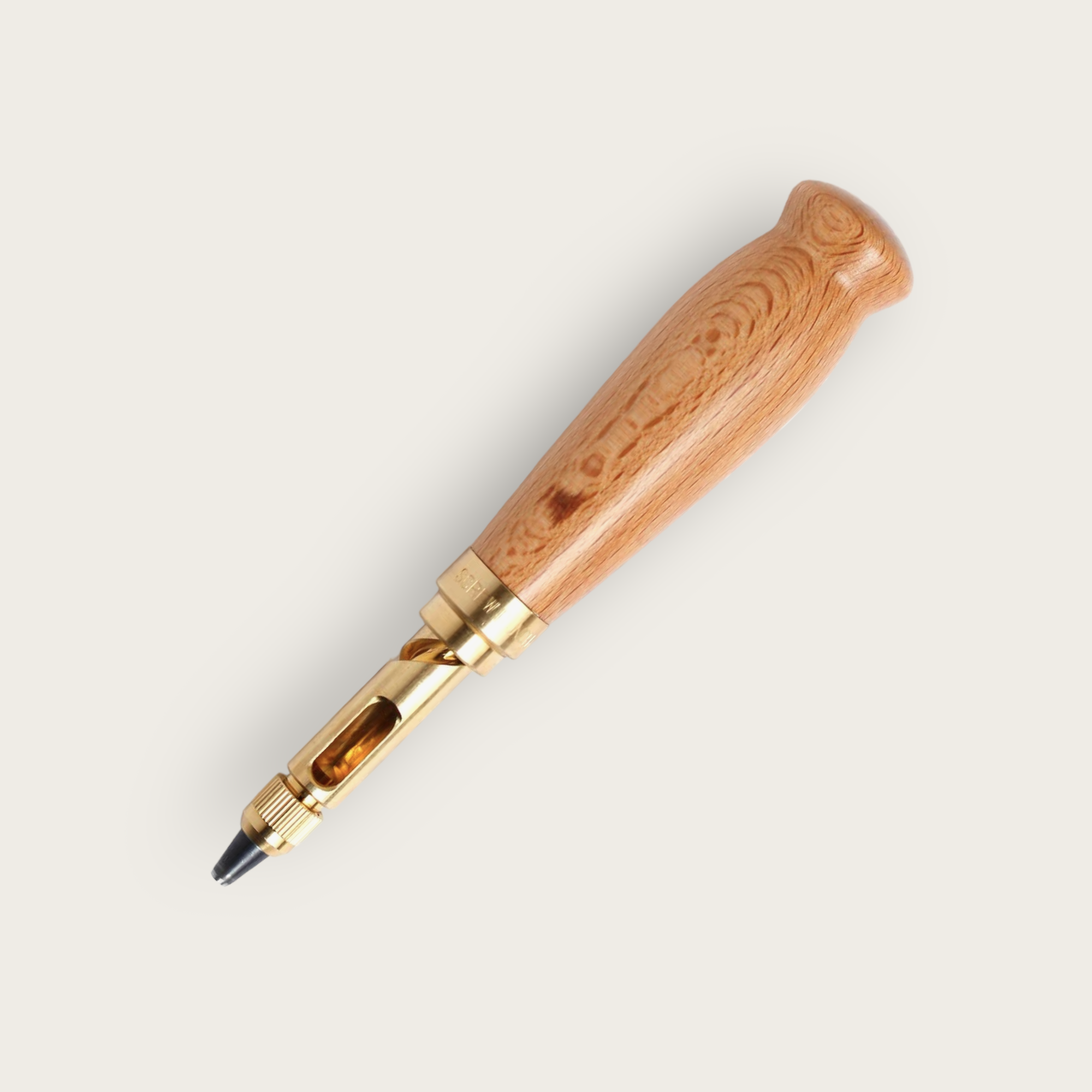
| Screw punch, such as Nonaka | Downward pressure drives a rotating circular blade | Can I support this material flat and choose the required compatible tip? |
| Hammer-driven leather punch, such as SK11’s 3mm punch | A strike drives the cutting edge into supported material | Do I have the correct striking tool, backing and suitable workspace? |
| Rotary leather-punch pliers | Squeezing the handles brings a selected cutter against its receiving surface | Can the jaws reach the hole position, and is the grip comfortable? |
| Hand-operated sewing punch, such as Clover N Punch 21-311 | A fixed 3mm circular blade makes the preparation hole; follow the supplied instructions | Does this fixed diameter meet the sewing task? |
The circular cutting tip can look similar across tools that work differently. A wooden handle alone does not establish whether striking is permitted. Follow the instructions for the exact model.
When the screw mechanism makes sense
The Nonaka is intended for materials including leather, cloth and paper. Its rotating blade allows holes away from an accessible edge when the piece can be laid flat over a suitable board. Hold the material securely: a light or small piece can turn with the blade if it is left free to move.
Eliminating the hammer strike is useful in a shared workspace. It does not make the entire project silent. Fitting rivets or snaps afterwards may still require a separate setting operation, so consider that stage before choosing a tool chiefly for quiet working.
Nonaka offers eleven replacement diameters from 1.0 to 5.0mm. The body-only version includes no blade; the 3mm version includes one 3mm blade. Choose the needed size before comparing complete purchase costs.
When a hammer-driven punch fits the job
A conventional leather punch has a simple working arrangement: the appropriate striking tool, a correctly supported receiving pad and the selected cutting diameter. It can make sense when these are already part of your bench and the material is within the punch’s stated use.
The impact and its transmission through the work surface matter in a home setting. Adding a soft layer somewhere in the setup does not guarantee quiet operation, and the cutting edge still needs suitable support. Do not strike a screw-punch handle as a way to get through difficult material.
Consider access and hand effort
Punch pliers avoid hammering too, but the distance their jaws can reach from an edge limits placement. Before buying for a large panel, compare the required hole position with the actual throat depth. Try the handle span if possible; squeezing pliers and pressing a vertical handle ask different things of your hand.
A fixed-size sewing punch is another option when its diameter is the one you need. Check its method separately instead of assuming that every non-screw punch belongs in the hammer-driven group.

Compare the hole, then the whole purchase
Test the intended material, backing and fitting together. A neat opening in paper is not a test of a reinforced fabric bag or a leather strap. Check both faces, the position and the fit after the fastener has been installed correctly.
Include any missing blade, punch pad, striking tool and fastener-setting equipment in the comparison. The best choice is the setup that completes your particular job comfortably and consistently, rather than the one with the greatest number of pieces in the photograph.
Related small-hole tools
 Nonaka Seisakujo Screw Punch with 3mm blade
 Bunka Eyelet Punch (3mm hole)
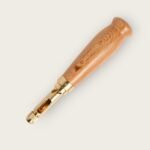 Nonaka Seisakujo Screw Punch – BODY ONLY