
Sewing Tips & Tool Advice
Bamboo, Brass or Clear Plastic Sewing Rulers?
Eight Needles Journal · Measuring
Three rulers can measure the same seam and still feel quite different in your hand. Okane’s bamboo rulers, Cohana’s brass interpretation of a traditional bamboo scale, and Bunka’s clear pattern ruler each bring something useful to the sewing table. Their markings, dimensions and intended jobs explain the differences better than choosing a material alone.
Bamboo: a narrow scale for direct measuring
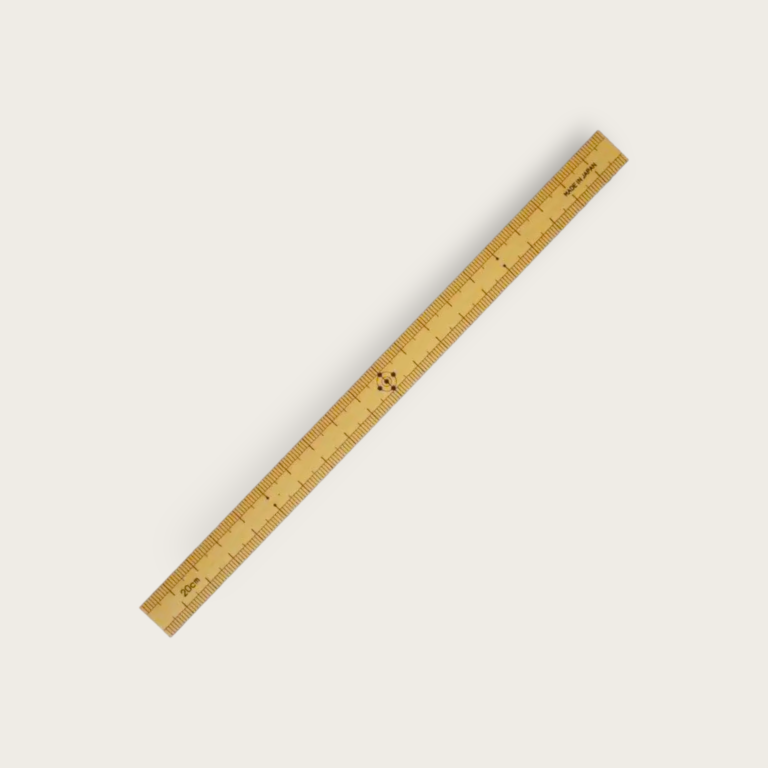
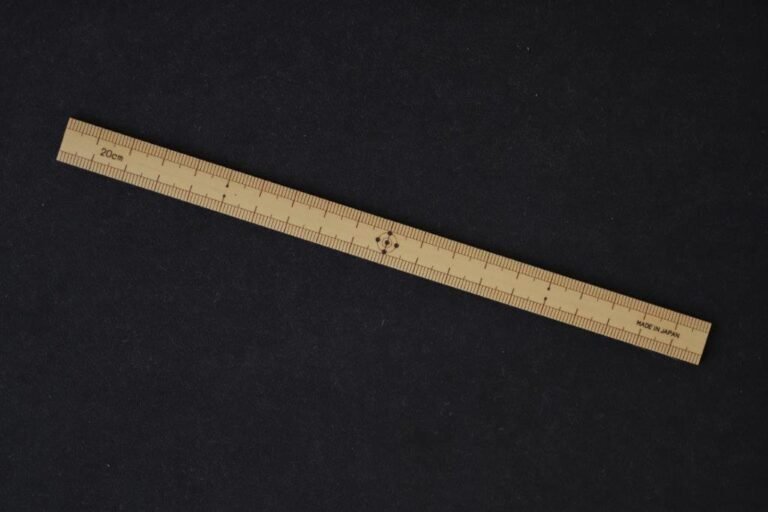
The Okane sewing rulers are metric, with 20, 30 and 40 cm options, each 13 mm wide. Their narrow shape is useful beside small pieces and in a compact sewing kit. Select the required length rather than assuming that a group photograph shows a multi-ruler set.
A traditional appearance does not establish the units. Japanese rulers also exist in older scales, so check that the graduations match the pattern you are following. Inspect the zero point and the edge before measuring from the end.
Cohana: the bamboo silhouette, made in brass
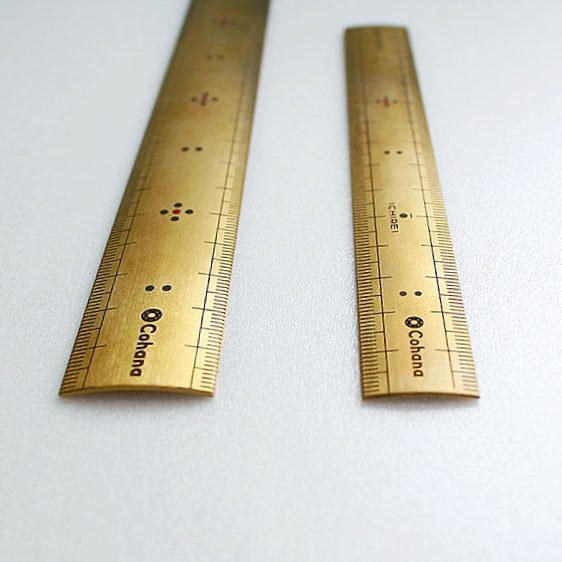
The Cohana brass ruler takes its shape from a traditional bamboo scale, but its body is brass. A gently curved profile helps it lift from a flat surface. The marks are laser engraved, with traditional star symbols rather than a conventional row of numbered centimetres.
The two lengths have different widths and thicknesses:
| Version | Overall dimensions |
|---|---|
| 15cm, 45-047 | 150 × 18 × 2mm |
| 30cm, 45-048 | 300 × 25 × 3mm |
Dimensions are approximate. The 30 cm version is wider and thicker as well as longer, so compare the whole size when choosing.
Readability matters as much as material
Before choosing, consider whether the markings are easy for you to read under your work light. Brass can catch reflections; an unnumbered scale asks you to recognise its pattern of marks. A clear grid ruler lets you see the line underneath, but its printed colour still needs enough contrast with the paper or fabric.
Bunka: seeing the pattern beneath the ruler
For adding seam allowances on paper, the clear Bunka 50cm Pattern Ruler with Line offers a different way to work. This version has a 5mm grid, a 12mm seam-allowance line and a 15mm translucent green band. Its 1.2mm body uses six layers of 0.2mm PVC film, protecting the printed markings inside the construction.
For example, when adding a 15mm allowance to a straight pattern edge, the band gives you an internal reference to align with the existing line. An opaque ruler calls for a different alignment method because you cannot see through its body. The Bunka ruler is for measuring and drawing; it is not suitable as a cutting edge.

Which material solves your task?
| Task | Useful feature | Compare |
|---|---|---|
| Check a short distance | A narrow, easy-to-position body | Okane bamboo or the shorter Cohana brass ruler |
| Add parallel allowances | See-through body and internal guides | Bunka clear grid ruler |
| Guide a blade or press a hem | Construction specifically approved for that operation | A dedicated cutting or ironing ruler |
Choose the working conditions as well as the material
For a narrow ruler beside the sewing machine, compare the Okane lengths. For the tactile brass finish and traditional scale, compare the two Cohana versions. For visible alignment guides across a paper pattern, look at Bunka’s grid.
Keep measuring rulers away from the hot iron. For the Cohana brass ruler, avoid high-temperature use, abrasive metal polish that could remove the red paint, and rubbing the ruler forcefully on fabric. Brass changes colour with use, while PVC can deform with heat. Follow the care instructions for the exact ruler. Neither a traditional appearance nor a metal body makes a ruler an ironing tool.
