
Sewing Tips & Tool Advice
Storing Rotary Cutters and Spare Blades Safely
Eight Needles Journal · Rotary cutting
Good rotary-cutter storage starts with a covered blade and a place where other tools cannot press its controls. Spare blades need their own protection. A tidy pouch can still be the wrong pouch if the cutter is squeezed inside or a loose blade disappears beneath the contents.
Know how your cutter closes
| Mechanism | Example | Before putting it away |
|---|---|---|
| Manual sliding blade cover | OLFA RTY-4, RTY-1/C and RTY-2/G | Move the cover fully into its closed position |
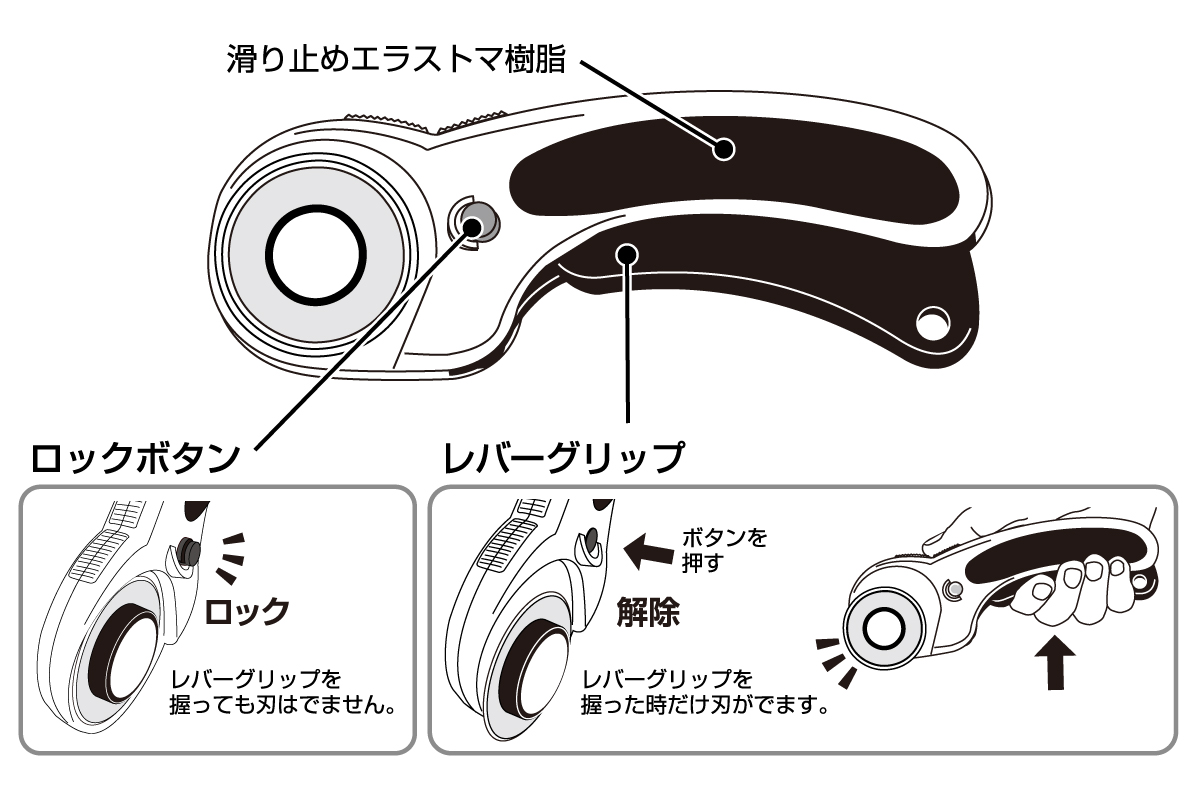
| Blade exposed by squeezing the grip | OLFA Safety Rotary Cutter 156B | Release the grip, then engage the lock with the blade covered |
| Manual cover with a button | Clover 28mm and 45mm rotary cutters | Close the cover using the model’s control |
These examples are model-specific. A yellow handle does not tell you how it closes, and an automatic return does not replace a storage lock where one is provided. Check the covered edge visually without touching it. A cracked cover or unreliable lock needs attention before the tool returns to the kit.
Measure the cutter, not just its blade
The diameter on a rotary cutter describes the wheel. Its covered head, handle and rear fastener also need room. Measure the complete closed tool and compare it with the usable inside dimensions of a case, including the opening.
A case should close without pushing the blade-cover control, squeezing a trigger grip or bending around the head. Leave space to lift the cutter by its handle. Packing it tightly among rulers, scissors and weights can defeat an otherwise sensible arrangement.
Compare three storage approaches
A fitted case: useful for carrying a cutter when its stated compatibility includes your exact model. Check that the tool is held without pressure on its controls and that the closure works with the cutter inside.
A divided drawer or box: convenient at home when the closed cutter has its own compartment and cannot roll beneath fabric. Keep the handle easy to see. The box itself should be stored away from children and other people who might reach into it without recognising the contents.
A general sewing pouch or tool roll: helps organise a kit, but soft fabric is not a substitute for the cutter’s cover. Protect the head and prevent the cutter moving into neighbouring tools. Reject an arrangement that leaves the head protruding or allows an exposed edge to touch the lining.
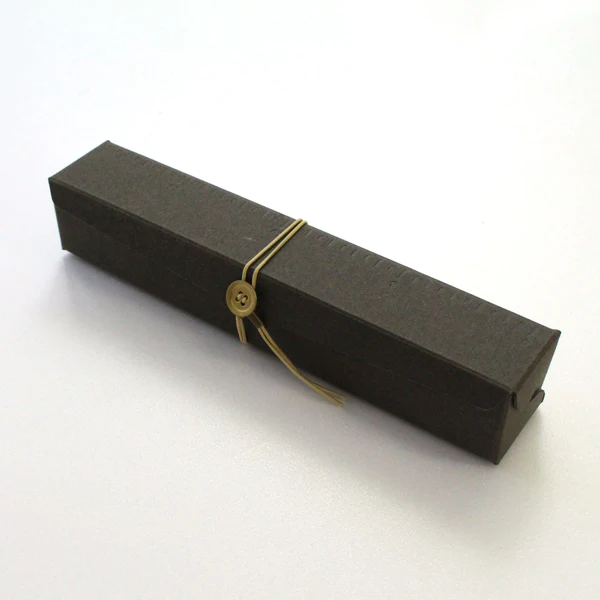
The Cohana Paperboard Tool Case pictured above is approximately 203 × 39 × 37mm overall and opens into a tray. Those are not usable internal dimensions, and it should not be assumed to fit a rotary cutter. Its paper construction can be damaged by sharp objects, moisture or heavy loads; the two built-in magnets do not make it a container for loose blades.
Keep new blades and used blades separate
Leave unused blades in their original protective case with the product code visible. Label the packet with the matching cutter model if that helps. Separate different diameters and smooth, perforating or decorative edges.
Use a secure, puncture-resistant container intended for discarded blades, clearly separated from new refills. Do not put an old blade loose in the sewing bin or back among unused replacements. Follow the disposal arrangements where you live; a blade being too blunt for fabric does not make its rim harmless.
A routine that works during sewing and after it
Close the cover at every pause, including while moving a ruler or pattern weight. Put the cutter in one visible resting place, clear of the edge of the table. At the end of the session, check that spare blades are contained and the closed cutter is secure before moving the bag.
If a blade or cover behaves abnormally after a drop, stop using the tool and inspect it according to its instructions. Storage protects a working mechanism; it cannot compensate for damage.
Keep the model details with the kit. Our replacement-blade guide compares the codes and packet quantities, and our cutting-mat guide covers storing the surface that goes with the cutter.
Browse cutting tools and accessories, or return to rotary-cutter tips and advice.
