
Sewing Tips & Tool Advice
Needle Minders, Needle Rests and Pin Holders
Eight Needles Journal · Small sewing tools
Small holding accessories can look similar while serving different purposes. A needle minder, a needle rest and a pin holder should be chosen from their stated functions, not simply from their decorative form.

Compare the three functions
| Accessory | How it is used | Useful distinction |
|---|---|---|
| Cohana Sakura wooden needle minder | Flower on one side of the fabric, backing magnet on the other | A resting place that can stay near the stitching area. |
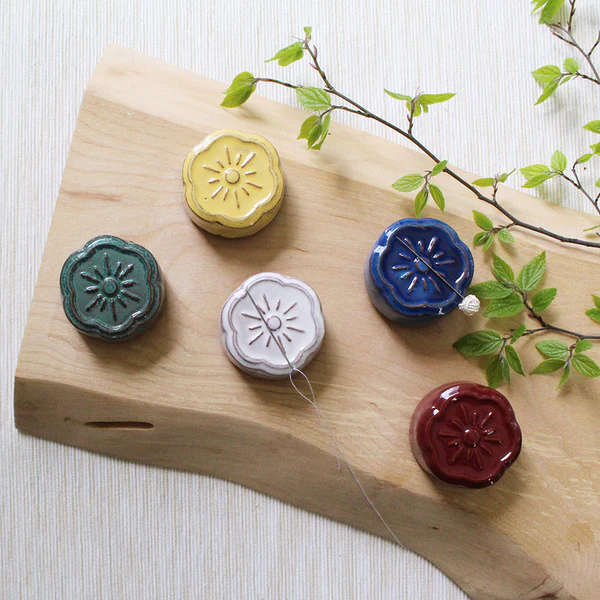
| Cohana Awaji Kawara needle rest with polisher | A ceramic magnetic rest on the table, with a separate polishing opening in its side | Resting a needle on top and polishing it are different actions. |
| Cohana Hasami magnetic holder | A spool-shaped tabletop holder for compatible pins and needles | Its deeper form suits a different arrangement from a small flat minder. |
A threaded needle you set down for a moment needs a clear resting place. A collection of pins needs enough room to pick them up individually. Neither task requires filling every available part of a holder.
Identify what needs holding
Decide whether you need a place for one working needle or a container for many pins. Read the product's construction and instructions. A holder intended to rest on a table may not be suitable for attaching to fabric or moving with the work.
Attach a fabric-mounted minder carefully
Test the hold on a spare piece of the project fabric. Position the front and backing pieces on a clear area, away from finished stitches that could be compressed. Check whether the weight pulls on the cloth or the edges catch the working thread. Move it as the stitching area changes.
Separate the two pieces in a controlled way and avoid letting them snap together through delicate fabric. Before removing the hoop or folding the work, take off the needle and both parts of the minder.
Use the polisher only when needed
The Awaji Kawara rest has a polishing opening in its side. Follow its instructions: insert the needle point gently, use the specified pressure at the underside and withdraw carefully. Wipe away any abrasive dust before returning the needle to the fabric.
Polishing is not an automatic step after every use. Excessive polishing can scratch a needle and encourage rust, and a short needle can disappear into the opening. Check the needle’s own care guidance, especially for coated finishes. Replace a bent or damaged needle instead of treating polishing as a repair.
For Misuya Chubei needles, use the rest without the polisher. Their maker advises against abrasive needle care because it can disturb the lengthwise-polished surface and create roughness that catches fabric. Replace a rusty or persistently snagging needle instead. The magnetic resting surface and the polishing opening are separate functions; you can use one without using the other.
Check compatibility
If the accessory uses a magnet, confirm that it retains the needles or pins you actually use. Follow any guidance about placement near other equipment. A magnetic feature does not make an item a secure enclosed storage box.
Keep sharp items accounted for
At the end of a session, return the working needle to a labelled container. Check the holder and the fabric separately. Decorative accessories become more useful when they support a consistent habit rather than hiding small sharp objects from view.
During a short pause
You pause with one threaded needle in use. Place it on the appropriate rest during the short pause, then return it to labelled storage when packing away. Keep the distinction between a working rest and secure storage clear.
Check before choosing
- Am I holding one needle or many pins?
- How is the accessory meant to be positioned?
- Where does the needle go after sewing?
Related tools to compare
Compare the size, material and included parts on each product page against the task above.
 Cohana – Sakura Edition 2025 – Wooden Needle Minder
 Cohana-Awaji Kawara Magnetic Needle Rest with Needle Polisher in 5 colours
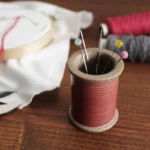 Cohana-Hasami Magnetic Pin Holder in 5 colours