
Sewing Tips & Tool Advice
Sewing Tweezers: Length, Access and Gentle Handling
Eight Needles Journal · Small sewing tools
Tweezers can help retrieve short thread ends or position small pieces where fingers are awkward. Their usefulness depends on reach, tip shape and how gently they can grip the material.

Two sizes, different working spaces
| Option | Dimension | What to compare |
|---|---|---|
| Bunka tweezers | 75mm overall | A compact tool for close work; check that the short grip suits your fingers. |
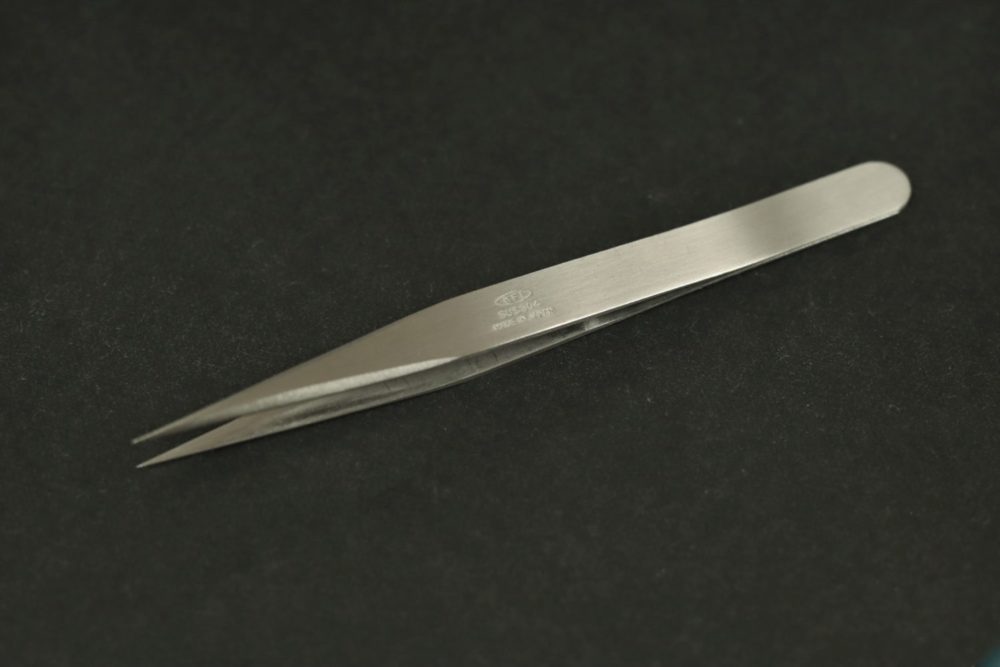
| KFI K-4 MM | 130mm overall | More reach, fine pointed tips and a rounded grip end. |
| Curved-tip tweezers | Varies by model | Can change the approach angle and keep the hand out of the line of sight. |
| Broad or rounded-tip tweezers | Varies by model | A wider contact area, with less access to tiny gaps than a fine point. |
Length is only one part of the choice. A fine tip may reach a single thread more easily, while a wider contact surface may suit a small fabric piece. Compare the actual tip shape and opening rather than assuming every pair sold for sewing behaves alike.
Choose for the space
Compare a compact pair with a longer model against the task you actually need to perform. Extra reach can help access, but it can also feel less precise in a very small area. Read the stated tool dimensions rather than judging a cropped photograph.
Check alignment and spring pressure
Close the tips gently and look at how they meet. A pair that crosses or leaves a gap at the working end may struggle to catch a short thread. Test with a loose length of the thread you normally use, without pulling against fabric.
Notice how much effort it takes to hold the tips together. A wider opening is not automatically more comfortable, and a stiffer pair is not automatically more precise. The useful combination is a reliable grip that you can control without squeezing hard.
Grip only what you intend
Separate the thread or component from the fabric before closing the tips. Avoid scraping along a delicate surface or pulling hard on a thread that is still stitched in place. If the work resists, inspect the cause.
Keep maintenance tasks separate
When using tweezers around a sewing machine, follow the machine's safety and maintenance instructions, including switching it off when required. Tweezers do not justify reaching into moving machinery or forcing a component out of position.
Remove a thread after unpicking
A small thread end remains after unpicking. Isolate it visually and grip only that end with suitable tweezers. If it will not move freely, locate the remaining stitch rather than pulling enough to distort the fabric.
Protect the tips between projects
Wipe off lint and keep the tool dry. Fit its protective sleeve or give it a separate compartment so other tools cannot strike the points. Do not use precision tweezers as a lever or screwdriver. A bent tip changes how the two sides meet.
Check before choosing
- How much reach is needed?
- Can I isolate the item to grip?
- Are the tips clean and undamaged?
Related tools to compare
Compare the size, material and included parts on each product page against the task above.
 Bunka Tweezer 75mm
 KFI Stainless Tweezers 130mm K-4 MM
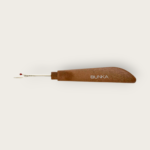 Bunka Seam Ripper