
Sewing Tips & Tool Advice
Choosing Refills for Sewing Pencils
Eight Needles Journal · Marking
Match the pencil first, the diameter second, and the colour third.
A click mechanism does not necessarily mean a pencil is refillable. Even within the Sewline range, the 0.9mm fabric pencil and the 1.3mm Tailors Click Pencil are different systems. Here is how to identify what belongs in your sewing box.
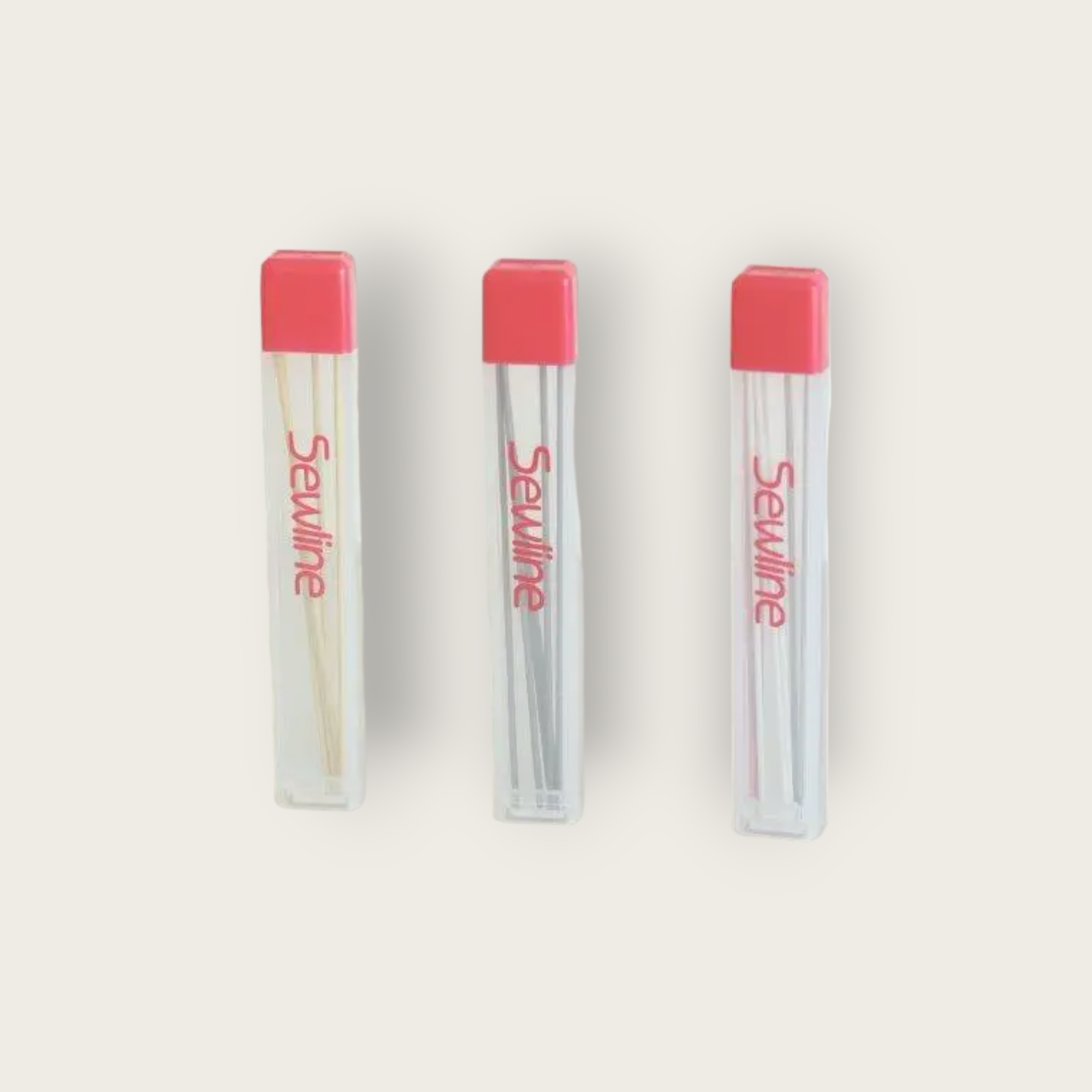
Which refill goes with which tool?
| Your tool | What to choose |
|---|---|
| Sewline 0.9mm mechanical fabric pencil | Matching Sewline 0.9mm fabric-marking leads. |
| Sewline Trio fabric pencils | Matching Sewline 0.9mm fabric-marking leads for the pencil functions; the ink-free tracer is not a coloured lead. |
| Sewline 1.3mm Tailors Click Pencil | A replacement complete pencil when used up. This model is disposable; the 0.9mm refill pack is unsuitable. |
| Sodeyama 4.0mm Click Chalk Pencil | Matching Sodeyama 4.0mm chalk refills. |
| Bunka chalk wheel | Its matching powder-chalk refill, not a pencil lead. |
| Clover iron-and-water-erasable white marker | The matching white-marker refill. This is an ink refill, not a chalk-pencil lead. |
Look for the exact model on the body, packaging or original order. If an older pencil has lost its label, do not use colour or barrel shape alone to identify it. A matching diameter is also not proof that another brand’s mechanism will work correctly.
The Sewline 0.9mm system
The single-colour mechanical fabric pencil and compatible Trio models use 0.9mm marking leads. The leads are formulated for fabric; ordinary graphite is not an equivalent refill simply because it fits the diameter.
A new colour can change how useful the pencil is on your usual materials. White is a starting point for dark fabric, while a darker or contrasting colour may be easier to follow on pale cloth. On a print, test the line across several parts of the design before settling on one colour.
Use the pencil’s compatible eraser or the specified water-removal method, checking the result on a scrap. A dry marking lead is not a promise of permanent marking, and its removable description is not a promise of complete removal from every fabric.
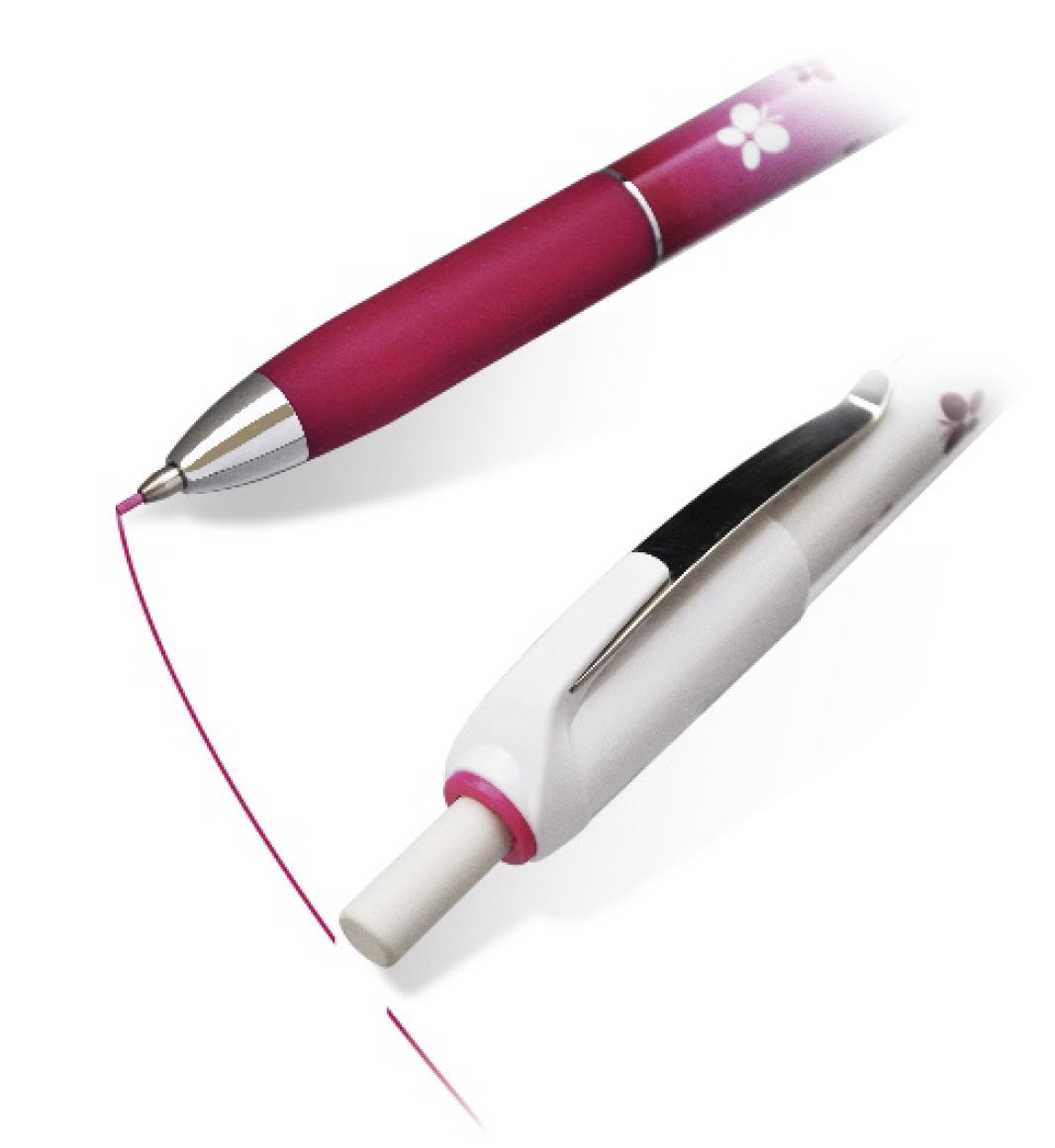
The 1.3mm pencil is a different purchase
The Sewline 1.3mm Tailors Click Pencil advances a thicker marking lead without sharpening. It is a complete, disposable pencil. When it is used up, choosing the correct replacement pencil avoids buying a refill that the tool was not designed to take.
The same distinction matters when comparing value: a refill pack, a complete pencil and a pencil supplied with spare leads contain different things. Compare the contents as well as the price.
Refill according to the mechanism
Keep the instructions for your exact model. Sewline’s single mechanical pencil and rotating Trio do not have identical loading procedures. For the Trio, new lead is loaded into the top of the lead tube, not forced backwards through the writing tip.
If the pencil will not feed after refilling, stop before repeatedly forcing it. A short fragment or a blockage may prevent a new lead advancing. Follow the model’s clearing instructions, and avoid pushing an oversized or unidentified refill into the mechanism.
Keep the next refill easy to find
Store one labelled refill case beside the tool it fits. Keep powder, ink refills and solid leads separate, and leave new leads protected until you need them. A small note with the model and diameter is more useful than trying to recognise a loose lead months later.
Sewline 0.9mm leads · Sewline 1.3mm complete pencil · Sodeyama 4.0mm refills
