
Sewing Tips & Tool Advice
Pincushion or Magnetic Pin Holder?
Eight Needles Journal · Small sewing tools
A pincushion holds pins by insertion; a magnetic holder gathers compatible metal items through attraction. The difference affects how you pick up and put down pins, as well as how the holder should be moved and stored.
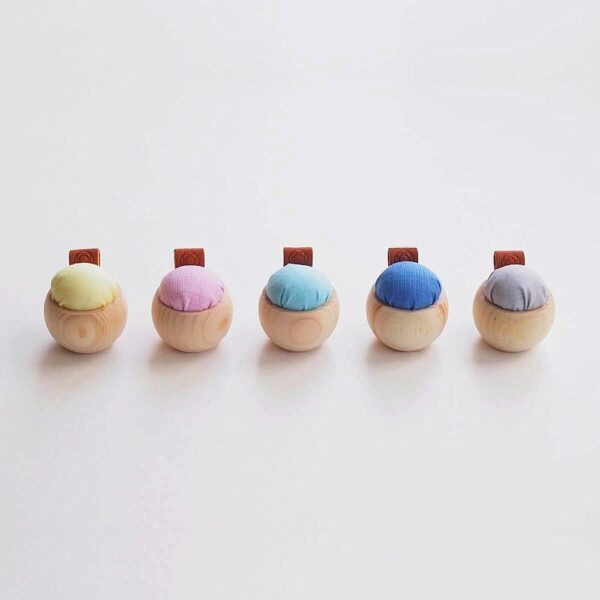
Compare three ways to keep pins close
| Holder | Best reason to consider it | What to check |
|---|---|---|
| Fabric pincushion | You want to place individual pins in a chosen position. | Usable depth, firmness and a base that stays steady. |
| Magnetic tray or spool | You want to put down compatible pins without pushing them into a filling. | Holding area, magnet compatibility and how easily one pin can be picked up. |
| Small needle minder | You need a temporary resting place for the working needle. | It may be too small for a large collection of waiting pins. |
A tiny magnet can be useful for one threaded needle yet crowded with a handful of long pins. Conversely, a large tray may occupy more room than a small hand-sewing project needs. Compare the number and length of pins you actually use, rather than the empty holder alone.
Try the working movement
Consider whether you prefer placing each pin into a cushion or setting it onto a holder. Keep the receiving area where it can be seen without reaching across cutting tools. A decorative shape is useful only when the pin storage remains clear and accessible.
Keep short sewing needles separate from long headed pins if mixing them makes retrieval awkward. In a fabric cushion, do not push a short needle out of sight. A labelled needle case can be a clearer place for needles you are not currently using.
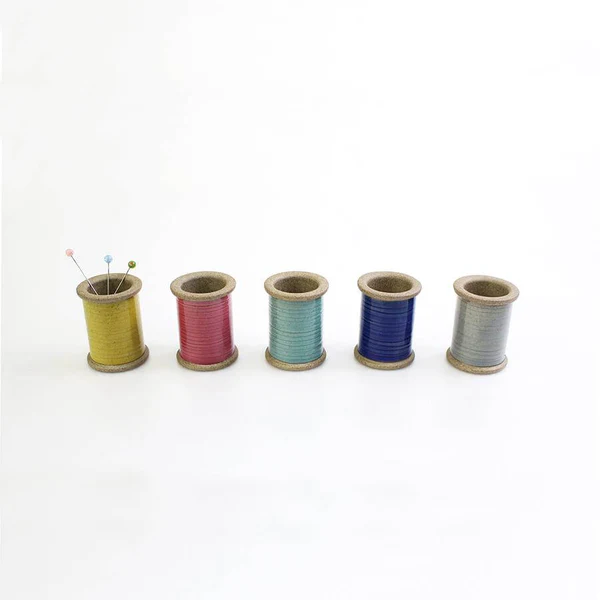
A magnetic spool works differently from a cushion
The Cohana Hasami holder has a ceramic body, an internal magnet and a felt-lined interior. It can be useful for blunt-tipped needles that are awkward to insert into a conventional cushion. Keep the pins accessible above the opening and avoid overcrowding it.
Ceramic can chip or break if dropped. Position any holder away from the edge of the table, and check that machine vibration is not gradually moving it. Magnetic attraction is useful retention during ordinary handling, not a guarantee that pins stay contained in a fall.
Check what it holds
Do not assume every needle or pin is strongly attracted to a magnet. Check compatibility and the holder's instructions. Keep magnetic holders away from items whose manufacturer advises avoiding magnets.
Contain the kit for travel
Neither an open cushion nor an uncovered holder should be treated as a sealed travel container. Protect exposed points and check the contents before moving the kit. Keep the holder out of reach of children and account for loose pins during cleanup.
Moving a project between rooms
You move a project between rooms. Transfer working needles and pins into protected storage before carrying an open holder. The tabletop arrangement that is convenient while sewing may not contain sharp items adequately when tilted or bumped.
Make cleanup easy to check
Start with a manageable number of working pins and account for them when you stop. Check fabric folds and the area beneath the project before packing it away. A magnet can help retrieve compatible dropped pins, but visual checking still matters. Keep damaged pins separate from the usable supply.
Check before choosing
- Which placing motion suits my work?
- Does the holder retain my pins?
- How will exposed points be contained during travel?
Related tools to compare
Compare the size, material and included parts on each product page against the task above.
 Cohana-Cypress Pincushion in 5 colours
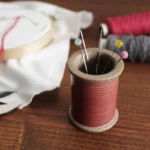 Cohana-Hasami Magnetic Pin Holder in 5 colours
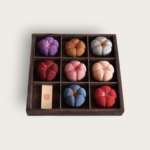 Misuya Chubei Plum Pin Cushion – 8 colours