
Sewing Tips & Tool Advice
Left- and Right-Handed Scissors: Check the Exact Model
Eight Needles Journal · Scissors
Choose scissors for the hand you actually cut with, and check the exact model. The handle shape is only part of the fit: the way the blades overlap also matters. A symmetrical-looking handle is not enough to confirm that a pair is fully left-handed.
Four descriptions that mean different things
| Description | What it tells you | What to check |
|---|---|---|
| Right-handed | The model is intended for right-hand use | Do not assume changing hands gives the same view and handling |
| Fully left-handed, or Japanese “sou-hidari” | Both the handle arrangement and the blade overlap are reversed | Confirm this construction for the selected size and model |
| Left-hand handle only | The handle is adapted for the left hand, while the blades retain the ordinary right-hand arrangement | Whether this matches the way you have learned to cut |
| Suitable for either hand | A stated feature of a particular model | Whether the claim concerns the complete tool or only a handle that either hand can hold |
Japanese product descriptions may distinguish a left-hand handle from a fully reversed pair. Those are different constructions. If you are replacing familiar shears, keep their exact model number or a clear photograph available so that you can compare the same kind of tool.
Use your cutting hand as the starting point
Being left-handed for writing does not necessarily tell you which hand you use for scissors. Some people have always cut with the right hand; others have learned to use an ordinary pair in the left. Your existing habit is useful information when comparing a replacement.
Try the selected pair on spare material where possible. Check whether you can see the cutting line, keep a relaxed grip and guide the blades without pulling the cloth sideways. A different blade arrangement may feel unfamiliar at first, so assess the actual movement rather than judging only how the closed scissors sit in your hand.
One confirmed example: Cohana Seki Mini Scissors
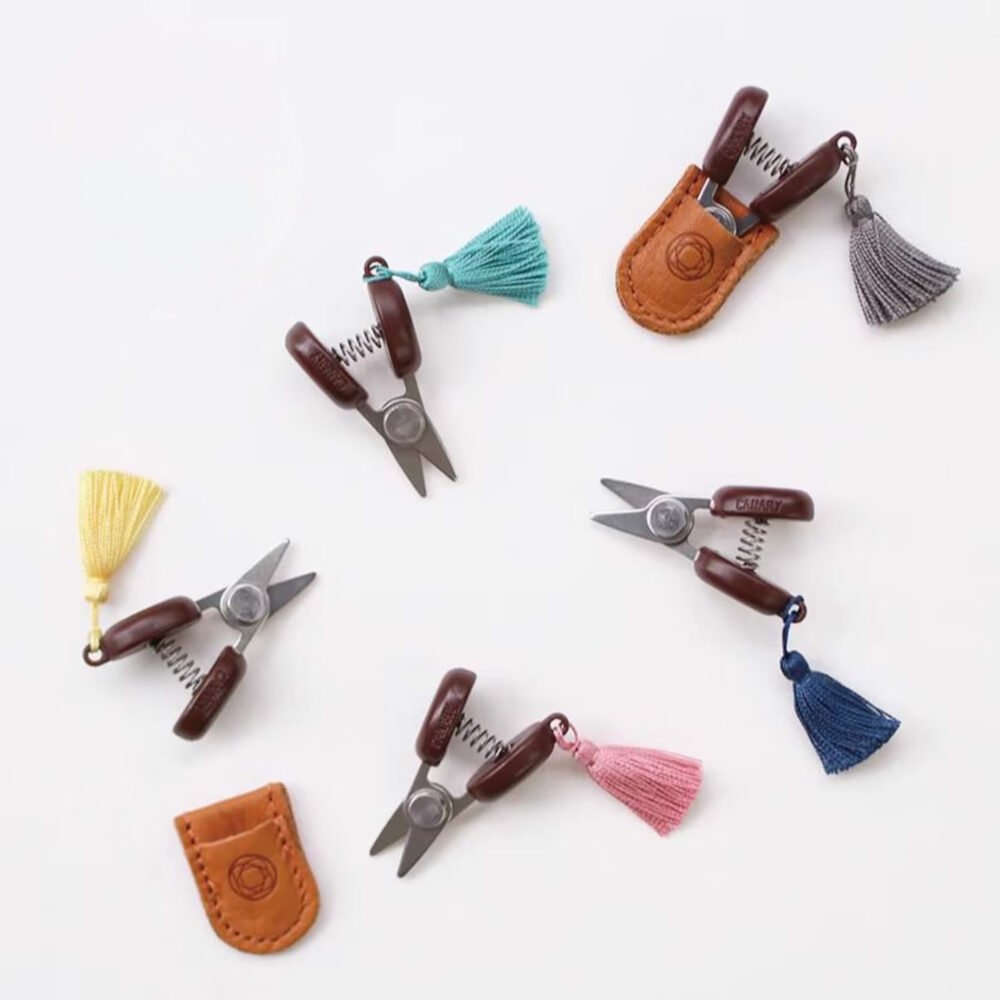
The Cohana Seki Mini Scissors can be used in either hand. They close with a squeeze between the fingers and have no finger rings. At approximately 35mm overall with an 8mm cutting length, they are a compact option for small cuts, rather than a replacement for fabric shears.
That feature applies to this mini-scissors model. It does not establish the handedness of every Cohana product, every pair of thread snips or every Japanese scissor with a similar appearance.
Read right-handed listings literally
The Shozaburo 24cm tailor shears and Gentey 18cm sewing shears linked below are listed as right-handed. Their different sizes do not change that designation. If you need a left-handed fabric-cutting tool, an attractive finish or a comfortable-looking handle is not sufficient reason to choose a right-handed listing.
For a gift, establish which hand the recipient uses for cutting and, ideally, what pair they already find comfortable. When that information is unavailable, another useful sewing accessory can be an easier choice than guessing at scissors.
Keep rotary-cutter compatibility separate
A rotary cutter has a different cutting action and its own setup instructions. Some models support either hand, but that does not tell you anything about a pair of scissors from the same brand. Confirm the named cutter and its required blade arrangement before using it.
Before you buy
- Identify the hand you use for cutting.
- Check the exact model and size, including any left-hand suffix or variant.
- Separate a left-hand handle from a fully reversed blade arrangement.
- Compare comfort and visibility on an ordinary cutting task.
Tools with different stated uses
 Shozaburo tailor shears 24cm (Right-handed)
 Gentey Sewing Shears 18cm (Right-handed)
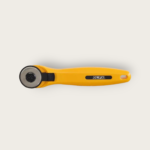 Olfa Rotary Cutter 28mm RTY-1/ C