
Sewing Tips & Tool Advice
Choosing a Thimble for Sashiko Practice
Eight Needles Journal · Small sewing tools
A thimble supports the hand in a particular stitching method, but its shape and wearing position need to suit that method. Read the product instructions and practise with the needle and cloth before settling into a long session.
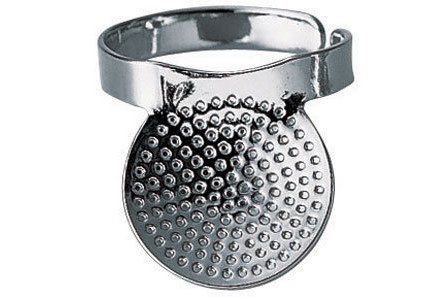
Compare the pushing surface
| Thimble style | How it differs | What matters in practice |
|---|---|---|
| Adjustable ring with a plate | Offers a broad pushing surface towards the palm | Useful for a long-needle running-stitch method; check the plate’s position. |
| Plain ring thimble | Provides a surface around part or all of the finger | Match its position to the point where the needle end meets your hand. |
| Closed fingertip thimble | Covers the end of the finger | Suited to a different pushing movement; size and fingertip clearance matter. |
| Leather thimble | Offers a softer contact with the finger | Designs vary; check the reinforced area, fit and wear. |
The Clover adjustable plate-style thimble shown here is intended to help control a long needle using the palm. Its metal ring and plate should not be confused with a simple band that sits farther up the finger. Choose the design used in the method you are learning, then assess the fit.
Follow the intended position
An adjustable ring thimble is not necessarily worn or used like a closed fingertip thimble. Check the maker's guidance and the sashiko technique you are learning. Adjust the fit only within the product's intended range.
For a palm-supported method, the plate sits towards the palm near the base of the working finger, ready to meet the needle’s eye end. Check the position against the technique’s demonstration. The ring should stay secure without pinching, and the needle should meet the intended surface rather than slipping past its edge.
Start with a short sample
Use manageable needle movements and a thread that fits the eye. The thimble should support controlled pressure, not encourage you to force a resistant needle through unsuitable layers. Stop if the tool or stitching position feels uncomfortable.
Begin with only a few running stitches on the needle at a time. Practise the action of supporting the needle end, guiding the fabric and releasing the stitches before trying to collect a long row. A longer needle gives room for more stitches, but you do not need to use its whole length immediately.

Review the combination
If the process remains difficult, reassess the needle, fabric layers and thread as well as the thimble. Keep the successful combination noted with the project. Comfort comes from the whole working arrangement, not from one accessory in isolation.
If the needle keeps resisting
You are learning a sashiko method with a ring thimble. Check the intended position and practise a short section with comfortable pressure. If the needle resists, reassess the fabric and thread combination rather than asking the thimble to provide more force.
Check before choosing
- Do I understand the wearing position?
- Does the fit remain comfortable?
- Can I stitch without excessive force?
Related tools to compare
Compare the size, material and included parts on each product page against the task above.
 Clover Adjustable Ring Thimble for Sashiko
 Misuya Chubei – Sashiko Needles – Long (Pack of 10)
 Daruma Sashiko Thread – REGULAR 40m in 29 colours