No products in the basket.
Guides
Storing Rotary Cutters and Spare Blades Safely
Eight Needles Journal · Rotary cutting
Rotary cutters are easier to manage when the blade is covered and spare blades remain in protective packaging. A tidy drawer is not enough if a sharp edge can become exposed when someone reaches for another tool.
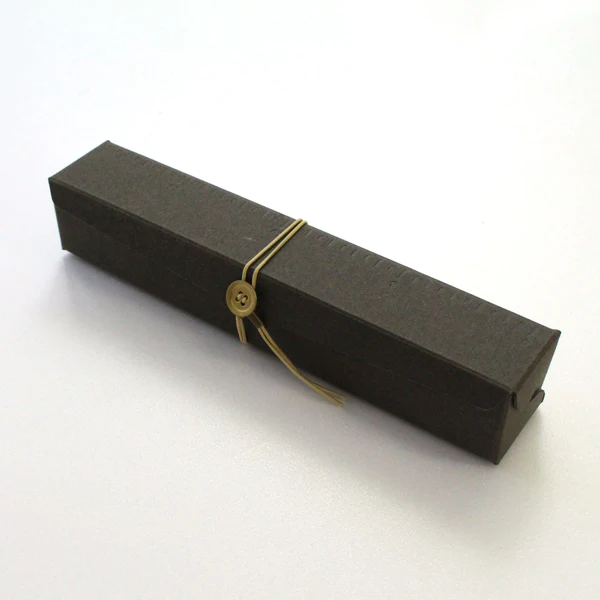
Close before putting down
Use the cutter's guard or closing mechanism whenever cutting stops. Make this part of the working sequence, including short pauses to move a ruler. Keep the tool where it cannot roll or become hidden under the project.
Keep spare blades contained
Retain the original protective packet and model reference. Separate new blades from used ones so their status is clear. Never leave a bare circular blade mixed with small sewing accessories.
Pack for movement
Use a compartment or case that prevents accidental opening and protects the mechanism. Before closing the bag, check that the guard is secure and no loose blade remains on the work surface. Store the kit where children cannot access it.
A practical example
You open a pouch and find a loose spare blade. Contain it appropriately before reaching for other tools, then revise the storage so new and used blades have separate protected places. A covered cutter does not make loose replacement blades safe.
Check before choosing
- Is the blade covered?
- Are spare and used blades separated?
- Will the cutter remain secure when the bag moves?
Related tools to compare
Compare the size, material and included parts on each product page against the task above.
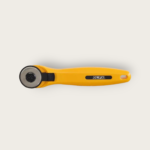 Olfa Rotary Cutter 28mm RTY-1/ C
 Olfa Replacement 28mm blade : Pack of 2
 Cohana-Paperboard Tool Case 2 colours
Meet the maker
For the company background, workshop photographs and more of the range, read OLFA: Yoshio Okada and the Search for a Fresh Cutting Edge.