
Sewing Tips & Tool Advice
OLFA: Yoshio Okada and the Search for a Fresh Cutting Edge

A fresh cutting edge without throwing the whole blade away: that was the problem Yoshio Okada set out to solve. OLFA’s story has the ingredients of a good invention tale—an everyday frustration, an unexpected idea and prototypes that needed work. It eventually led to another familiar tool on the sewing table: the rotary cutter.

1. The people behind the snap-off blade
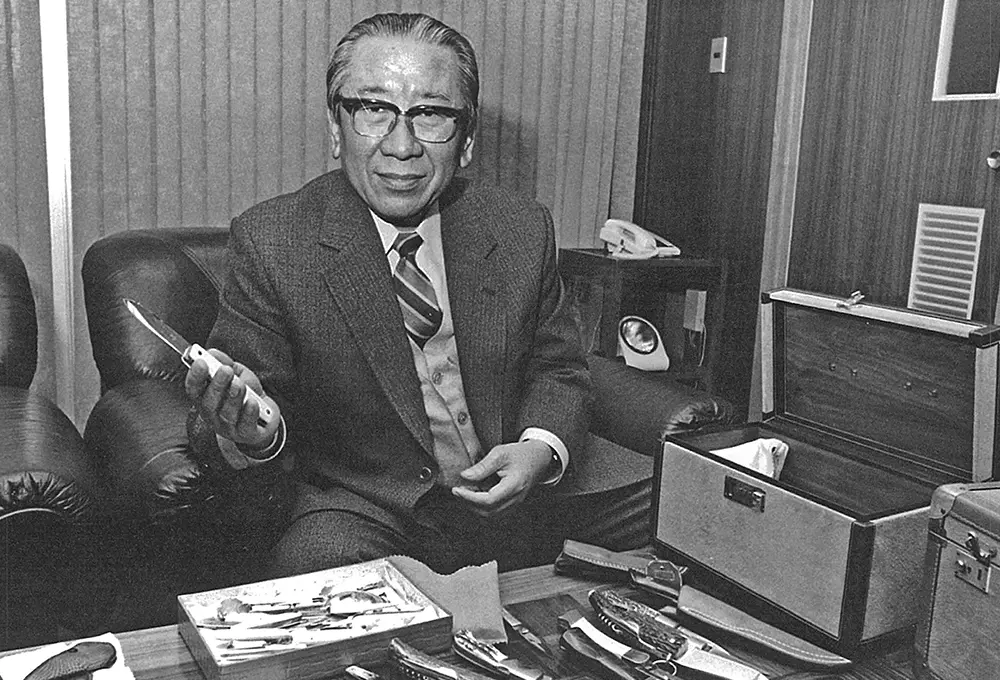
OLFA’s founder Yoshio Okada grew up around his family’s paper-cutting business. His company’s account follows that early interest in blades into work at a printing shop, where a recurring problem was the loss of a usable cutting edge. Okada’s brother Saburo, working at another printing business, asked about a better knife for paper. Razor blades were awkward to hold and discarded once their edges dulled. The company’s story describes two influences on Okada’s solution: shoemakers renewing an edge by breaking glass, and the divisions in a bar of chocolate.
A blade with planned break lines could reveal a fresh edge several times. Okada invented that snap-off form in 1956. The account is preserved by OLFA together with portraits and early prototypes. OLFA’s account of the invention.

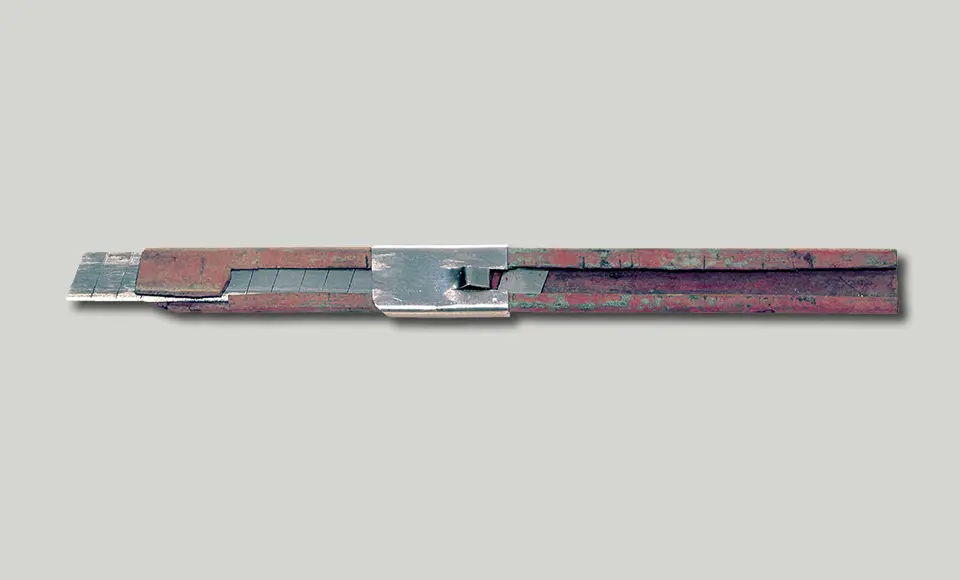
The prototype is worth looking at before the familiar modern cutter. It makes the idea visible as an object somebody had to build. A sketch can suggest a fresh edge; a tool has to hold that edge where the hand expects it to be. Handle, blade and the way they move together all become part of the answer.
2. From invention to a company
The chronology dates the product launch to 1959 and the establishment of Okada Kogyo to 1967. The Japanese company adopted the OLFA name in 1984. Separating those dates makes clear that the initial invention preceded the later corporation. OLFA chronology.
3. The edge becomes a wheel
OLFA dates its rotary-cutter invention to 1979 and the launch to 1980. This brought a circular cutting edge to the range. Rotary cutters, a perforation cutter and replacement blades are the part of that business represented in the Eight Needles catalogue. The rotary-cutter milestone.
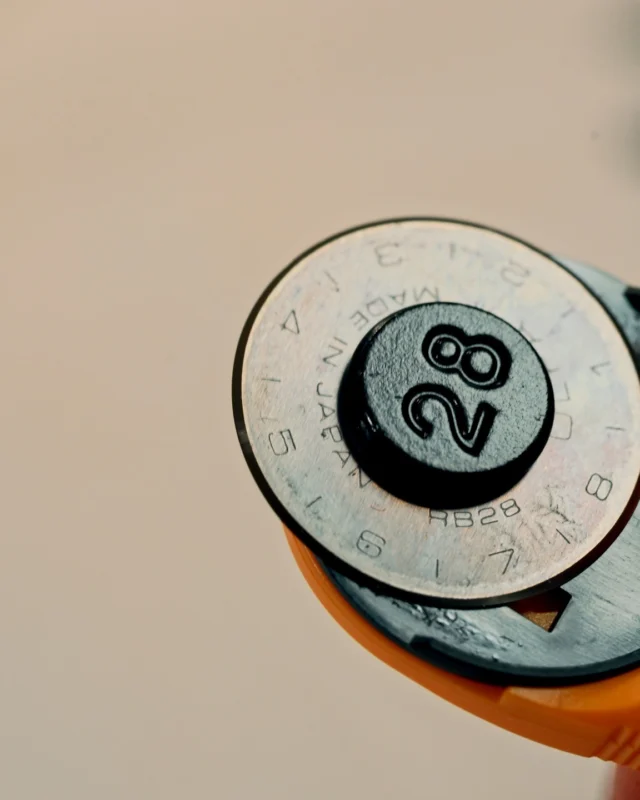
The categories below separate cutters from replacements. The 18mm, 28mm and 45mm model titles retain their dimensions, so the development story leads into the actual tools without treating all circular blades as the same product.
Explore this part of the story: Olfa Replacement 28mm blade : Pack of 2.
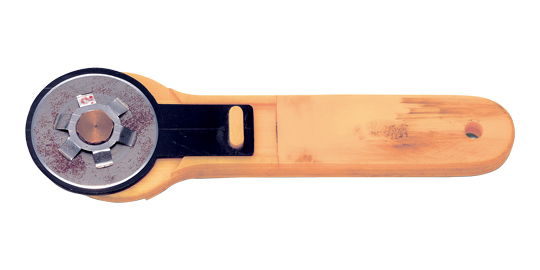
The shift from a straight cutting edge to a rolling circle is the part most immediately familiar to a quilter or garment maker. Look at the circular blade separately from its handle, then look at the whole cutter. One is the replaceable cutting part; the other is the part you keep holding and guiding.
4. Match the blade to the work
Our selection includes several blade diameters, along with a perforation cutter and replacement blades. A smaller and a larger circle do not occupy the same space around a curve, so the diameter is a useful detail to compare. Compatibility remains specific to the cutter and blade: use the model information in the linked listings when selecting a replacement.
It is a fitting final detail for a story that began with renewing a cutting edge. The blade is the part that wears through use; the maker’s idea is carried forward every time the right replacement gives a familiar tool another working life.
5. Explore the collection by category
Explore by category
Replacement blades
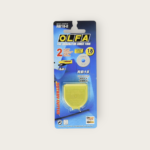 Olfa Replacement 28mm blade : Pack of 2View details & options →
Browse 1 more in this category
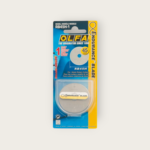
Perforation cutter
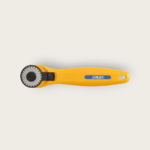 Olfa Perforation Rotary Cutter 28mmView details & options →
Rotary cutters
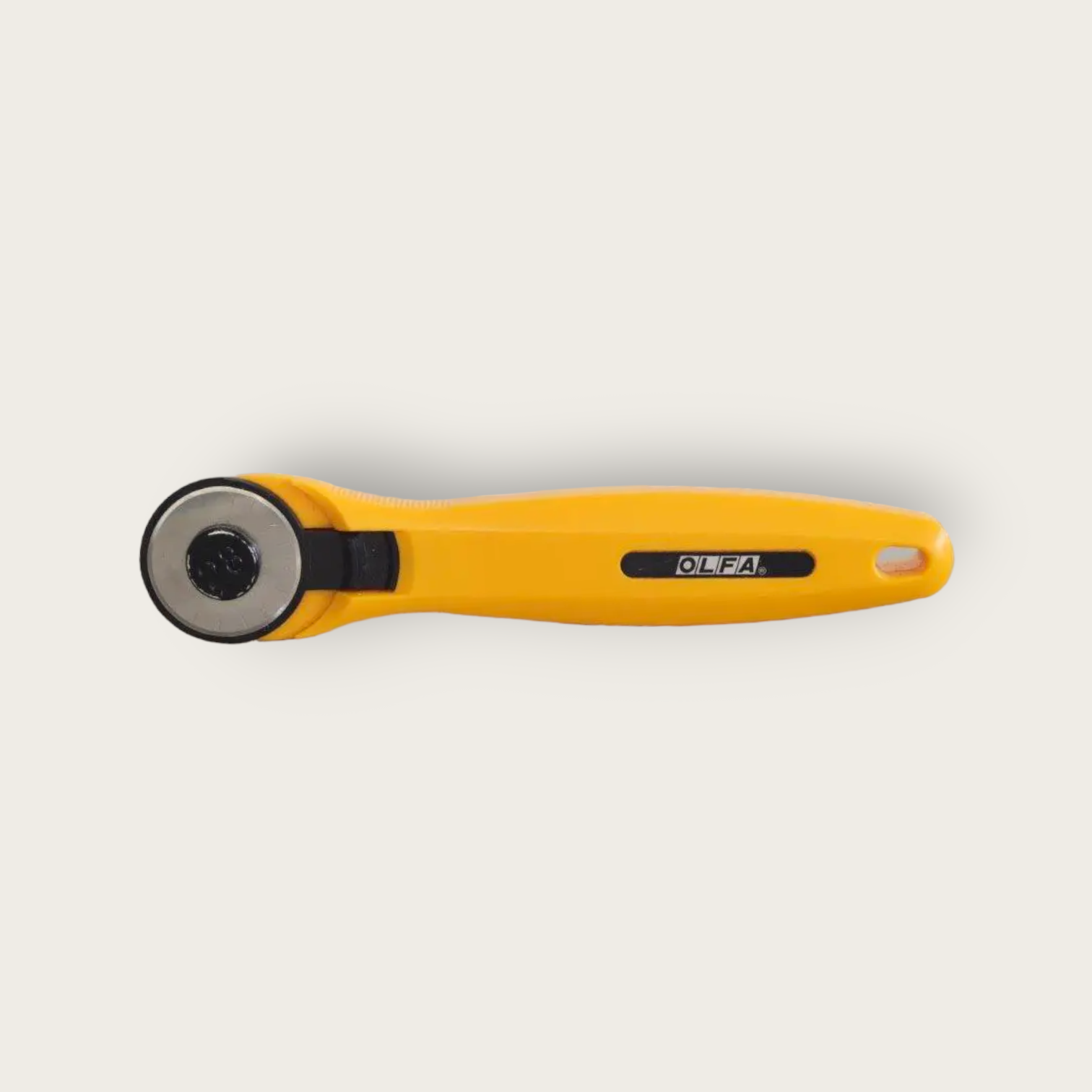
 Olfa Rotary Cutter 18mm RTY-4View details & options →
Words: Eight Needles. Historical, workshop and product images are credited in their captions. Company and manufacturing sources are linked beside the relevant passages. Historical and manufacturing sources are linked beside the relevant passages. Product links open the live Eight Needles shop.
