
Sewing Tips & Tool Advice
Japanese Screw Punch: The People and Story Behind Nonaka
Sep
MEET THE MAKER · NONAKA SEISAKUSHO · TOKYO
A quieter hole. A tiny blade. A family workshop with a long memory.
Look closely at a Japanese screw punch. The wooden handle is easy to notice. The small cutting edge beneath it is easier to overlook. Yet that little circle of metal is where this tool’s story becomes interesting.
Before it found a place on craft tables, the Nonaka Screw Punch began with a tailor’s practical problem: how to make a hole without the repeated noise of a mallet.
Here is the story behind the tool, the person pictured at the workbench, and the details to watch when it goes to work.
01 · AN IDEA BORN FROM A PROBLEM
What if a punch did not need a hammer?
Nonaka’s roots reach back to 1908. The family business made specialist sewing machines, including machines for stitching the small fasteners used on traditional Japanese tabi footwear. It later made precision sewing-machine components.
Then, in 1972, a menswear tailor asked for a quieter way to make buttonholes. The existing method involved striking a bladed metal tool with a wooden mallet. Nonaka’s answer was to make the cutting edge turn as the handle was pressed.
History: Nonaka Manufacturing’s company story.
The appealing part of that story is its scale. A familiar task prompted a specific question. The result was a different motion at the workbench: press, rotate, cut, lift.
02 · THE HANDS BEHIND THE EDGE
Meet Kiyoshi Nonaka
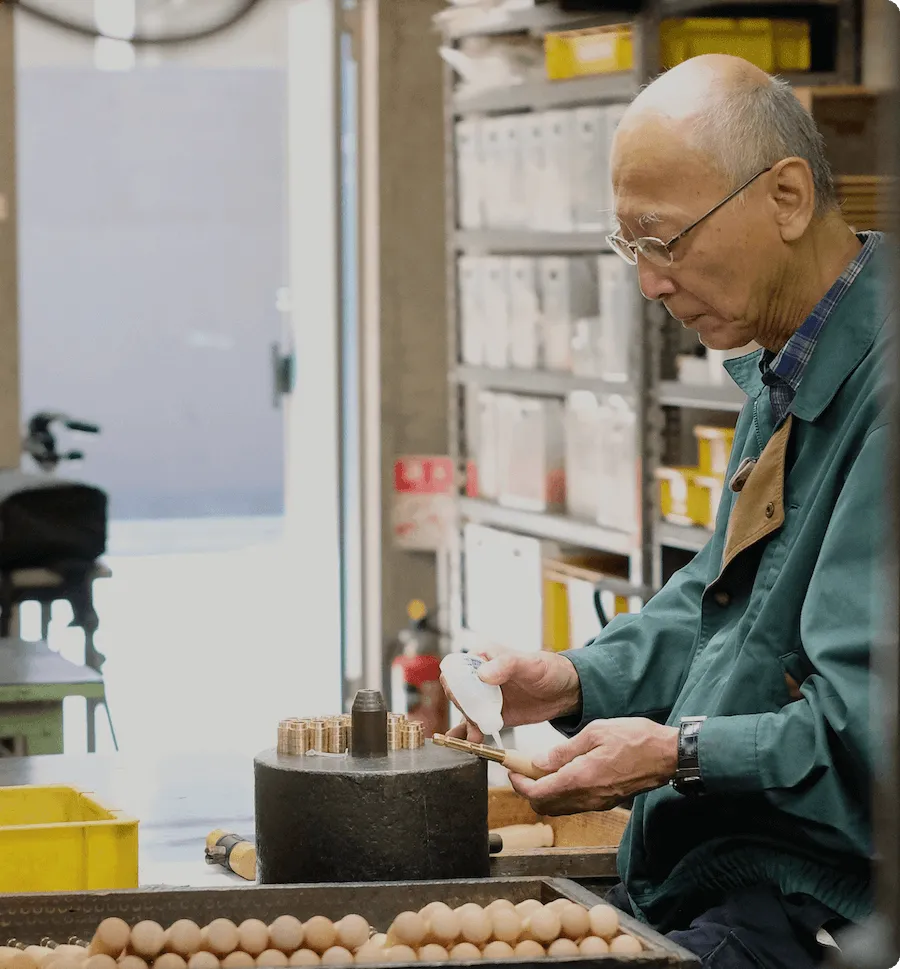
Nonaka’s company information identifies its representative as Kiyoshi Nonaka (野中機良). The workshop is in Ishihara, in Tokyo’s Sumida district. Meet the company.
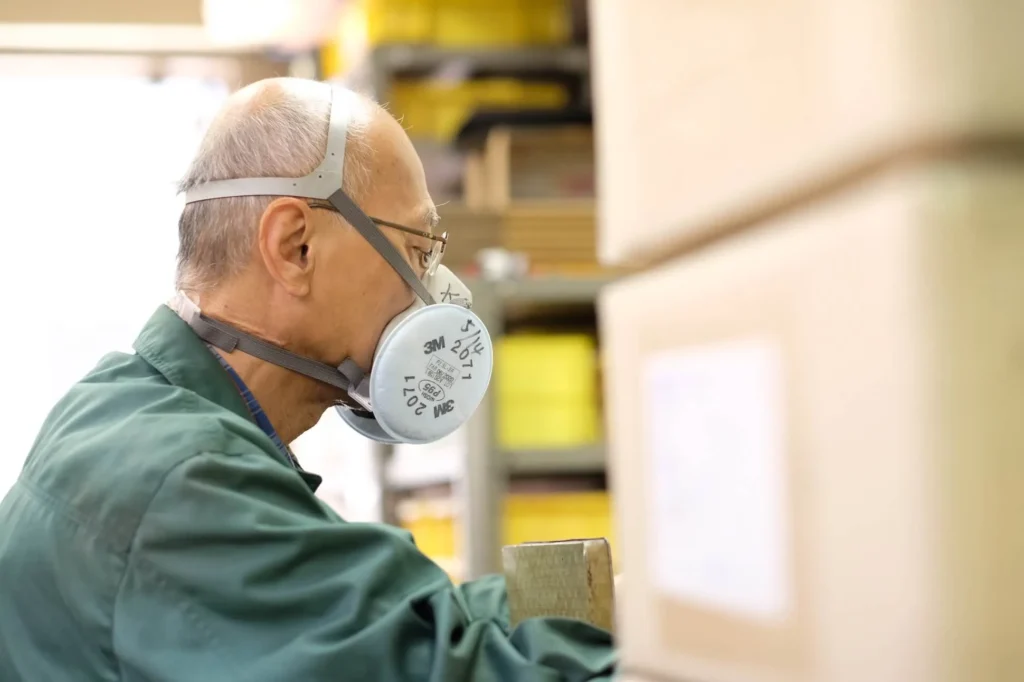
In the photographs, you can see wooden handles, trays of small components and shelves close to the workbench. These are useful images to pause over: the finished tool is only one small part of what is in the room.
Nonaka describes handwork as central to its approach. Its blades are sharpened individually, using a technique the maker traces back to the tool’s early production.
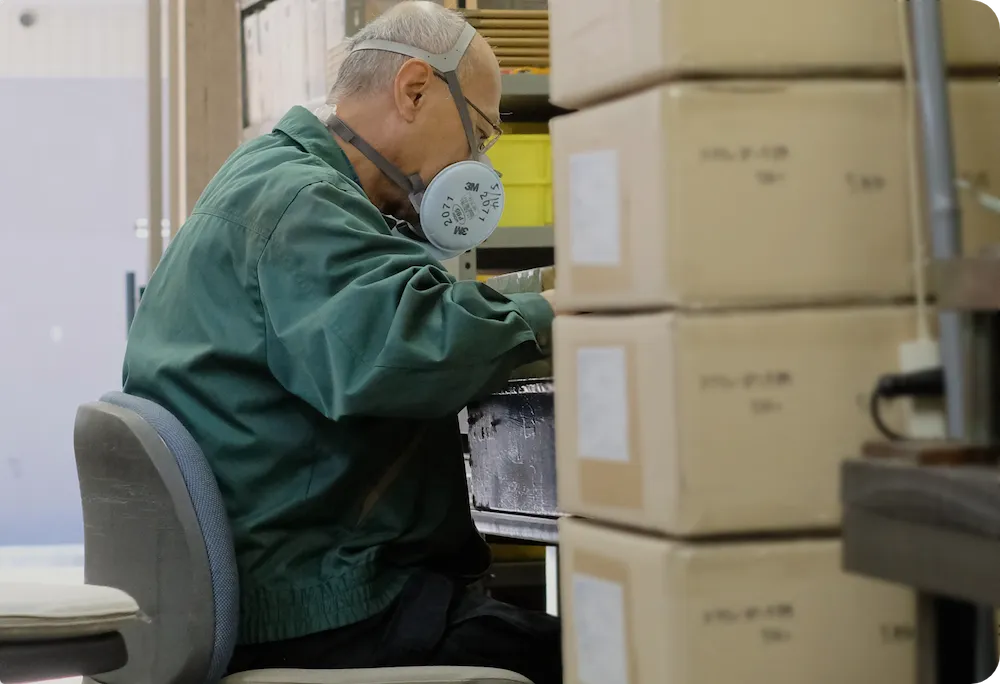
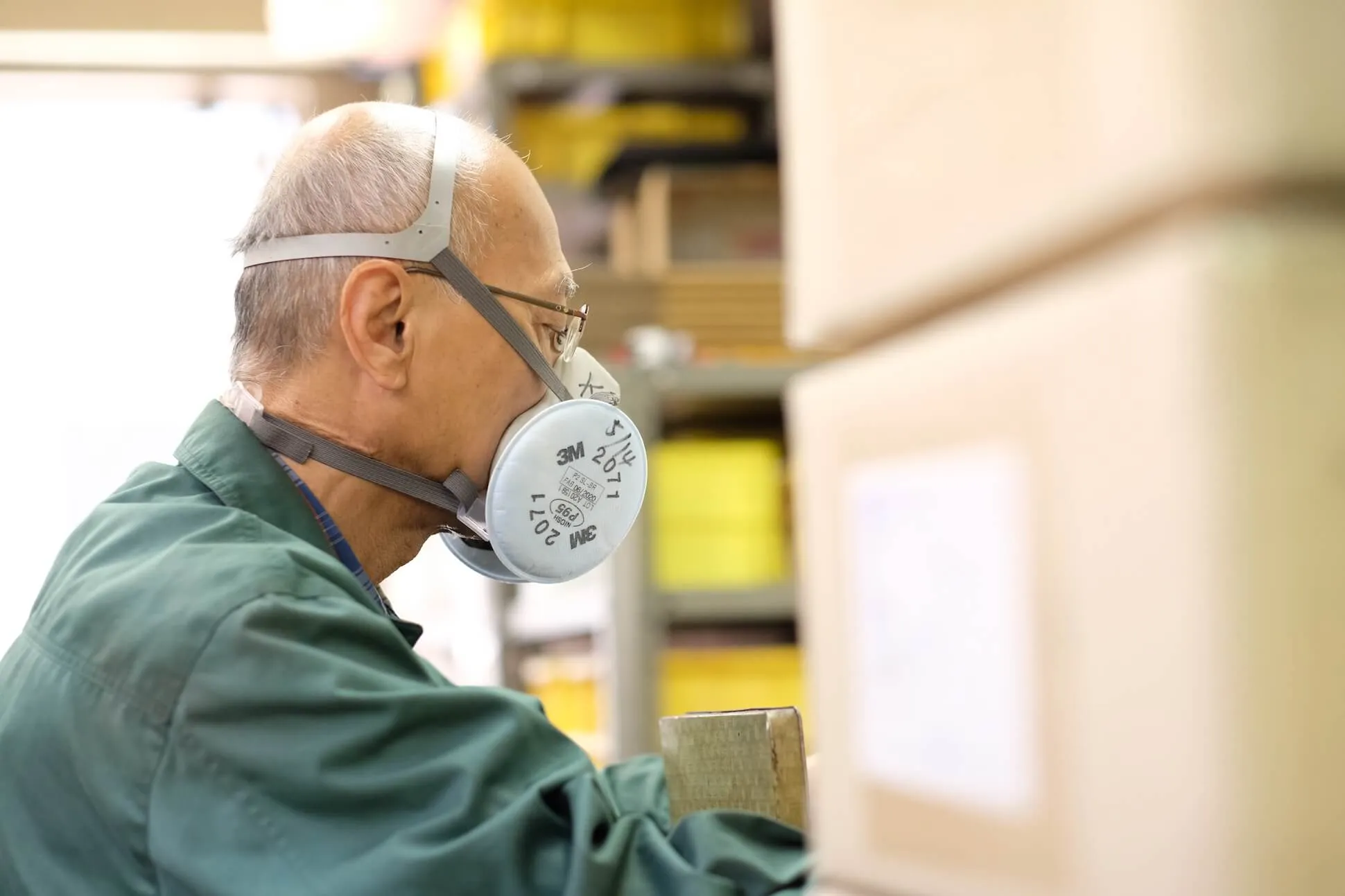
A tiny edge does a precise job
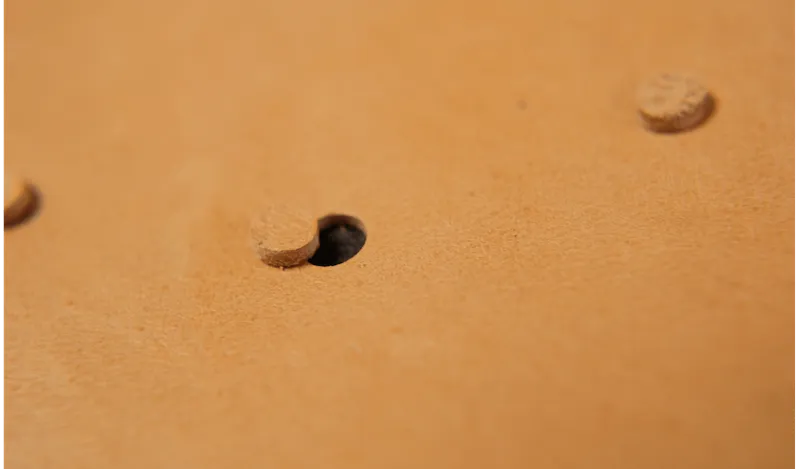
Nonaka’s explanation focuses on the edge of the hole. Rough, raised fibres can make a cut look untidy and interfere with fittings such as eyelets. The maker combines a sharpened blade with rotation to produce a cleaner circular cut.
Making and sharpening: Nonaka’s workshop and manufacturing approach.
When you watch the films, follow the hands as well as the tool. Then look at the edge left in the material. It is a more revealing way to understand a cutting tool than looking only at its outline.
03 · SEE THE IDEA IN MOTION
From our Instagram: Meet the Maker
Our Nonaka film introduces the idea behind the Screw Punch. Watch for the turning action: the handle moves down, while the blade does the circular cutting work.
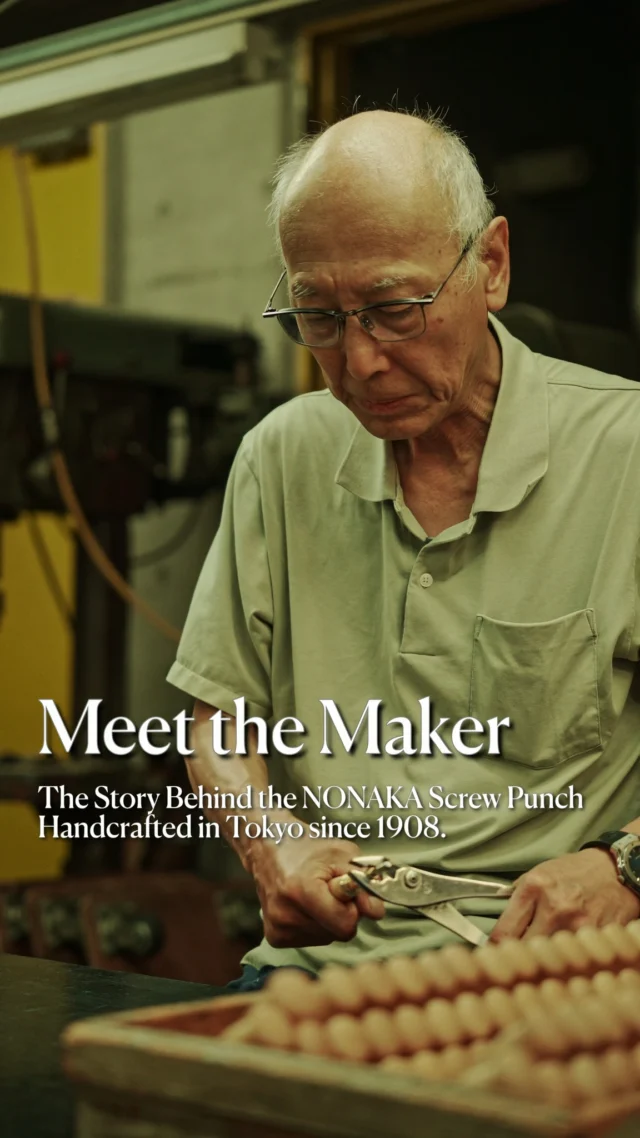
From our Instagram series, Meet the Maker. Open the original post.
Watch it at the workbench
Explore Nonaka’s official workshop page for more about the handwork and sharpening behind the tool.
04 · BRING THE IDEA TO YOUR WORKBENCH
How to use a Japanese screw punch
The movement is simple. Give yourself a clear work area and take time to position the blade before pressing.
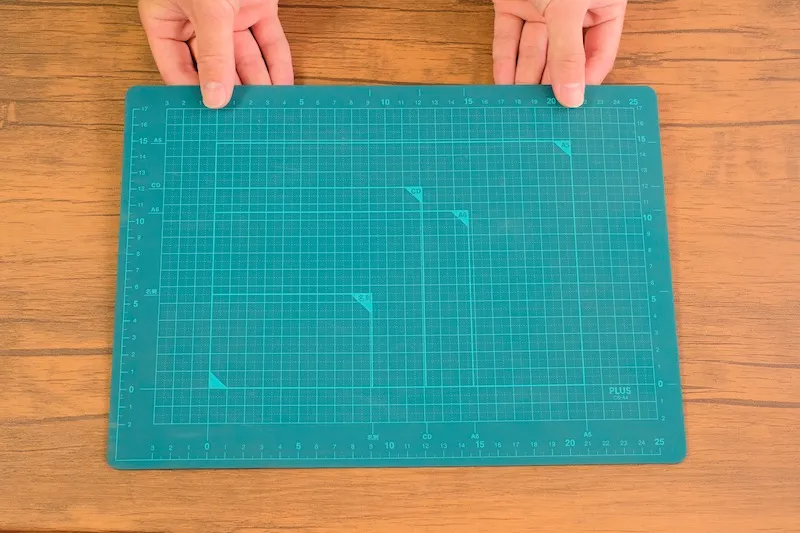
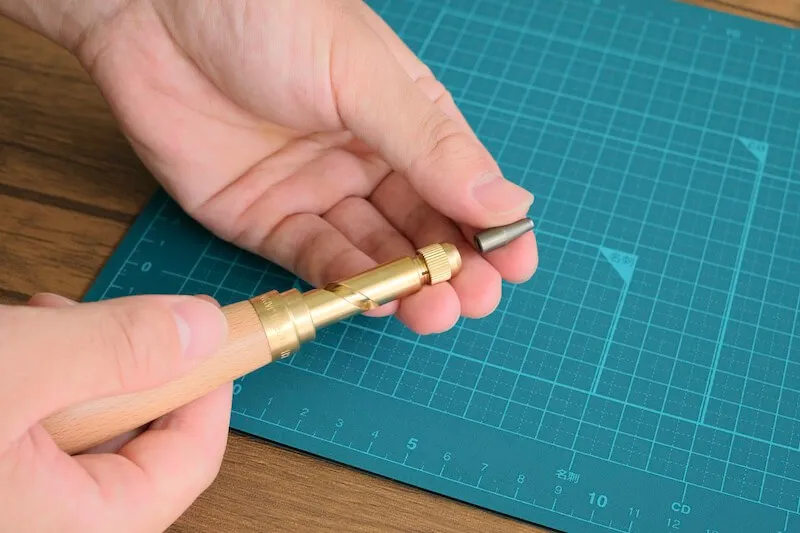
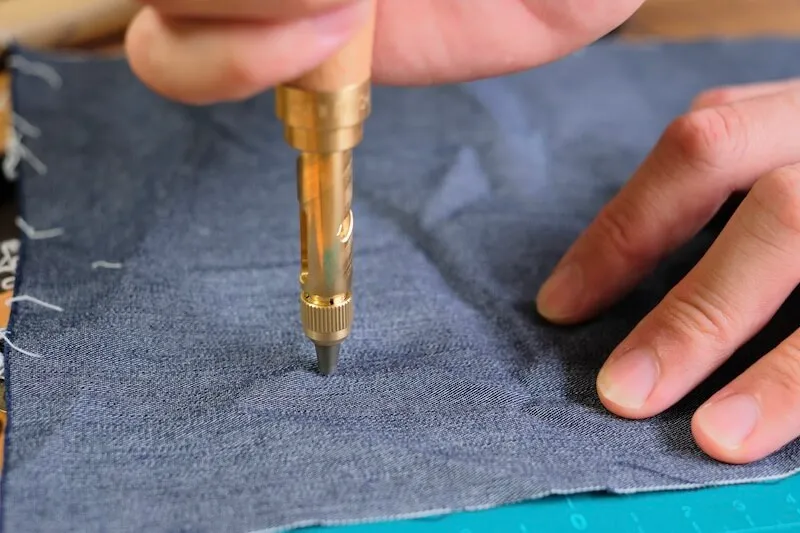
No mallet is needed, and you do not twist the handle by hand. Do not use the tool on metal or hard materials that could damage the blade.
Technique and step photographs: Nonaka’s official instructions.
Keep the little circles in mind
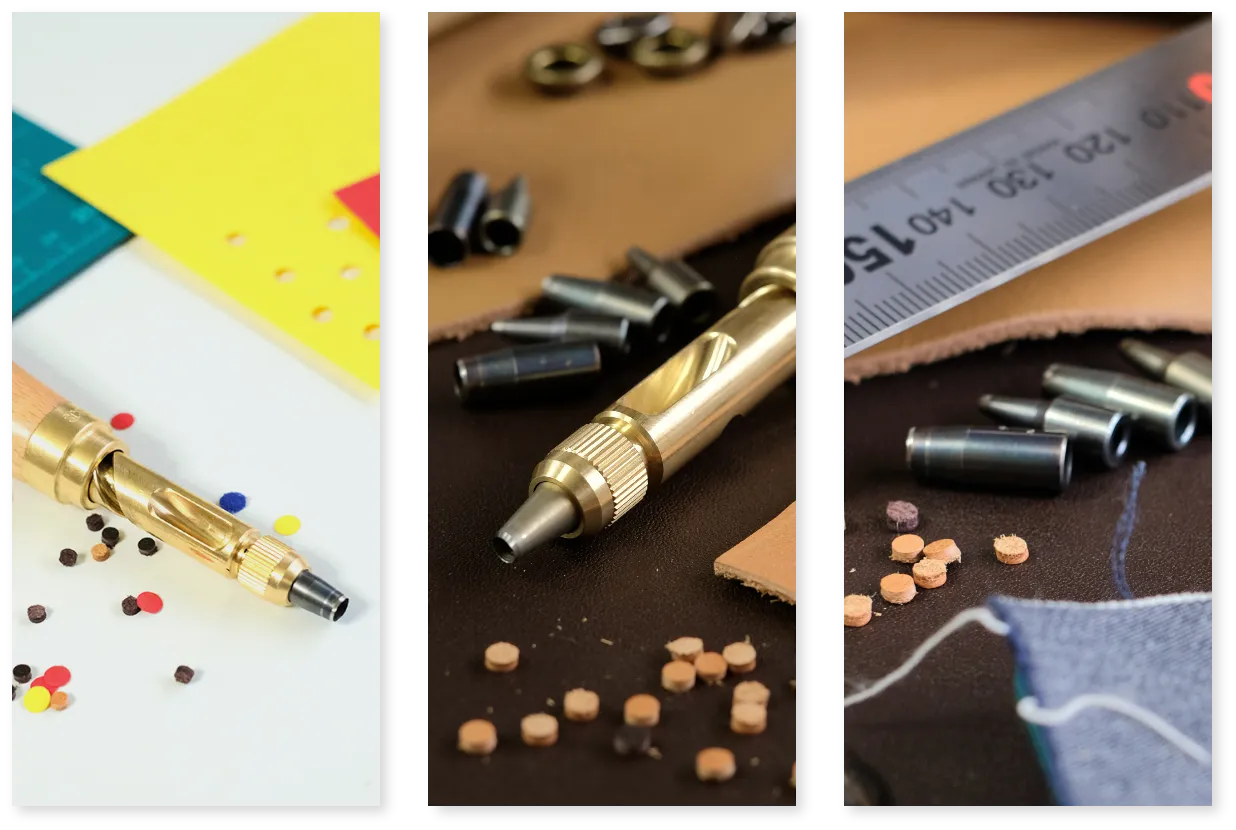
The removed discs can be useful too. Nonaka suggests using them as small eyes in paper or animal craft projects. They collect inside the blade and emerge from its upper opening as you continue working.
For your own project, try a sample first. Look at the hole from both sides, check its size against the fitting or cord you plan to use, and decide whether the result suits your material.
05 · SMALL DETAILS, WORTH NOTICING
Look at the blade, then the mark
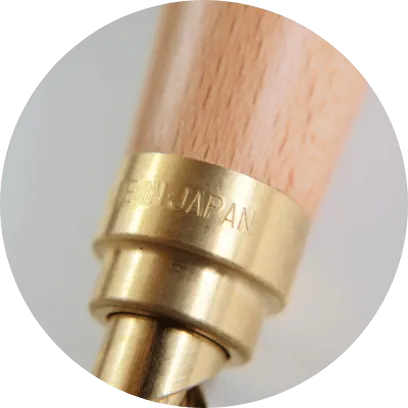
The collar carries the wording SCREW PUNCH MADE IN JAPAN, described on Nonaka’s official product page.
The interchangeable blades are the other detail to notice. A diameter is the size of the hole, so choose it for your intended result rather than simply choosing the smallest or largest option.
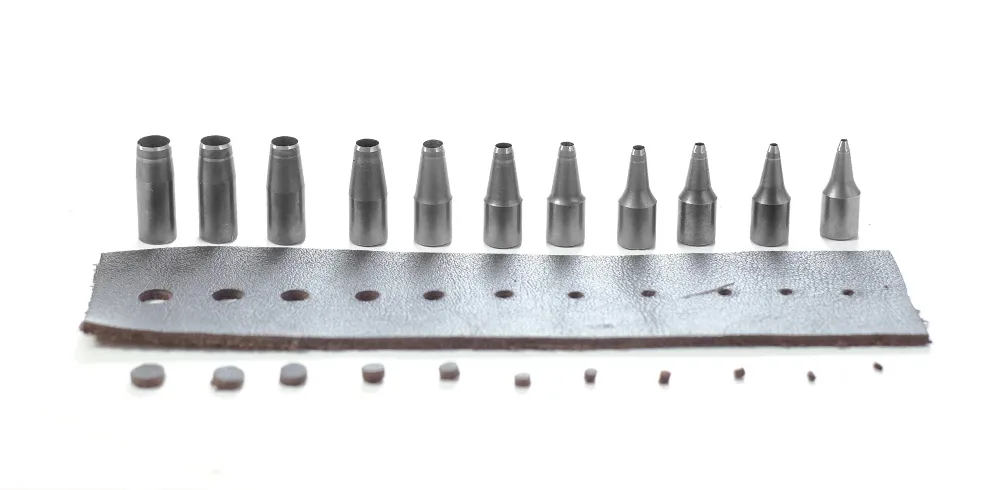
CHOOSE YOUR TOOL
Find your Nonaka screw punch
When you are ready to choose, check which parts are included:
- Punch with a 3mm blade — body and one 3mm blade.
- Body only — add a blade separately.
- Replacement blades — one blade in your selected diameter; check the listing for availability.
