No products in the basket.
Guides
Why Two Rulers Can Give Different Sewing Measurements
Eight Needles Journal · Measuring
Before blaming the pattern, check how you are reading the tools. Different starting points, line thicknesses and viewing angles can create an apparent disagreement between two rulers that otherwise work perfectly well.

Compare like with like
Place both scales on a flat surface and align their printed zeros. Compare several marked intervals, not just the ends. Read directly above the scale rather than from an angle, and decide whether your pencil line is centred on the required measurement.
Remove avoidable variation
Use one reference tool for a set of related measurements. Keep flexible tapes relaxed rather than pulled tight. Check that transparent rulers lie flat and that worn corners or damaged markings are not being used as the starting point.
Record rather than average
If a tool consistently disagrees with a reliable reference, set it aside for investigation. Averaging two readings does not establish which is correct. A clear note about the tool and the discrepancy is more useful than quietly changing your pattern to compensate.
A practical example
Two tools disagree at the end of a long measurement. First check zero, units and viewing angle. Next compare a shorter known interval. If the discrepancy persists, keep a note and set the uncertain tool aside; do not quietly average the readings and build that uncertainty into the pattern.
Check before choosing
- Are the zeros aligned?
- Are the units identical?
- Can I repeat the same reading?
Related tools to compare
Compare the size, material and included parts on each product page against the task above.
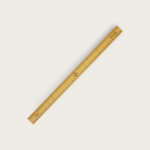 Okane Seisakusho Bamboo Sewing Ruler in 3 sizes (20cm. 30cm. 40cm)
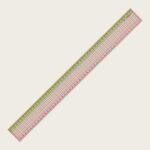 Bunka 50cm Pattern Ruler with Line
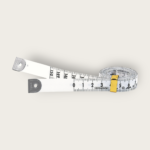 Hara Doki Glass Fibre Tape Measure 150 cm / 60 inch (With extra gap)
Meet the maker
For the company background, workshop photographs and more of the range, read Okane Seisakusho: The Bamboo-Ruler Workshop in Koka.