No products in the basket.
Guides
Keeping Thread Labels and Leftovers Useful
Eight Needles Journal · Sashiko & thread
A leftover thread is useful only if you can identify it when the next project needs it. Keep colour, thickness and maker information attached as the original packaging becomes smaller or is replaced by another holder.
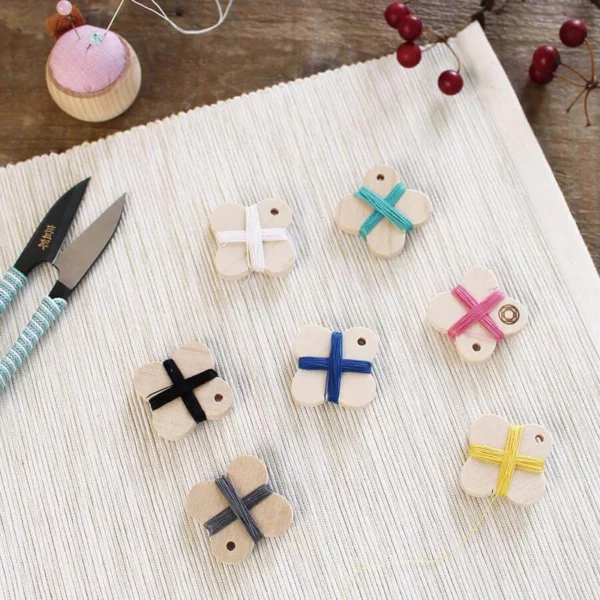
Create a simple reference
Write the product range and colour code on a small card, then attach a short sample. If no code is provided, preserve the original label. Avoid relying on a colour name you invented while the thread was still fresh in your memory.
Store without mixing systems
Keep different thicknesses and thread types in clearly separated groups. Wind or fold leftovers gently using a method appropriate to the thread. Do not stretch the thread tightly simply to make the storage look tidier.
Make reuse intentional
Before using an old length, inspect its condition and compare it with the new work. A nearly matching colour may be an attractive choice for a visible repair but unsuitable for an invisible join. Decide that difference deliberately.
A practical example
A short leftover looks almost the same as a new thread. Compare them in the intended fabric before joining. If the difference is welcome, use it deliberately; if an invisible match is needed, retain the leftover for another task.
Check before choosing
- Can I identify the range and colour?
- Is the thread in sound condition?
- Does the match suit the intended finish?
Related tools to compare
Compare the size, material and included parts on each product page against the task above.
 Cohana-Wooden Thread Spool in 7 colours
 Daruma Sashiko Thread Box with Pin Cushion and Needles – Small
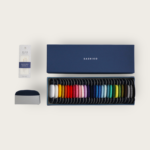 Daruma Sashiko Thread Box with Pin Cushion and Needles – Large
Meet the maker
For the company background, workshop photographs and more of the range, read DARUMA: From Yokota’s First Thread to the Factories of Shiga and Kyoto.