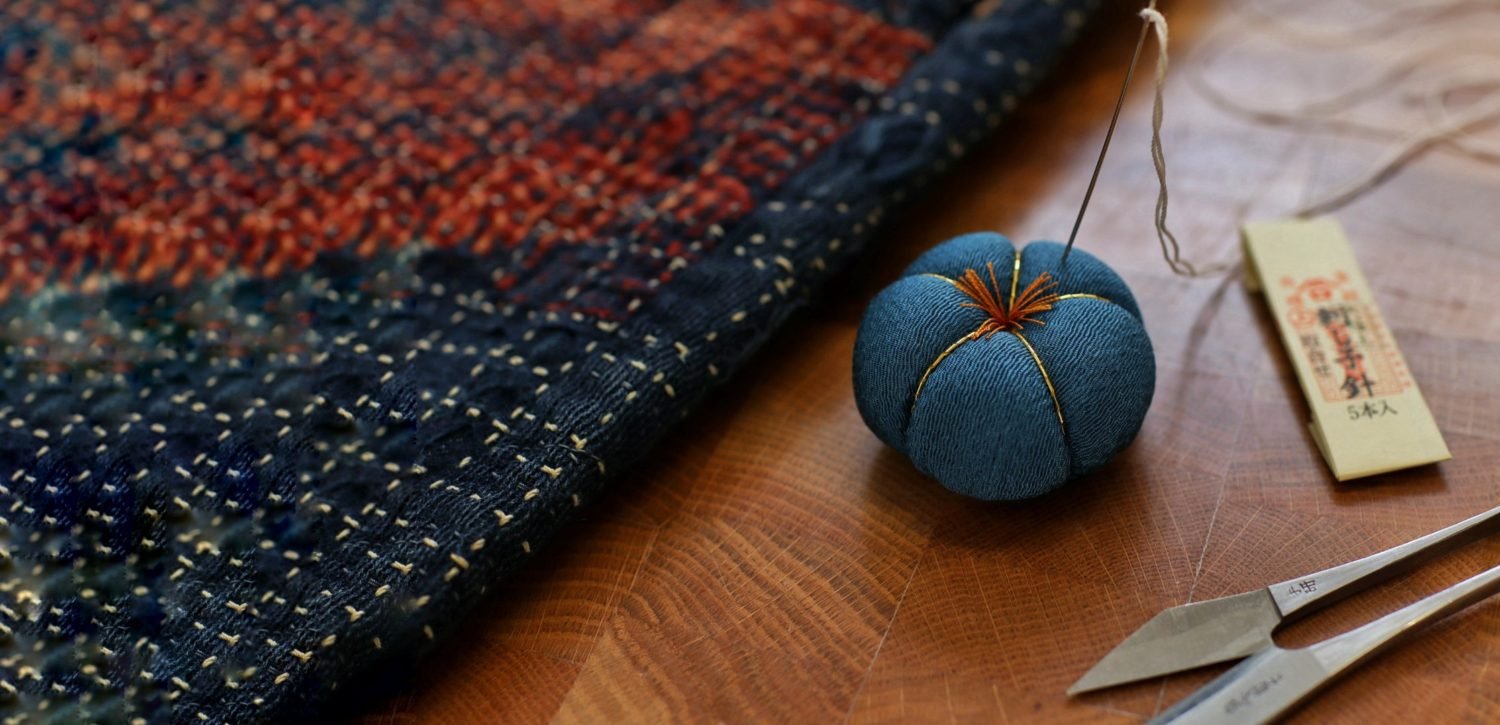

Sewing Tips & Tool Advice
DARUMA: From Yokota’s First Thread to the Factories of Shiga and Kyoto
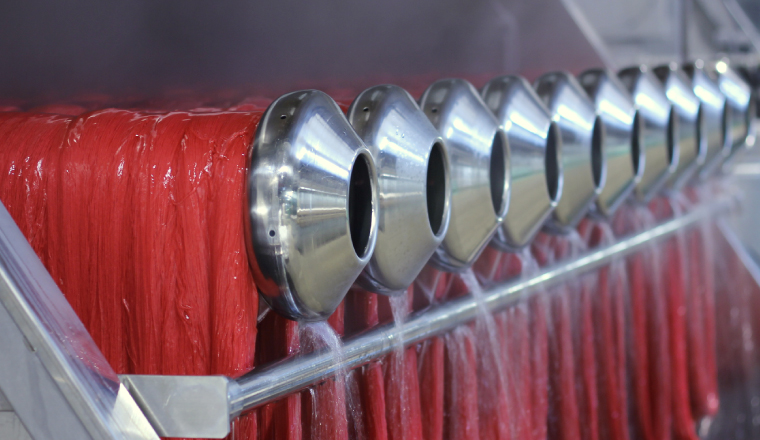
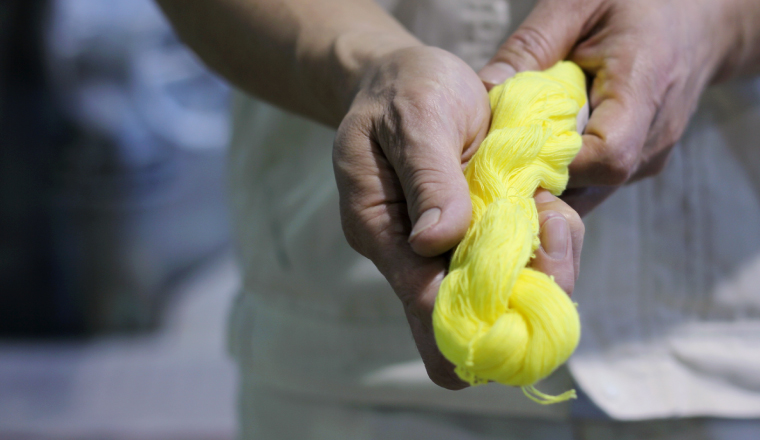
A bright yellow hank passes through a worker’s hands. Elsewhere, pale thread runs through machinery and a small flame removes loose fibres. Before a DARUMA colour reaches a sashiko sampler, it has already travelled through a sequence of decisions about twist, surface and dye. The story starts with the person who wanted better sewing thread.
1. Chozaemon Yokota and the beginnings of DARUMA
Chozaemon Yokota trained with a Kyoto kanoko-shibori textile business before beginning to manufacture and sell thread in 1901. He saw a need for cotton thread suited to fabrics such as wool muslin and silk meisen. The company’s history describes his pursuit of strength, smooth passage and a silk-like lustre, with the DARUMA emblem reserved for the highest-grade products. DARUMA’s history.
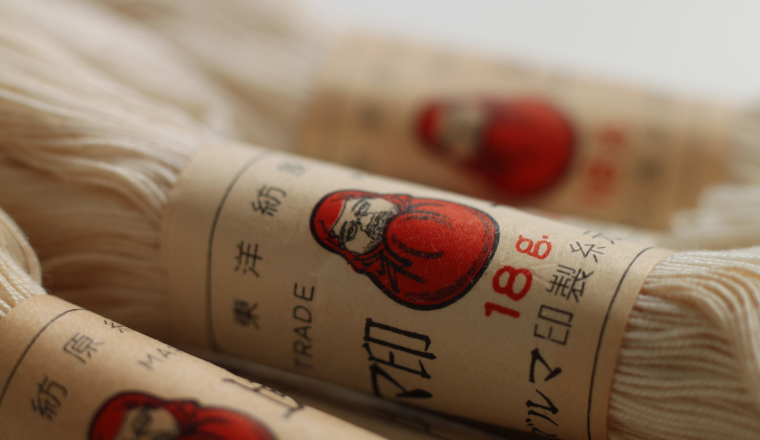
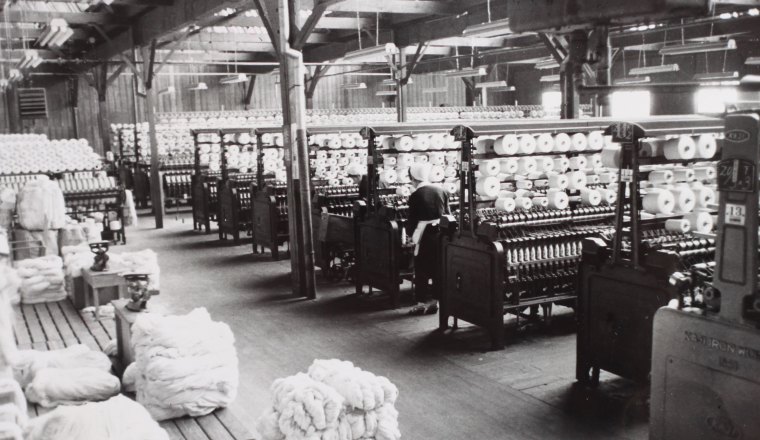
Yokota expanded its own dyeing and bleaching work and introduced manufacturing equipment. Its historical account also records a growing national distribution network and the promotion of lace crochet through classes in the 1950s. The business developed beyond selling finished thread into controlling more of the processes that determine its quality. Yokota’s historical account.
The company distinguishes its foundation in 1901 from incorporation in 1934. Its current introduction describes materials made for the pleasure of handwork as well as the practical task of sewing. About Yokota.
2. The people behind the machines
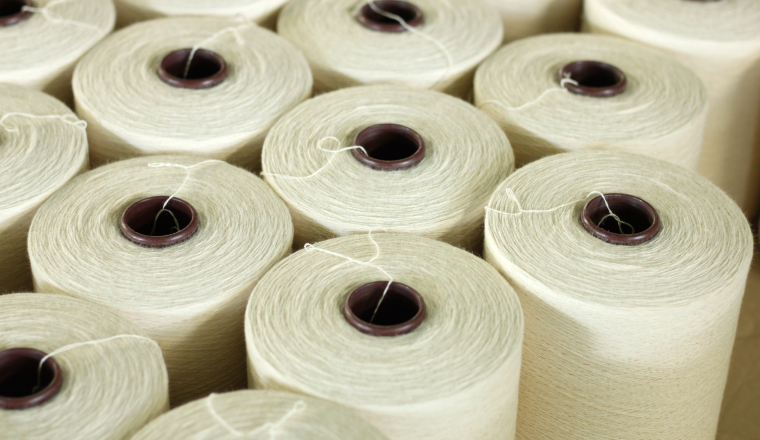
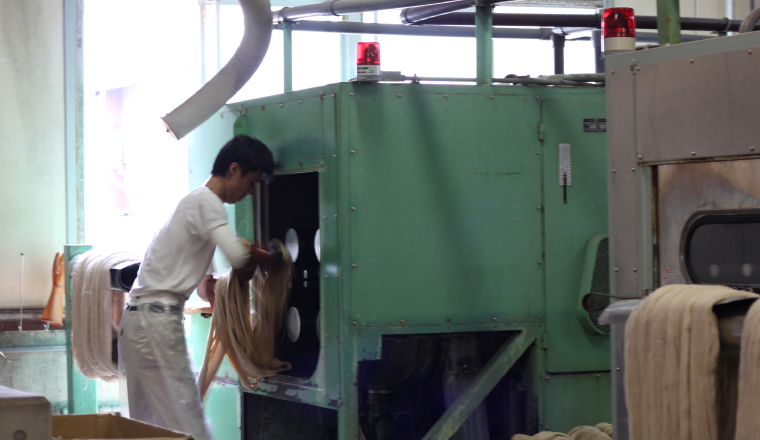
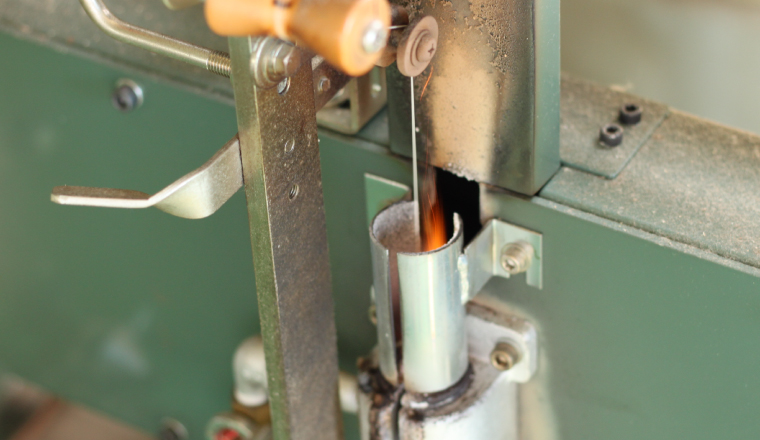
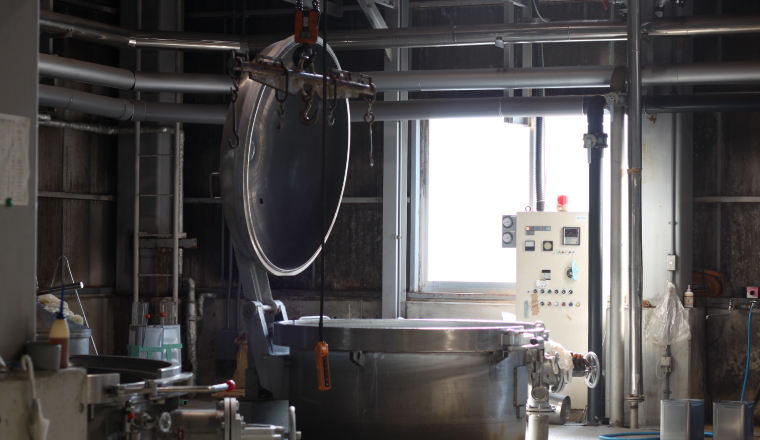
DARUMA’s factory account introduces DARUMAN at the foot of Mount Ibuki in Shiga. Machines perform the repeated operations, while workers check the thread with their eyes, ears and hands. Thin yarn arriving from a spinning mill is twisted; surface fibres are singed before the thread moves towards dyeing. DARUMA factory story.
3. A second factory in Kyoto
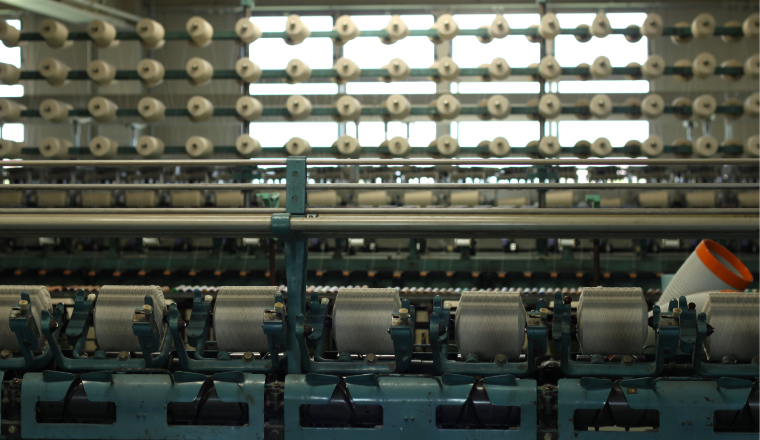
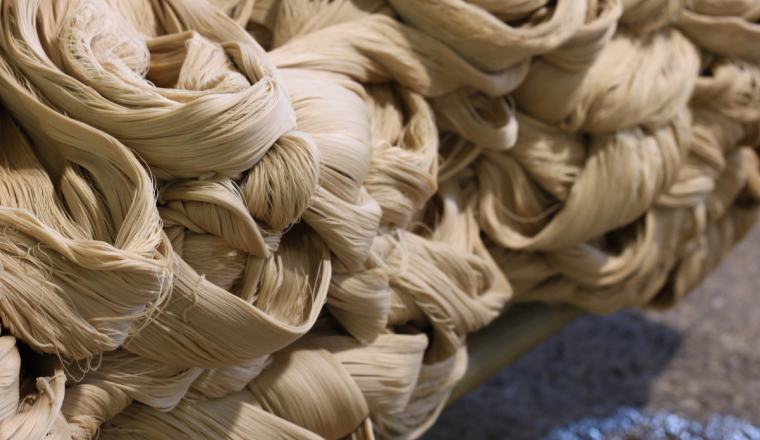
The same account follows the thread to the Murasakino factory near Daitokuji in Kyoto. It describes mercerisation, bleaching, dyeing, water removal and drying. Workers arrange and separate the hanks carefully to help avoid uneven colour and tangling. These photographs document the company’s thread-making processes; they should not be read as a claim that every DARUMA yarn receives every treatment shown. The manufacturing sequence.
Explore this part of the story: Daruma Sashiko Thread Box with Pin Cushion and Needles – Small.
Look again at the two factory settings. A coil on a machine and a loose hank in a person’s hands present the same material in very different ways. One image emphasises repetition; another makes it possible to see individual lengths being kept in order. Together they make thread production easier to imagine than a photograph of a sealed packet alone.
When the material reaches a sewing table, another kind of judgement begins. How prominent should the stitch be? How much of the cloth should remain visible? Would one colour carry the pattern, or would alternating colours make its structure clearer? Those are questions about the work you want to make, and they are a useful route through the thread selection.
4. More than one kind of thread
Yokota’s wider catalogue includes hand-sewing thread, basting thread, silk thread, buttonhole thread and machine-sewing thread. Eight Needles carries basting thread alongside a larger sashiko selection of threads, printed samplers, cloth, kits and storage. That distinction explains both the breadth of the company and the particular part of its work represented in our shop. DARUMA product catalogue.
A small piece of cloth is enough for an experiment. Sew one short row with the thread you have chosen, then look at it from a little distance. The wound thread and the stitched thread will not read in quite the same way: gaps, shadows and the surrounding cloth all contribute to the result. If you are comparing regular and thick sashiko thread, a sample also lets you see how much space each stitch occupies.
The printed samplers below offer a ready-made design to follow. Gridded cloth gives more room to decide your own pattern. The basting thread belongs to another kind of making altogether: temporary construction stitches that help bring a garment together before they are removed. It is a pleasing range for a company whose story started with sewing thread.
5. Explore the collection by category
Explore by category
Basting thread
The natural-colour 900m basting thread belongs to the garment-sewing side of DARUMA’s range.
 Daruma Basting Thread – 900m in NaturalView details & options →
Kits and thread storage
The linen-handkerchief kit brings materials together for a particular project. The thread boxes with pincushions and needles belong to the organisation of the work, keeping a growing collection of materials together.
 Daruma Sashiko Thread Box with Pin Cushion and Needles – SmallView details & options →

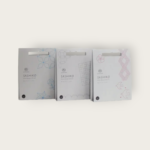
Gridded sashiko cloth
The gridded cloth category leaves the design more open. It is distinct from the printed motif samplers and includes white and coloured cloth options.
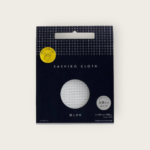 Daruma Gridded Sashiko Cotton Cloth – WhiteView details & options →
Browse 1 more in this category
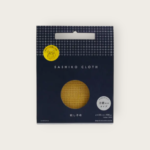
Printed sashiko samplers
Traditional patterns, pop patterns and hitomezashi designs form separate groups in the selection. The printed cloth supplies a pattern to follow, making the sampler a complete design in its own right rather than simply another colour of thread.
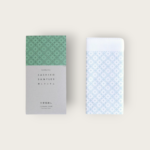 NEW-Daruma Hitomezashi Sashiko Sampler in White – 22 Patterns(4/4)View details & options →
Browse 7 more in this category
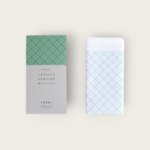 Daruma Hitomezashi Sashiko Sampler in White – 22 Patterns(3/4)View details & options →
Daruma Hitomezashi Sashiko Sampler in White – 22 Patterns(2/4)View details & options →
Daruma Hitomezashi Sashiko Sampler in White – 22 Patterns(1/4)View details & options →
Daruma Hitomezashi Sashiko Sampler in White – 22 Patterns(3/4)View details & options →
Daruma Hitomezashi Sashiko Sampler in White – 22 Patterns(2/4)View details & options →
Daruma Hitomezashi Sashiko Sampler in White – 22 Patterns(1/4)View details & options →
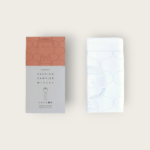 Daruma Sashiko Sampler in White – 8 Pop PatternsView details & options →
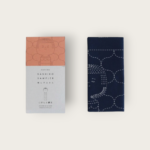 Daruma Sashiko Sampler in Navy – 8 Pop PatternsView details & options →
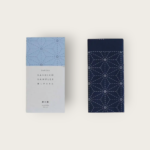 Daruma Sashiko Sampler in Navy – 8 Traditional PatternsView details & options →
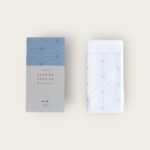 Daruma Sashiko Sampler in White – 8 Traditional PatternsView details & options →
Sashiko thread: regular and thick
The regular and thick ranges are separated below. Cards and larger skeins offer different lengths, while single-colour and blended options create different colour arrangements. Each listing identifies the format and shade choices.
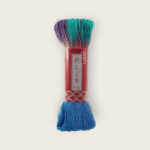 Daruma Sashiko Thread – THICK 100m Skein Multicoloured in 4 optionsView details & options →
Browse 7 more in this category
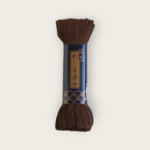 Daruma Sashiko Thread – REGULAR 170m Skein in 20 coloursView details & options →
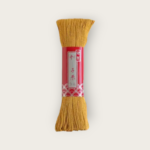 Daruma Sashiko Thread – THICK 100m Skein in 9 coloursView details & options →
 Daruma Sashiko Thread – REGULAR 40m 8 Colours Blended in 2 optionsView details & options →
 Daruma Sashiko Thread – REGULAR 40m 3 Colours Blended in 3 optionsView details & options →
 Daruma Sashiko Thread – REGULAR 40m 2 Colours Blended in 3 optionsView details & options →
 Daruma Sashiko Thread – REGULAR 40m in 29 coloursView details & options →
 Daruma Sashiko Thread – THICK 30m in 29 coloursView details & options →
Words: Eight Needles. Historical, workshop and product images are credited in their captions. Company and manufacturing sources are linked beside the relevant passages. Historical and manufacturing sources are linked beside the relevant passages. Product links open the live Eight Needles shop.
