No products in the basket.
Guides
Pincushion or Magnetic Pin Holder?
Eight Needles Journal · Small sewing tools
A pincushion holds pins by insertion; a magnetic holder gathers compatible metal items through attraction. The difference affects how you pick up and put down pins, as well as how the holder should be moved and stored.
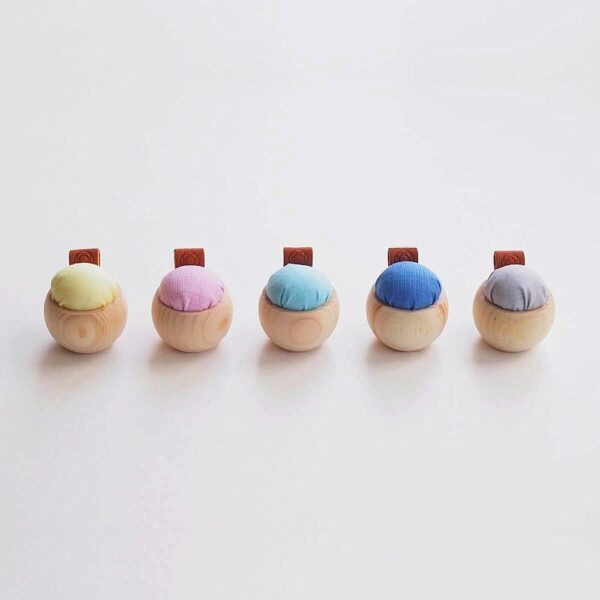
Try the working movement
Consider whether you prefer placing each pin into a cushion or setting it onto a holder. Keep the receiving area where it can be seen without reaching across cutting tools. A decorative shape is useful only when the pin storage remains clear and accessible.
Check what it holds
Do not assume every needle or pin is strongly attracted to a magnet. Check compatibility and the holder's instructions. Keep magnetic holders away from items whose manufacturer advises avoiding magnets.
Contain the kit for travel
Neither an open cushion nor an uncovered holder should be treated as a sealed travel container. Protect exposed points and check the contents before moving the kit. Keep the holder out of reach of children and account for loose pins during cleanup.
A practical example
You move a project between rooms. Transfer working needles and pins into protected storage before carrying an open holder. The tabletop arrangement that is convenient while sewing may not contain sharp items adequately when tilted or bumped.
Check before choosing
- Which placing motion suits my work?
- Does the holder retain my pins?
- How will exposed points be contained during travel?
Related tools to compare
Compare the size, material and included parts on each product page against the task above.
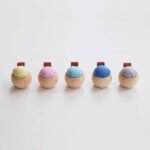 Cohana-Cypress Pincushion in 5 colours
 Cohana-Hasami Magnetic Pin Holder in 5 colours
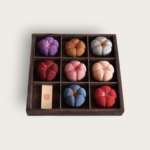 Misuya Chubei Plum Pin Cushion – 8 colours
Meet the maker
For the company background, workshop photographs and more of the range, read Cohana: The Regional Makers Behind a Japanese Sewing Box.