
No products in the basket.
Guides
Straight or Curved Embroidery Scissors?
Eight Needles Journal · Scissors
Curved scissors change the angle between your hand, the blades and the work. That can be useful in confined areas, but the shape should match the task. A curved tool is not automatically more precise than a straight one.
Look at access to the thread
Consider where your fingers can sit while the tips approach the thread. A hoop, raised surface or nearby seam can limit the angle. Compare the complete handle and blade shape, not only the curve visible in a product photograph.
Protect the underlying fabric
Support the work and identify the thread before closing the blades. Keep the tips clear of the cloth beneath. Curvature can help access, but it does not prevent accidental cutting if the fabric and thread are not separated.
Choose a defined use
Keep a small pair for the close trimming it handles well and use an appropriate tool for larger cuts. Read the model's stated application before using it on unusual materials or thick bundles.
A practical example
You are trimming inside an embroidery hoop. Examine where the handle can sit while the tips reach the thread. Practise on a sample and keep the underlying cloth clear. A curved blade changes access, but you still need to see the intended cut.
Check before choosing
- What blocks access to the thread?
- Can I see the tips clearly?
- Are the blades clear of the fabric underneath?
Related tools to compare
Compare the size, material and included parts on each product page against the task above.
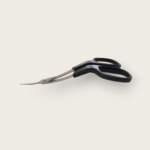 Kai Double Curved scissors
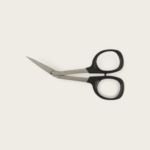 Kai Bent scissors
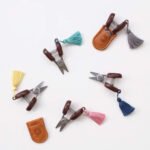 Cohana-Seki Mini Scissors in 5 colours
Meet the maker
For the company background, workshop photographs and more of the range, read KAI: The Endo Family and the Growth of a Cutting-Tool Business.
