No products in the basket.
Guides
Flexible or Straight Ruler? Choosing for Sewing
Eight Needles Journal · Measuring
A ruler that bends is useful when the line you need to measure bends too. A straight ruler gives a stable reference when you need to draw or check a straight edge. Begin with the shape of the task, rather than buying the longest ruler in the shop.

Follow the line
For a curved seam, measure along the stitching line specified by your pattern. The outer cutting edge can be longer or shorter, especially around an armhole. Position a flexible ruler without stretching the paper; a tape measure is another option when held on its edge and advanced in small sections.
Keep a straight reference
Use a straight pattern ruler for grainlines, rectangular pieces and checking that a folded edge stays aligned. A flexible ruler is not automatically a cutting guide. Only use a ruler with a blade when its maker identifies it as suitable for that purpose.
A useful comparison
Draw a gentle curve and a straight line on scrap paper. Follow the curve with your flexible tool, then check the straight line with a rigid edge. This shows why the two tools complement one another: flexibility helps follow a shape, while rigidity helps establish one.
A practical example
You are comparing the front and back of a curved seam. Mark the matching endpoints on the stitching lines, measure between those points and note any ease specified by the pattern. Then use the straight ruler to check the grainline separately. The two measurements answer different questions.
Check before choosing
- Which line am I measuring?
- Do I need to draw, measure or cut?
- Can I read the smallest divisions comfortably?
Related tools to compare
Compare the size, material and included parts on each product page against the task above.
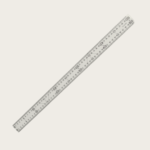 Clover 50 cm Paperfeel Flexible Ruler
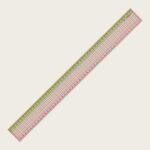 Bunka 50cm Pattern Ruler with Line
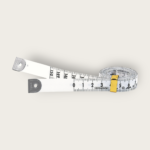 Hara Doki Glass Fibre Tape Measure 150 cm / 60 inch (With extra gap)
Meet the maker
For the company background, workshop photographs and more of the range, read Clover: An Osaka Shop, a Factory and a Leaf Kept in a Book.