
No products in the basket.
Guides
KFI: The Tokyo Workshop Behind Two Carefully Aligned Tips
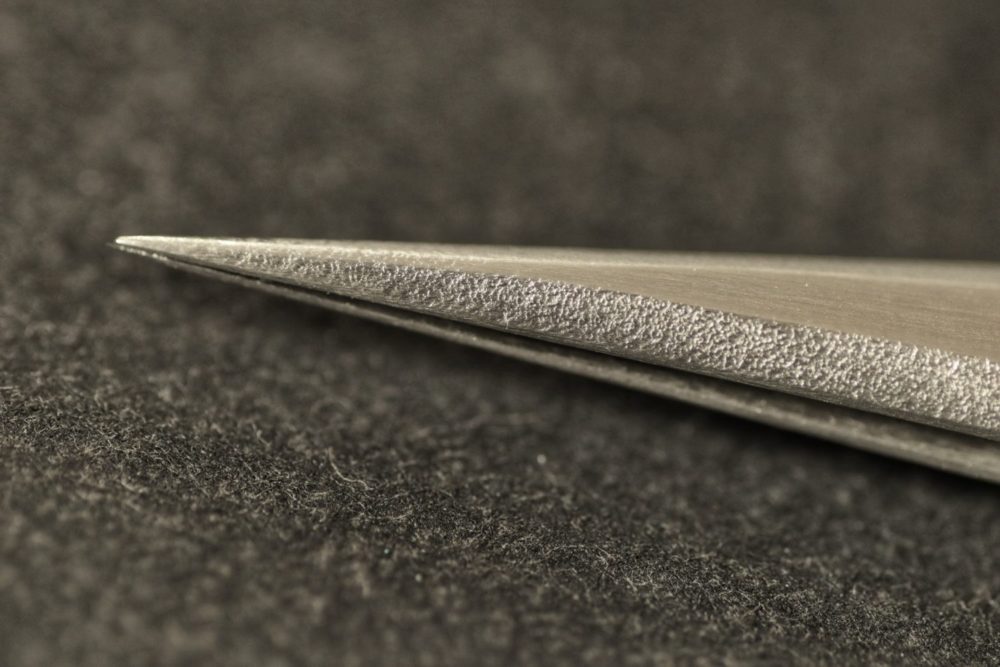
Bring the tips of a pair of tweezers together and look for the point where they meet. That tiny contact is the useful part of the tool—and the end of a manufacturing story involving straightening, shaping, spring behaviour and a final adjustment by hand.
1. A specialist in Tokyo
Kowa Pincet was founded in 1952 and lists its address in Horikiri, Katsushika, Tokyo. Its catalogue serves medical, industrial, laboratory and hobby work. In the company’s message, experienced craftspeople describe final hand finishing as essential even when earlier operations have been mechanised. KFI’s company introduction.
KFI’s company profile dates its establishment to September 1952, as a handcraft operation making medical instruments. It later mechanised parts of the work, developed production in 18-8 stainless steel and brought die-making into the business. Its address is in Horikiri, Katsushika, Tokyo. KFI’s own company history.
That makes the sewing-table connection especially interesting. A specialist can develop experience around one kind of action—gripping something small—and apply it to more than one field. At Eight Needles, the chosen model is the K-4 MM, a 130mm pair. It is one particular tool from a much wider specialist range.
2. The spring begins before the tips
The published process starts with cut metal strips. Each is checked and straightened, with attention to the direction in the rolled material. Spring forming follows; KFI does not disclose the details of that proprietary stage. The broad shapes and surface grooves are then formed before bending or joining the two sides. KFI’s production sequence.
3. Why the last checks matter
Craftspeople grind, file and polish individual tools. Polishing generates heat and can introduce a small shift at the tips, so the finished pair is inspected and adjusted again. The manufacturer’s account describes dozens of operations, varying with the type of tweezers, rather than one universal process count. Finishing and inspection.
That sequence explains the amount of work hidden in the contact between two small metal points. KFI’s broader business supplies many specialist shapes; our shop carries the 130mm K-4 MM in 18-8 stainless steel. It is the model selected for our sewing collection, with its own dimensions and material specified in the listing.
Explore this part of the story: KFI Stainless Tweezers 130mm K-4 MM.
The useful detail in a pair of tweezers is the meeting of the points. Looking at one side alone cannot tell the whole story. The spring of the arms, the surface held by your fingers and the position of the tips work together when you pick something up.
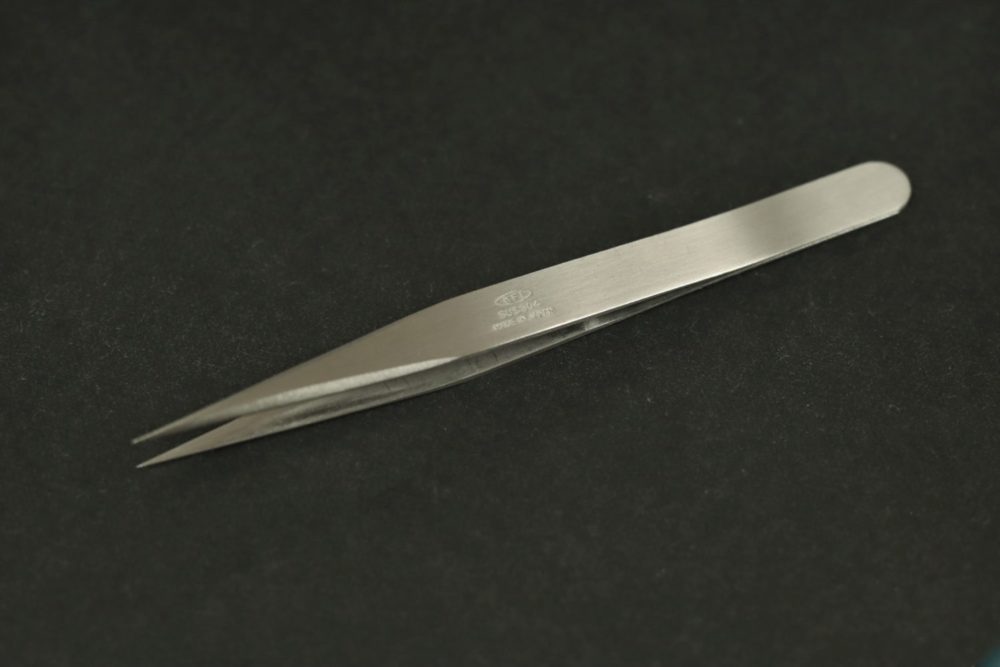
The manufacturer’s account of final inspection is particularly revealing here. The last part of the work checks how the two sides perform together, giving the tool a function beyond a polished finish. KFI’s manufacturing sequence.
4. A small tool beside a larger machine
In a sewing room, a pair of tweezers often appears beside something much larger. It brings the scale of the work back down to a thread or a small edge of cloth. Our listing shows the particular tip and body shape, so you can compare it with the space in which you intend to work.
The manufacturing account gives the tool its background. The close photographs are the useful next step: look at the points, the grip and the overall length. They are the details that connect a specialist Tokyo business with a small movement of your hand.
5. Explore the collection by category
Explore by category
Precision tweezers
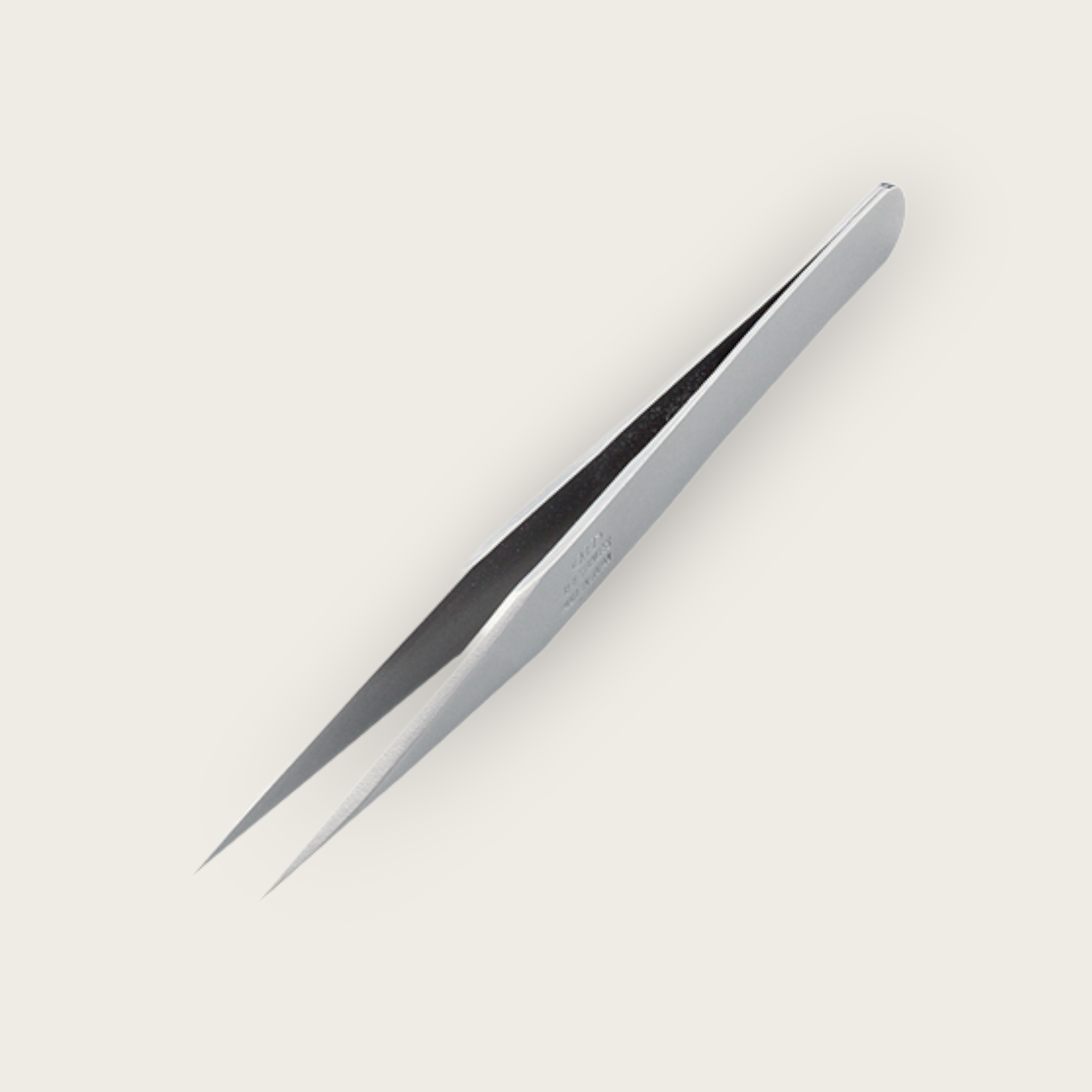 KFI Stainless Tweezers 130mm K-4 MMView details & options →
Words: Eight Needles. Historical, workshop and product images are credited in their captions. Company and manufacturing sources are linked beside the relevant passages. Historical and manufacturing sources are linked beside the relevant passages. Product links open the live Eight Needles shop.
