
No products in the basket.
Guides
Hara Doki: A Measuring-Tool Business That Began with Bamboo
Hara Doki’s history begins with a licence to make bamboo measuring instruments in 1906. Its founder, 原吉太郎, built a measuring-tool business that later worked in textile tapes and metal rules as well.
1. Bamboo, textile and metal
The company chronology records textile-tape manufacture beginning in 1925 and metal measuring instruments in 1936. The business incorporated in 1949. Its headquarters are in Odawara, Kanagawa. Hara’s company history.
The sequence matters because the tape measure in a sewing box belongs to a longer specialism in measuring length. Hara’s stated manufacturing range includes metal tapes, straight metal rules, textile tapes and their accessories.
The white tape, introduced in 1964, is another chapter in Hara’s chronology. The company’s work has stayed with measuring while the material and format have changed. Hara Doki’s company chronology.
A rigid ruler and a flexible body tape are different answers to the same broad question: how can a dimension be made readable? One gives a straight reference; the other can follow a curved surface. For garment making, both are useful because a pattern begins on paper and ends around a body.
2. The dressmaking connection
In 2007, Hara opened a glass-fibre tape-measure division, explicitly including dressmaking tapes in the work. This is the direct link between the company’s wider measuring business and the flexible tapes carried by Eight Needles. The glass-fibre division.
3. Two versions in our sewing collection
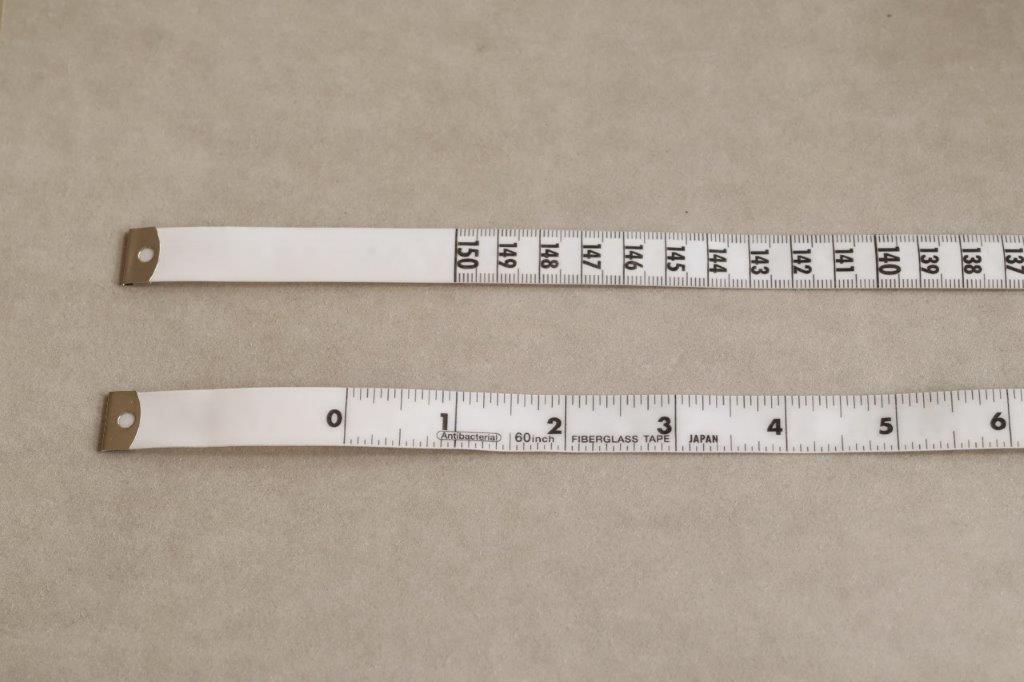
Our selection contains a version with a 5cm blank leader and another without that additional gap. The two beginnings are visible in the photograph. The listed units and starting arrangements distinguish the actual products; they sit within the company’s documented history of developing several forms of measuring instrument.
Explore this part of the story: Hara Doki Glass Fibre Tape Measure 150 cm / 60 inch (With extra gap).
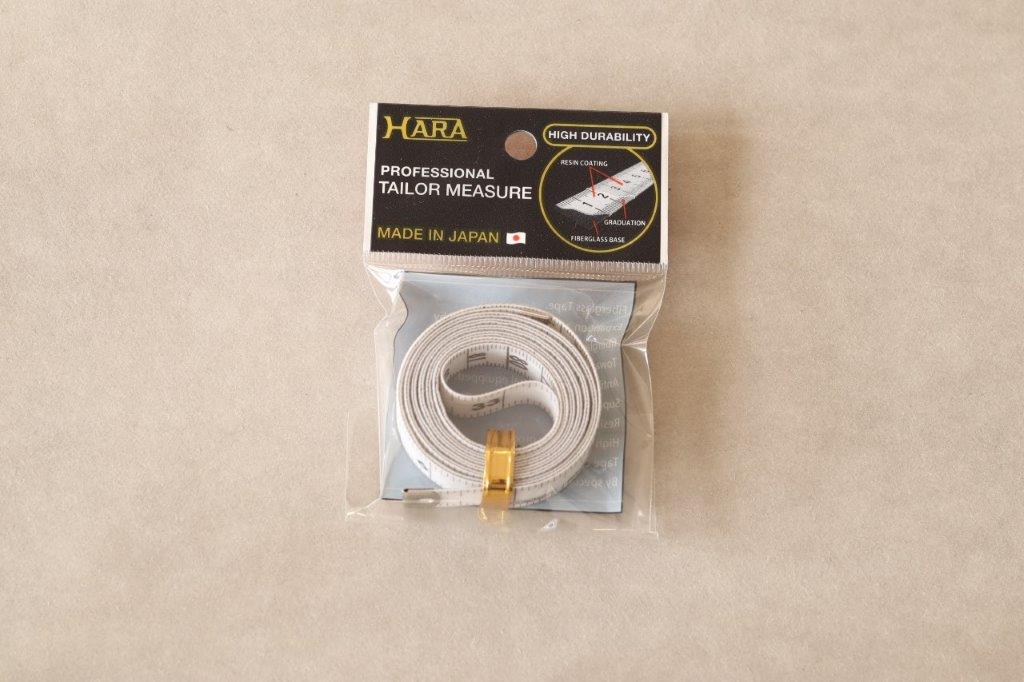
The version in our collection includes a blank 5cm section before the scale begins. The listing explains this as a way to overlap the end when taking body measurements. It is a small design detail, but it changes how the end can be held. The same listing distinguishes it from the version that starts at zero at the edge. The tape and its two formats.
When you look at a tape, start with that relationship between the end and the zero mark. Then look at the units on each side. It is easy to focus on the flexibility of a tape and overlook the way its information is arranged.
4. From measurement to something wearable
A body measurement is the start of a design decision, not the whole decision. The garment still needs its intended shape and room for movement. Keeping a clear record of which measurement you took, where and in which units makes the later pattern work easier to follow.
The 150cm / 60in tape below is the specific Hara item at Eight Needles. Its flexible form carries a much longer measuring-tool story, from bamboo rules to tapes developed for different kinds of work.
5. Explore the collection by category
Explore by category
Tape measures
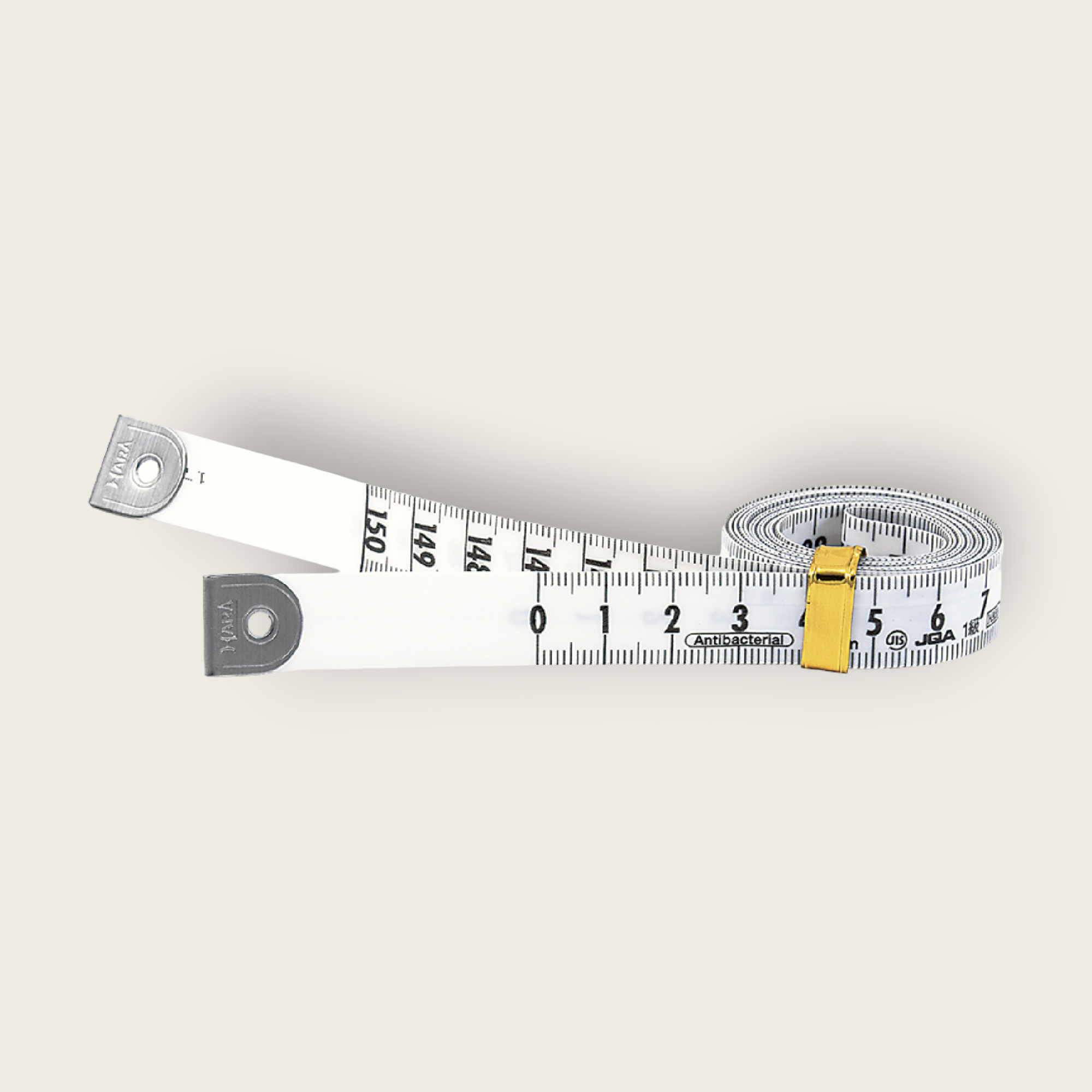 Hara Doki Glass Fibre Tape Measure 150 cm / 60 inch (With extra gap)View details & options →
Browse 1 more in this category
Words: Eight Needles. Historical, workshop and product images are credited in their captions. Company and manufacturing sources are linked beside the relevant passages. Historical and manufacturing sources are linked beside the relevant passages. Product links open the live Eight Needles shop.
