No products in the basket.
Guides
Basting Thread: Why Keep It Separate from Decorative Thread?
Eight Needles Journal · Sashiko & thread
Basting holds work temporarily while you check placement or prepare the next construction step. Its purpose is different from a visible decorative line. Choose the thread and stitch with removal in mind as well as holding strength.

Check the fabric first
Try the temporary stitching on an offcut using the intended needle. Remove it and inspect the fabric for marks or holes. A contrast colour can be easy to find, but the complete combination must still suit the fabric.
Keep the temporary line identifiable
Use the basting method described by your pattern or tailoring instructions. Position and label temporary work so it is not mistaken for a permanent seam. Do not rely on thread colour alone when several construction lines are present.
Remove with control
Cut and withdraw temporary stitches gently, supporting the fabric. If a thread resists, find the cause instead of pulling harder. Keep sharp snips away from the garment surface and inspect the area after removal.
A practical example
You use a contrast thread to hold a fitting temporarily. Keep the basting line clearly distinguishable from permanent construction, then remove a sample to check for traces. Ease of finding the thread is only helpful when removal also leaves an acceptable surface.
Check before choosing
- Will the stitches be easy to identify?
- Have I tested removal?
- Does the thread suit the temporary job?
Related tools to compare
Compare the size, material and included parts on each product page against the task above.
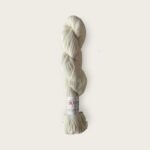 Daruma Basting Thread – 900m in Natural
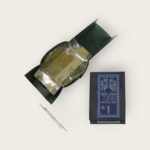 Sōho Hand Sewing Needles – Long No 4-9 (Pack of 25 Needles)
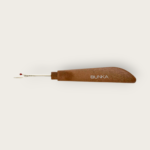 Bunka Seam Ripper
Meet the maker
For the company background, workshop photographs and more of the range, read DARUMA: From Yokota’s First Thread to the Factories of Shiga and Kyoto.