
No products in the basket.
Guides
Adger: A Saitama Marker Manufacturer Since 1969
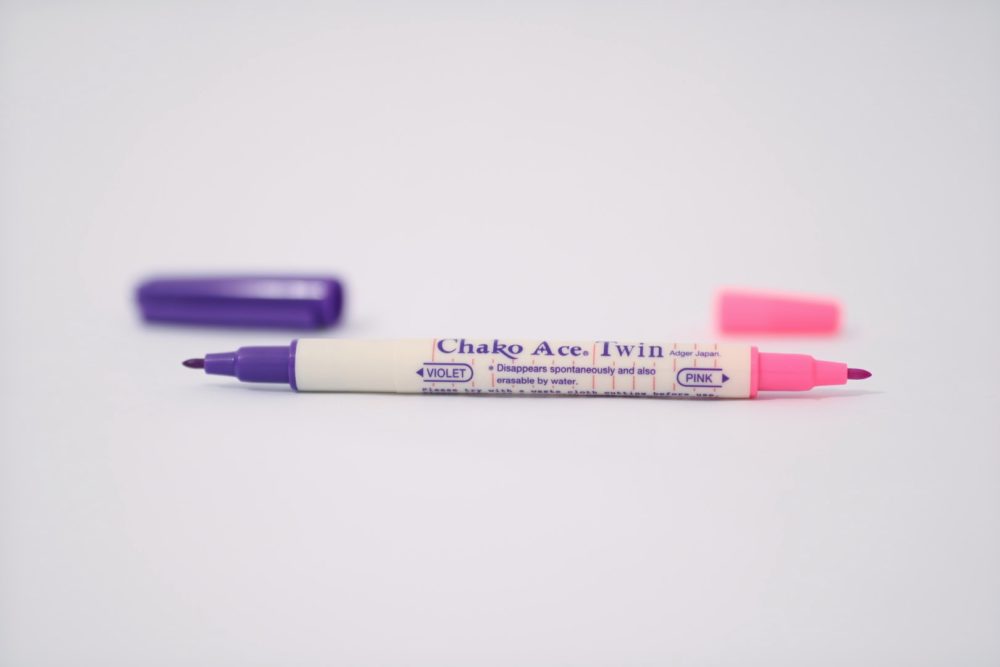
Adger Kogyo is a specialist marker manufacturer in Soka, Saitama. Its Japanese company profile dates its establishment to May 1969. Chako Ace is its fabric-marking range, bringing together marks that disappear with time, marks removed with water and dedicated erasing tools. Adger’s company profile.
1. Where the company says its markers are made
Adger’s English company statement identifies its Saitama factory as the production site for Adger products and states that it has no production site outside Japan. This is a specific manufacturing statement from the company, rather than an origin inferred from the brand name. Adger’s manufacturing statement.
2. A company organised around marking systems
The official range groups pink and violet markers, blue markers, pens combined with erasers, twin markers and white markers separately. Removal method and format are central to how the company presents its work. Adger’s official range.
Eight Needles carries purple and pink vanishing markers, a twin-ended version and the pale-blue water-erasable marker. These appear as separate groups below. Their removal instructions belong to each product; the fact that they come from one manufacturer does not make the inks interchangeable.
Explore this part of the story: Adger Water Erasable Marker Pen (Pale Blue).
Adger’s specialism is interesting because the successful result can be something that disappears. A construction line must help the maker while it is needed, then leave the finished fabric as intended. The company’s separate pink, violet, blue and white systems show that “a fabric mark” is not a single technical problem.
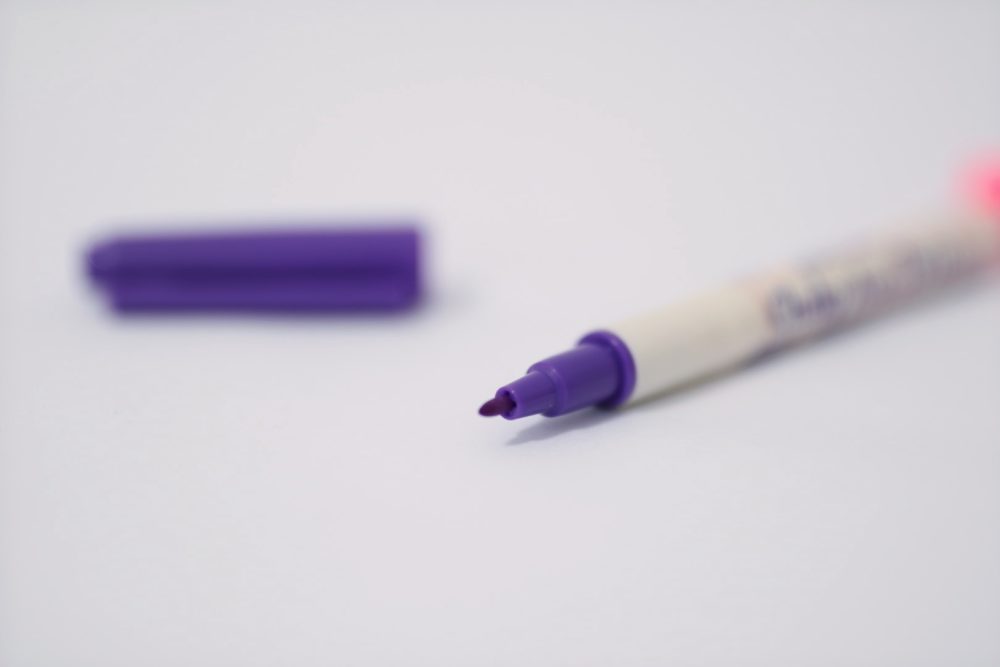
This also changes the way to read a marker photograph. The barrel and tip tell you about format. The removal method tells you about how it belongs in the sewing process. Both matter, and neither can be inferred just from the colour of the cap.
3. One project, several kinds of information
Imagine a project that involves cutting out, a fitting and several sessions of sewing. A mark needed immediately and a mark needed after the next session may have different requirements. The useful starting point is how long you need the information, on what material and how the instructions say it should be removed.

For any unfamiliar combination of marker and fabric, make a sample and follow the exact product’s directions before marking the main work. This is especially useful when a fabric’s colour or finish makes it difficult to predict how a line will look. Keep the sample until you have confirmed the removal step.
4. A specialist range in a small space
The Eight Needles selection brings together single-ended vanishing pens, a twin-ended version and a water-erasable option. They offer different formats within Adger’s wider marking specialism. Browse those groups with your project in mind; the company story explains the specialist background, while the individual product instructions explain the particular ink you will be using.
5. Explore the collection by category
Explore by category
Water-erasable marker
 Adger Water Erasable Marker Pen (Pale Blue)View details & options →
Twin-ended vanishing marker
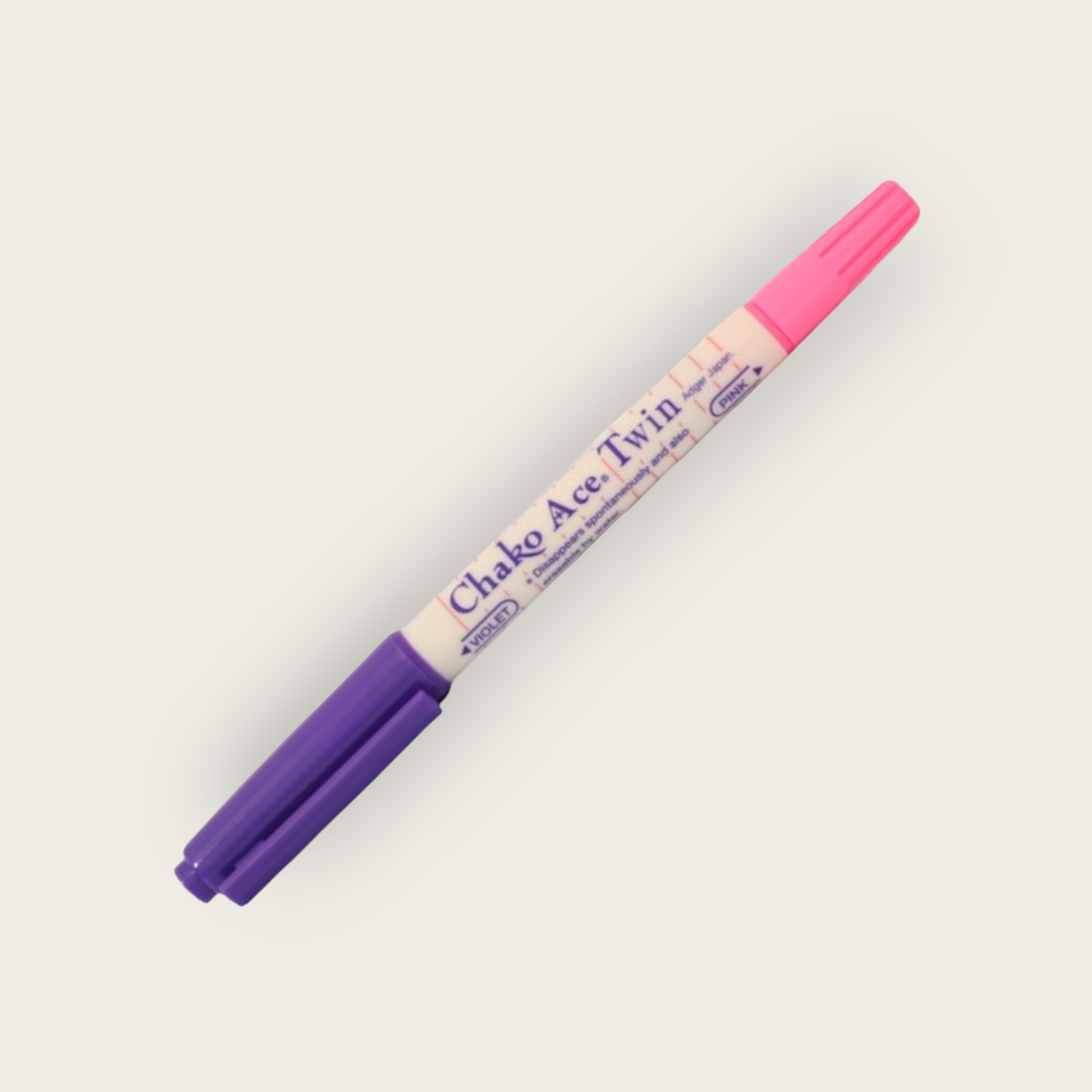 Adger Vanishing Fabric Marker Pen (Twin – Purple & Pink)View details & options →
Single-ended vanishing markers
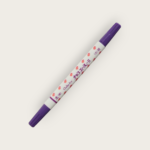 Adger Vanishing Fabric Marker Pen (Purple – Slower Vanishing )View details & options →
Browse 1 more in this category
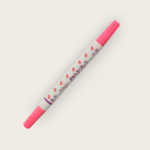
Words: Eight Needles. Historical, workshop and product images are credited in their captions. Company and manufacturing sources are linked beside the relevant passages. Historical and manufacturing sources are linked beside the relevant passages. Product links open the live Eight Needles shop.
